
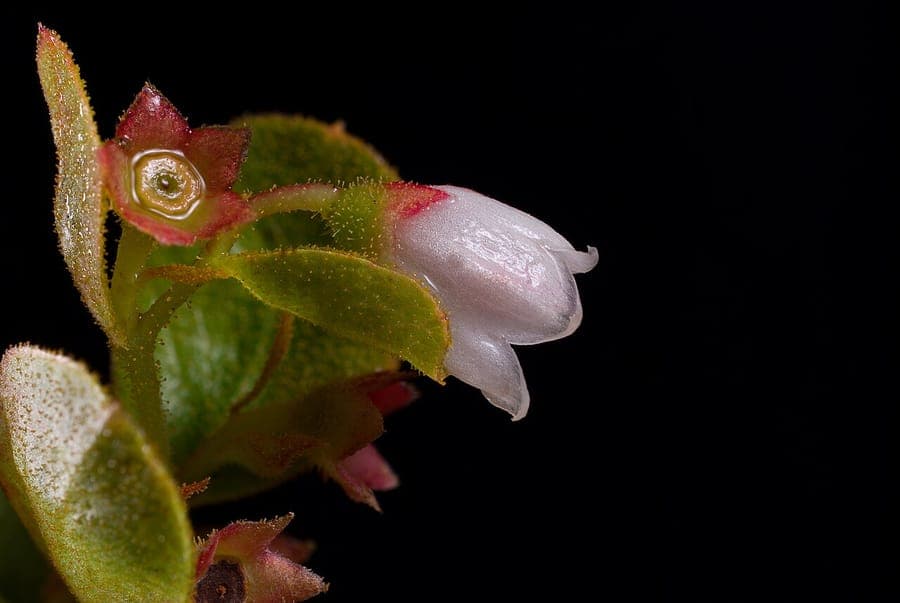
magnolia1000 / CC BY 2.0, via Wikimedia Commons
Dwarf huckleberry: complete guide
Gaylussacia dumosa
Want to see Dwarf huckleberry: complete guide in your garden?
1 minute, no credit card
Overview
Gaylussacia dumosa, commonly known as dwarf huckleberry, is a low-growing, rhizomatous subshrub in the heath family (Ericaceae). It is native to the southeastern United States, from West Virginia south through the Carolinas to Florida, and westward to Louisiana and Mississippi. In its natural habitat, dwarf huckleberry grows in open, acidic, nutrient-poor environments: pine barrens, sandy open heaths, dry ridges and open pine woodlands along the Atlantic coastal plain.
The genus name Gaylussacia honours the French chemist Joseph Louis Gay-Lussac (1778-1850), best known for the law of gas expansion. The species name 'dumosa' derives from the Latin 'dumus' (thicket, thornbrake) and describes the plant's dense, bushy growth habit. The species was described by Torrey and Gray in 1843 from earlier collections.
For European gardeners, Gaylussacia dumosa is a rewarding but specialised discovery: a compact, attractive shrublet that occupies a similar niche to the better-known blueberries (Vaccinium corymbosum) and cranberries (Vaccinium vitis-idaea), but with its own distinctive character and ornamental appeal. The small black or deep-purple berries that ripen in summer are technically edible but bitter and slightly resinous in flavour - making the plant less valued as a fruiting plant than commercial blueberries, but all the more worthwhile as an ornamental specimen for wild, naturalistic garden settings.
The plant's preferred soil pH of 4.3 to 6.5 makes it ideally suited to gardens with acidic, peaty or sandy soils where heather, bog myrtle, cranberries and rhododendrons flourish. At gardenworld.app you can find inspiration for how acid-loving heath plants and berry shrubs are combined into a coherent heathland or woodland garden design. The slow growth rate - described as 'slow' in botanical databases - is typical of many Ericaceae; this plant rewards patience but provides years of interest once established.
Dwarf huckleberry is also ecologically valuable: the flowers attract bumblebees and solitary bees, the berries are consumed by birds (grouse, thrushes, blackbirds) and small mammals, and the low, dense shrub layer provides cover for ground-nesting birds and small animals.
Appearance & bloom cycle
Gaylussacia dumosa is a low, compact subshrub typically reaching 20 to 50 cm in height, with a spreading, mat-forming habit. Growth is rhizomatous: underground stems spread laterally to produce new aerial shoots, gradually forming a broad, low mat or clump. Expansion is slow - reflecting the plant's overall growth rate - but eventually produces a characterful, dense groundcover.
The leaves are elliptic to obovate, 1 to 4 cm long, with a slightly leathery texture and a glossy dark-green colour. A distinctive feature of Gaylussacia species is the presence of small resinous glands visible on the upper leaf surface - the source of a faint, pleasant resinous scent when the leaves are handled on warm days. In autumn, the leaves colour attractively red to orange-red before dropping, providing seasonal interest beyond the flowering and fruiting periods.
Flowers are typical of the Ericaceae: tubular-bell-shaped, pink to white-pink, around 5 to 7 mm long, hanging from short stalks in small racemes at the branch tips. Flowering occurs from early spring to early summer: April through June depending on position and climate. The flowers are attractive to bumblebees and solitary bees that visit the tubular blooms for nectar and pollen.
After flowering, the berries ripen: round, dark-purple to black, approximately 6 to 8 mm across, in hanging clusters. Berries ripen from July to September. They are edible but have a bitter, slightly resinous flavour less appealing than cultivated blueberries. Birds consume the berries readily and play an important role in seed dispersal.
Ideal location
Gaylussacia dumosa is naturally a plant of open, acidic, oligotrophic (low-nutrient) habitats. In its native range it grows in open positions in pine barrens and sandy coastal woodlands - places with full sun to light shade, an open, freely draining soil and a low pH.
In the European garden, the ideal position is: full sun to partial shade on an acidic, well-drained soil. The combination of light shade (beneath open pine trees or at the edge of a birch group) with a peaty or sandy acidic soil is the perfect situation for this plant. In fully shaded, cold north-facing positions the plant grows too slowly and flowers less freely. Full sun on a dry, acidic soil can also work well, particularly in cooler climates.
The plant is well suited to the following European garden contexts: a heathland garden or heather-inspired border with rhododendrons, azaleas and ericas; the edge of a woodland or bog garden with acidic soil; a naturalistic wildlife garden featuring native heathland plants; or combined with blueberries in an edible garden on acid ground. The low, spreading habit also makes dwarf huckleberry a useful edge-softening groundcover beneath taller acid-loving shrubs.
Soil requirements
The soil requirements of Gaylussacia dumosa are specific and non-negotiable: a strongly acidic soil with a pH of 4.3 to 6.5, ideally at the lower end of this range. These requirements parallel those of blueberries, heather, rhododendrons and other Ericaceae members. On neutral or alkaline soils (pH above 6.5 to 7.0), the plant develops iron-deficiency chlorosis (yellowing leaves), grows poorly and may decline.
The ideal soil composition is: sandy to lightly loamy, humus-rich, well-drained but not desiccating. Poorly drained or waterlogged soils are detrimental: the roots are susceptible to root rot in persistently wet conditions. On heavy clay: do not plant without substantial soil improvement. Incorporate at least 40 per cent coarse acidic peat-based compost or ericaceous compost into the planting zone and ensure drainage is effective.
When planting into neutral or mildly acidic ground: acidify the soil before planting by working in generous amounts of acidic peat-based compost (ericaceous compost) or coarse heather compost. Lowering pH with elemental sulphur (flowers of sulphur) is also possible: 100 to 150 grams per square metre per pH unit to be lowered, though this acts slowly over months to a year. Check pH annually in early spring with a simple soil pH meter.
Mulching with acidic materials is essential for dwarf huckleberry: use pine needle compost, coarse heather compost, fresh pine needles or acidic bark mulch from conifers. Avoid calcareous or neutral mulch materials such as chipped poplar, ash or beech leaves, which gradually raise soil pH.
Free design
Want to see Dwarf huckleberry: complete guide in your garden? Make a free design now.
Watering
Gaylussacia dumosa is accustomed to the moist but freely draining sandy soils of the Atlantic coastal plain. The plant prefers a consistently moist position but tolerates periods of moderate drought once properly established. Waterlogging is more damaging than drought.
In the first year after planting, regular watering is critical: the plant establishes its root system slowly and drought stress in this first year can seriously weaken it. Apply 5 to 10 litres per plant weekly in dry weather, directly to the root zone. Use rainwater or demineralised water wherever possible: mains tap water in many European regions is too alkaline and gradually raises soil pH - a chronic problem for all Ericaceae in areas with hard water.
From the second year onwards, reduce watering: check soil moisture in dry summer weather and water when the top 5 cm feels dry. In shaded positions with a good acidic mulch layer, less supplemental water is needed. Continue to prefer rainwater throughout the plant's life. In autumn and winter, supplemental watering is generally not needed in most northwest European climates.
Pruning
Gaylussacia dumosa has a naturally compact habit and requires very little pruning. The slow growth rate means intensive pruning is rarely necessary. The main pruning task is removing dead, damaged or inward-growing branches in early spring, before the buds break - February to March.
Remove dead branches carefully back to living wood, using a sharp, clean pruning knife or small secateurs. Disinfect tools before use to avoid transmitting fungal diseases. Pruning in summer or autumn is inadvisable: this stimulates new growth that is vulnerable to frost damage.
Division of oversized clumps is possible in early spring or early autumn: carefully dig up an outer section with attached rhizomes, retaining as much root as possible, and replant immediately in the new position. The plant may need some time to recover from division.
Do not cut dwarf huckleberry back hard into old wood. Members of the Ericaceae family generally regenerate poorly from heavily cut old stems, and the slow growth rate means the plant may take years to recover from drastic pruning. Small, annual maintenance interventions are always preferable to major occasional pruning.
Maintenance calendar
January-February: Dormancy. Check the acidic mulch layer is intact. Top up with pine compost or heather compost if needed. No active garden work.
March: Buds begin to swell. Remove any dead or damaged branches before buds break. Check soil pH and correct if needed with ericaceous compost or elemental sulphur.
April-May: Flowering period. Pink-white bell flowers open. Bumblebees and bees visit actively. No pruning during flowering.
June: Flowering ends. First fruit set visible. Check soil moisture during dry spells. Water with rainwater if needed.
July-August: Berries ripening. Watch for bird activity on the fruiting branches. Supplement with rainwater during drought.
September: Berries fully ripe. Autumn leaf colour begins: red to orange-red. Consider renewing the mulch layer before winter.
October-November: Autumn colour at its best. Leaves drop. Top up mulch with acidic material for winter insulation.
December: Full dormancy. No tasks needed.
Winter hardiness
Gaylussacia dumosa is robustly cold hardy across most European climate zones. Native to Virginia and West Virginia, regions with severe continental winters, it survives temperatures to -20 degrees Celsius or below without damage to the roots and rhizomes. It corresponds reliably to USDA hardiness zones 5 to 9.
No winter protection is needed in the Netherlands, Belgium, the United Kingdom, Germany or northern France. In warmer Mediterranean regions (USDA zones 9-10), the plant grows but can struggle with prolonged hot, dry summers.
The above-ground stems are also cold hardy: in most northwest European winters the stems remain intact, though shoot tips may suffer minor frost damage in severe conditions. The leaves are semi-persistent: in mild winters some leaves remain green through winter; in hard winters all leaves drop. The plant reliably returns from its rhizomes in spring.
A layer of pine compost or pine needles (5 to 8 cm) around the crown provides additional insulation during exceptionally hard frosts and simultaneously helps maintain the soil pH at the acidic level the plant requires.
Companion plants
Gaylussacia dumosa naturally associates with other acid-loving plants and fellow Ericaceae, available at specialist garden centres:
- Vaccinium angustifolium (lowbush blueberry) or Vaccinium corymbosum (highbush blueberry): close relatives with identical soil and site requirements; combining Gaylussacia and Vaccinium creates an authentic North American heathland landscape effect.
- Gaultheria procumbens (wintergreen): a low, creeping Ericaceae groundcover with red berries and winter-green foliage; an ideal companion on acidic, lightly shaded soils.
- Calluna vulgaris (common heather): the classic heathland plant for acidic, open soils; combines naturally with the broader leaves of dwarf huckleberry.
- Erica carnea (winter heath) or Erica tetralix (cross-leaved heath): for extending the season of interest; ericas flower in winter or early spring when dwarf huckleberry is still dormant.
- Rhododendron impeditum or compact azalea cultivars: larger acid-loving shrubs providing structure above the low dwarf huckleberry layer.
- Clethra alnifolia (sweet pepperbush): a fine autumn-flowering shrub for acidic soils with fragrant white flowers, combining beautifully in a heathland-inspired border.
At gardenworld.app you can explore how acid-loving heathland and woodland plants are combined into a coherent, seasonally rich garden design that accounts for soil pH, light and moisture conditions.
Closing
Gaylussacia dumosa is a modest but ecologically and aesthetically valuable plant for the acidic heathland or woodland garden. The small bell-shaped flowers, the rich dark berries, the attractive autumn colour and the low, compact habit make it a versatile choice for gardens with the right soil conditions. Its slow growth demands patience, but once established in a well-acidified, well-drained position, it provides years of interest with minimal maintenance.
Curious about creating a heathland-inspired border or an acidic woodland garden with plants like dwarf huckleberry? Visit gardenworld.app for professional garden design advice and tailored planting plans that account for soil pH, light conditions and the right plant selection for your specific garden situation.
Want to see Dwarf huckleberry: complete guide in your garden? Make a free design now.
Upload a photo, pick a style, and get a photorealistic design with plant list in under a minute.
10,000+ gardens designed already
No credit card required

