
homeredwardprice / CC BY 2.0, via Wikimedia Commons
Drooping leucothoe: complete guide
Leucothoe fontanesiana
Want to see Drooping leucothoe: complete guide in your garden?
1 minute, no credit card
Overview
Drooping leucothoe (Leucothoe fontanesiana) is an evergreen shrub in the heath family (Ericaceae) native to the Appalachian Mountains of the southeastern United States. Its natural range runs from Virginia and North Carolina south through Tennessee, Georgia, and Alabama, where it colonises the banks of mountain streams, moist shaded slopes, and the understorey of mixed deciduous forests. In cultivation it has become one of the most valued low-maintenance shrubs for shaded gardens, prized for its graceful arching habit, glossy foliage, and remarkable autumn-to-winter leaf colour.
The genus name Leucothoe comes from Greek mythology; the species epithet fontanesiana commemorates the French botanist Rene Louiche Desfontaines. Common English names include fetterbush, dog-hobble, and switch-ivy, all reflecting the dense, tangling growth habit that can impede passage through its native forest understorey. On gardenworld.app you will find garden design tools that help you plan shade-loving planting schemes where drooping leucothoe plays a leading role as year-round ground cover.
Appearance and bloom cycle
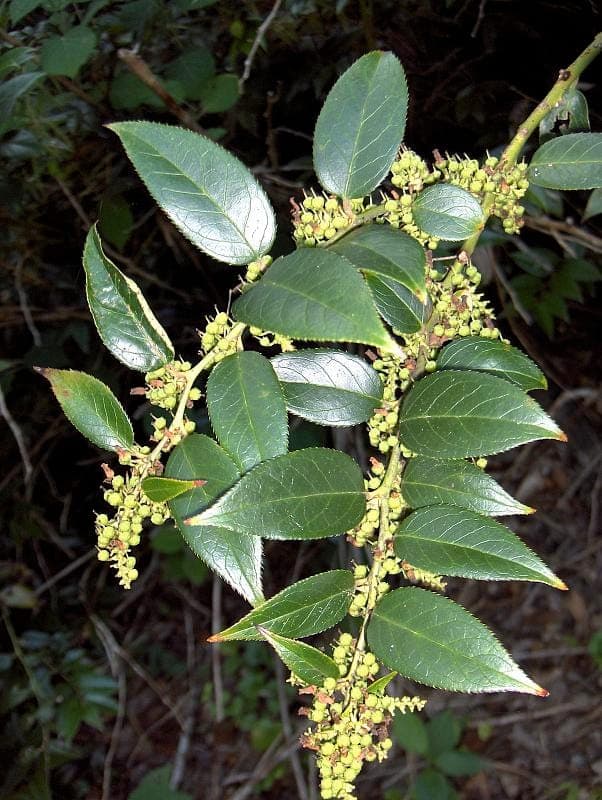
Drooping leucothoe forms a broadly spreading, multi-stemmed shrub with slender, arching canes that rise to ninety to one hundred and eighty centimetres and spread to one hundred and twenty to two hundred centimetres. The branches arch outward and downward in a graceful waterfall effect that is particularly striking along paths or at the front of a shaded border. The lance-shaped leaves are leathery, glossy, and deep green in summer, but develop purple-red to burgundy tones in autumn and winter, especially after cool temperatures arrive. This seasonal colour shift makes the plant interesting throughout the year.
In May and June, small white to cream flowers appear in short racemes that hang beneath the arching branches, resembling lily-of-the-valley. The flowers are modest in size but pleasantly fragrant and attractive to pollinators. Small round seed capsules follow the flowers and persist through winter. Named cultivars such as "Rainbow" and "Girard's Rainbow" offer variegated foliage in pink, cream, and green that maintains its appeal throughout all four seasons.
Ideal location
Dropping leucothoe thrives in partial to full shade. It tolerates deep shade far better than most ornamental shrubs, though its autumn and winter colour is richest when the plant receives a few hours of dappled or indirect light each day. Direct afternoon sun is harmful and causes leaf scorch, yellowing, and desiccation of the foliage.
A sheltered position away from drying winds is preferable. The shrub works beautifully as a ground cover beneath large deciduous trees, at the base of rhododendrons or azaleas, along shaded paths, or on moist slopes. Competition from large surface-feeding tree roots can limit growth, so choose planting pockets with a reasonable depth of soil. The plant also performs well in containers provided it receives consistent moisture.
Soil
As a member of the heath family, Leucothoe fontanesiana has clear soil requirements: it prefers moist, humus-rich, well-drained but moisture-retentive, acidic soil with a pH between 4.5 and 6.0. Alkaline or chalky soils cause iron chlorosis - a yellowing of the leaves between the veins - and stunted, poor growth. The ideal growing medium resembles the leafmould-rich soil found on a moist forest floor.
When planting in average garden soil, incorporate ericaceous compost, leaf mould, or pine bark to lower the pH and improve moisture retention. An annual top-dressing of acidic mulch - pine needles, oak leaves, or bark chippings - around the plant keeps the root zone cool, moist, and at the correct pH. Avoid lime-based fertilisers and anything that raises soil alkalinity.
Watering
In its native habitat the drooping leucothoe always has access to consistently moist soil beside mountain streams and on shaded slopes. In the garden it needs regular watering but cannot tolerate waterlogged conditions. The soil should never dry out completely, as this leads to wilting, brown leaf margins, and lasting damage.
During dry summers - even in shaded positions - a deep watering once a week is recommended. A mulch layer of five to eight centimetres around the plant significantly reduces moisture loss and keeps root temperatures low. In spring and early summer during active growth, the top layer of soil can dry slightly between waterings but deeper layers should remain moist. In winter, supplemental watering is only needed during prolonged dry spells combined with frost-free periods.
Free design
Want to see Drooping leucothoe: complete guide in your garden? Make a free design now.
Pruning
Drooping leucothoe requires very little active pruning. Removing dead, damaged, or overly long canes is best done in early spring, right after the last frost and before new growth begins. Cut canes back to just above ground level or to a well-placed side shoot.
If you want to keep the plant more compact, the longest canes can be shortened after flowering in June or July. This encourages denser branching and keeps the plant within the desired dimensions. Leucothoe tolerates quite hard pruning; cutting back almost to the base is possible if the shrub has become too large. Note that heavy pruning may slightly reduce the following year's flower display since the flowers are borne on year-old wood. With variegated cultivars, any shoots that revert to plain green foliage should be cut back to the base immediately to preserve the ornamental colouring.
Maintenance calendar
January to February: check for frost damage; protect young plants in exposed positions with horticultural fleece or conifer branches. March: remove frost damage and dead wood; apply a fresh layer of acidic mulch; feed with an ericaceous fertiliser. April: new shoots emerge; check for powdery mildew or leaf spots; remove all-green shoots from variegated cultivars. May to June: flowering period; enjoy the pendant white flowers; no special interventions needed. July: optionally prune back the longest canes after flowering to promote compact, dense growth. August: in dry summers, water deeply once a week; check the mulch layer for depth and moisture. September to October: autumn colour develops; leaves turn red and burgundy; avoid pruning during this period. November to December: resting period; the colourful winter foliage provides garden interest; maintain mulch depth.
Winter hardiness
Leuaena fontanesiana is rated for USDA hardiness zones 5 to 9, meaning it can withstand temperatures as low as approximately -26 degrees Celsius. This places it among the hardiest of the evergreen shrubs available to gardeners in northern Europe, and outdoor overwintering is almost always possible even in colder regions of the United Kingdom and the Low Countries.
In severe frost, the leaves may roll and pucker as a moisture-conserving mechanism, but they unfurl again as temperatures rise. Permanent leaf damage from cold is unusual. In particularly exposed, wind-swept positions without snow cover, leaf tips may brown slightly in a hard winter. A mulch layer around the roots provides welcome extra protection. Young plants in their first year after planting may benefit from light winter protection in the first season.
Companion plants
Dropping leucothoe is a versatile partner in the shade border. Excellent combinations include:
- Rhododendron and azalea: the same acidic, humus-rich soil requirements; the bold flowers contrast with the fine leucothoe foliage. Available at most garden centres.
- Ferns (Dryopteris, Polystichum): the feathery texture of ferns enriches the border alongside the glossy leaves of leucothoe.
- Hostas: large, pleated leaves as a counterpoint to the lance-shaped leaflets of the leucothoe.
- Bergenia: a tough evergreen rosette plant with large, leathery leaves for a firm anchor to the border planting.
- Epimedium: a low ground cover that also tolerates dry shade once established.
At gardenworld.app you can create garden designs that combine shade-loving plants such as leucothoe, hostas, and ferns in a coherent, low-maintenance scheme tailored to your specific garden dimensions.
Closing
The drooping leucothoe is one of the most valuable evergreen shrubs for the shade garden. Its graceful arching branches, glossy foliage that turns from green to burgundy, and the small white flowers in May and June make it a true four-season plant. It is frost-hardy, asks for minimal maintenance, and is an ideal companion for rhododendrons and azaleas in an acid soil border. Give it the right position - partial to full shade, moist acidic soil, and shelter from drying winds - and drooping leucothoe will reward you year after year with effortless elegance.
Want to see Drooping leucothoe: complete guide in your garden? Make a free design now.
Upload a photo, pick a style, and get a photorealistic design with plant list in under a minute.
10,000+ gardens designed already
No credit card required


Similar plants
Goldenball leadtree: complete guide
Leucaena retusa
Everything about the goldenball leadtree (Leucaena retusa): location, soil, watering, pruning, hardiness and companion plants.
Appalachian blazing star: complete guide
Liatris squarrulosa
Everything about the Appalachian blazing star (Liatris squarrulosa): sun, soil, watering, care, winter hardiness and companion plants.