
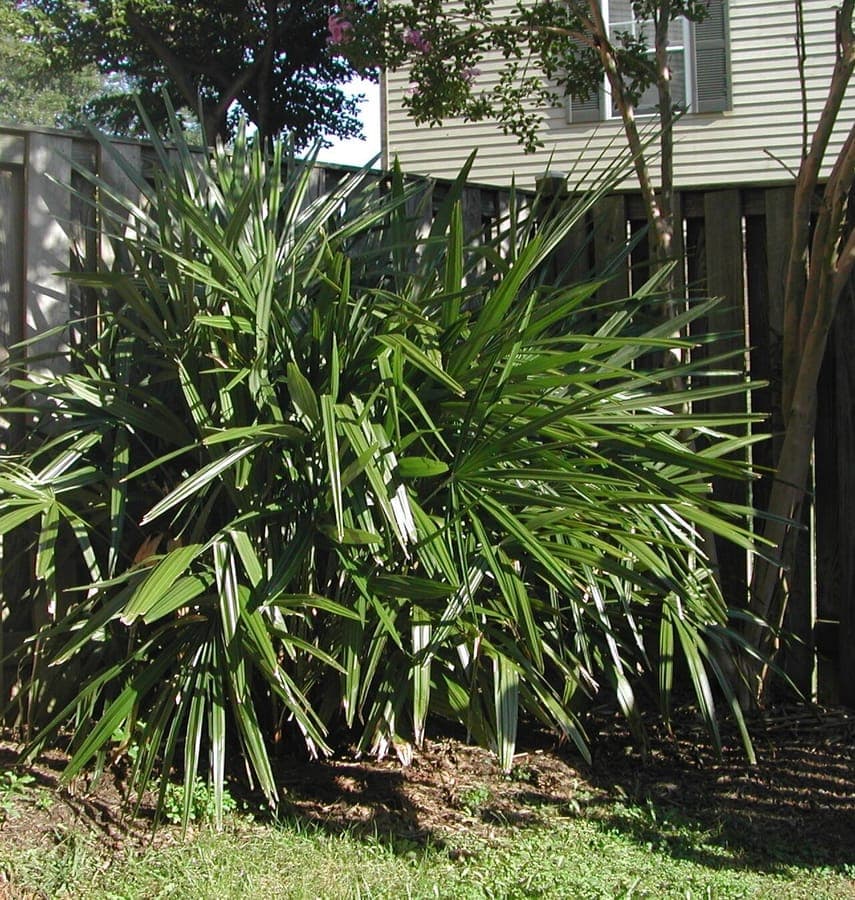
Wikimedia Commons / Public domain, via Wikimedia Commons
Needle palm: complete guide
Rhapidophyllum hystrix
Want to see Needle palm: complete guide in your garden?
1 minute, no credit card
Overview
The needle palm (Rhapidophyllum hystrix) is one of the most remarkable plants a gardener can grow in a temperate climate. Native to the southeastern United States - specifically Florida, Georgia, Alabama, Mississippi, and South Carolina - this member of the Arecaceae family grows naturally as an understorey plant in moist pine forests, coastal swamps, and along shaded riverbanks. What sets it apart from every other palm on the planet is a feat of cold tolerance that seems to defy its tropical appearance: the needle palm is widely regarded as the hardiest palm in the world, capable of surviving temperatures well below freezing with little or no protection. This makes it genuinely useful, not just a curiosity, for gardeners in cool-temperate climates who want to achieve an exotic look without the annual chore of heavy winter wrapping. For more inspiration on designing an exotic garden with bold structural plants, visit gardenworld.app.
Appearance and bloom cycle
In cultivation, the needle palm typically forms a low, multi-stemmed clump reaching 100 to 150 cm tall, though specimens in warm gardens can eventually reach 3 metres or more over many decades. The leaves are fan-shaped (palmate), deeply folded, and glossy deep green on top with a silvery-green underside - each leaf can span 60 to 90 cm across and gives the plant a genuinely lush tropical presence. Its most distinctive feature, and the source of its common name, is the mass of long, needle-sharp black spines that emerge from the base of each stem, sometimes reaching 20 to 30 cm in length. These spines are a natural defence against browsing animals and should be treated with considerable respect by the gardener. Flowers appear in spring, typically April through June, as small yellow to reddish clusters nestled among the leaf bases. The plant is dioecious, meaning male and female flowers occur on separate plants. Female plants set small, olive-like fruits that ripen to a brownish red.
Ideal location
The needle palm performs best in a sheltered position receiving full sun to partial shade. In its natural habitat it grows beneath a forest canopy, but in the garden it handles full sun well provided moisture levels are adequate. In cooler climates, the most important factor is wind protection: a south- or southwest-facing wall, a dense hedge, or a grouping of other large shrubs dramatically reduces cold wind damage in winter. Cold, dry winds desiccate the leaves and can cause more damage than the actual frost. The plant adapts well to container growing provided the pot is large enough (at least 50 litres) and has excellent drainage. Containers can be moved under a porch or into a frost-free shed during the coldest spells in regions with reliably harsh winters.
Soil
The needle palm is not demanding about soil type but does best in a slightly acidic to neutral, well-draining medium with a pH between 5.5 and 7.0. Heavy, waterlogged clay soils are its main enemy: prolonged wet roots in winter are a greater threat than frost. Amend heavy soils generously with coarse grit, perlite, or composted bark to improve drainage. A mix of loam, coarse sand, and well-rotted compost in equal parts works excellently. For container planting, a quality palm potting mix is ideal, with a layer of drainage material (clay pebbles or gravel) at the base. The roots spread laterally rather than deeply, so a wide, shallow container is preferable to a tall, narrow one.
Watering
During the growing season from April through September, water regularly but avoid waterlogging. Check soil moisture by pressing a finger 3 to 5 cm into the substrate: water only when this top layer feels dry. In hot summer months this may mean watering two or three times per week; in cooler, overcast periods once a week is sufficient. Reduce watering significantly from October onwards and keep to a minimum through winter - once a month is generally enough just to prevent the roots from completely drying out. Garden-planted specimens in areas with reasonable rainfall will usually look after themselves through winter without supplemental watering. Soft water or rainwater is preferable to hard tap water, as the needle palm is mildly sensitive to high calcium levels that can over time inhibit nutrient uptake.
Free design
Want to see Needle palm: complete guide in your garden? Make a free design now.
Pruning
Very little pruning is needed. Remove only completely dead fronds by cutting them as close to the stem base as possible with clean, sharp secateurs. Do not remove yellowing or partially brown fronds until they are entirely dead, since any green tissue is still contributing to photosynthesis and nutrient recycling. Never cut live green fronds to tidy the plant up - this reduces the plant's energy reserves and can set back growth noticeably. A critical safety point: the spines at the stem base are extremely sharp and can inflict serious puncture wounds. Always wear thick gloves and protective long sleeves when working close to the plant. Some gardeners find it useful to wrap the spine zone temporarily with burlap when transplanting or moving containerised plants.
Maintenance calendar
January and February: leave the plant undisturbed; provide extra insulation with straw mulch around the base and fleece over the crown if temperatures drop below -10 degrees Celsius for extended periods. March: remove winter protection once hard frosts have passed; assess any frost damage and cut back dead leaf tips. April and May: begin monthly feeding and gradually increase watering. June, July, and August: peak growing season; feed with a balanced palm fertiliser every two weeks and water regularly. September: remove any dead fronds, reduce feeding to monthly. October: stop feeding entirely and begin reducing watering. November and December: prepare winter protection for young or exposed plants; ensure drainage around the base remains unobstructed.
Winter hardiness
The needle palm is rated hardy to USDA zone 7b, corresponding to minimum temperatures of around -15 degrees Celsius. In practice, well-established specimens in sheltered positions have survived brief dips to -17 or even -18 degrees without permanent damage. Much of the Netherlands and Belgium falls in USDA zone 8a to 8b, meaning the needle palm can remain outdoors year-round in most locations, making it a genuine garden plant rather than a temporary summer visitor. Young plants in their first two to three winters are more vulnerable than established ones and benefit from a thick mulch of straw or coconut fibre around the root zone, plus a fleece cover over the crown when temperatures below -8 degrees are forecast. Older, well-rooted clumps generally need no winter protection at all in mild maritime climates. gardenworld.app features real garden designs where the needle palm serves as a focal point in all-year outdoor planting.
Companion plants
The needle palm combines beautifully with other cold-hardy architectural plants. Trachycarpus fortunei (Chusan palm) brings a similar level of frost tolerance but grows taller and adds vertical contrast. Musa basjoo (Japanese fibre banana) offers enormous tropical leaves that create a lush jungle atmosphere alongside the needle palm. Phormium tenax (New Zealand flax) provides strong sword-like foliage in colours ranging from green to burgundy and copper. Acanthus mollis, with its bold lobed leaves and tall flower spikes, makes an excellent ground-level companion. For the front of a border, Hemerocallis cultivars, low clumping bamboos such as Fargesia varieties, or ornamental grasses provide softer textural contrast. In containers, combine with Agapanthus, Crocosmia, or Canna for a striking summer display.
Buying and price
The needle palm is less common in garden centres than Trachycarpus or Chamaerops but increasingly available through specialist nurseries and online retailers in the UK, Netherlands, and Belgium. Prices vary considerably by size: small plants of 15 to 20 cm cost around 10 to 20 pounds or euros, while larger specimens of 50 to 80 cm can run from 40 to 100 or more. Look for plants with firm, upright fronds, no yellowing, and a well-filled pot with visible healthy roots. Avoid specimens that have been pot-bound for too long, as these can struggle to establish in the open garden. Local garden centres sometimes stock them in summer alongside other exotic plants.
Closing
The needle palm earns its reputation as the most cold-hardy palm in the world. With its dramatic fan fronds, its bristling defensive spines, and its remarkable ability to shrug off temperatures that would destroy any other palm, it offers something genuinely unique: a plant that looks thoroughly tropical yet can be treated as a permanent, low-maintenance fixture in a temperate garden. Give it good drainage, a sheltered spot, and a little patience - it is slow to grow but very long-lived - and it will reward you with years of exotic drama.
Want to see Needle palm: complete guide in your garden? Make a free design now.
Upload a photo, pick a style, and get a photorealistic design with plant list in under a minute.
10,000+ gardens designed already
No credit card required


Similar plants
Saw palmetto: complete guide
Serenoa repens
A complete guide to saw palmetto (Serenoa repens), the iconic fan palm from Florida and the southeastern United States, prized for its toughness.
Puerto Rican hat palm: complete guide
Sabal causiarum
Grow Puerto Rican hat palm successfully. A majestic fan palm with tropical presence suited to sheltered Mediterranean-style gardens.
Lipstick palm: complete guide
Cyrtostachys renda
Discover how to care for the gorgeous Lipstick palm (Cyrtostachys renda). Tips for cultivation, watering and winter protection of this tropical palm.