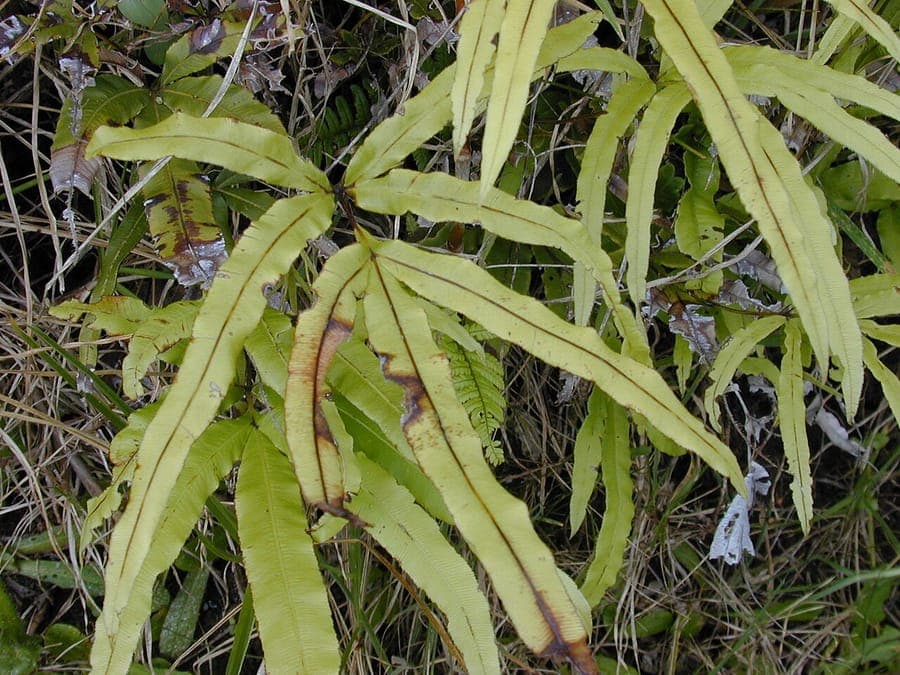
Forest & Kim Starr / CC BY 3.0, via Wikimedia Commons
Cretan Brake Fern: complete guide
Pteris cretica
Want to see Cretan Brake Fern: complete guide in your garden?
Full design in HD: €7.99
Look after your Cretan Brake Fern with the GardenWorld app
Identify plants with your camera and get a care calendar with reminders for this plant.


Overview
The Cretan Brake Fern, scientifically known as Pteris cretica, is an elegant fern species belonging to the Pteridaceae family. This graceful foliage plant is cherished for its delicate ribbon-like fronds and serves as a favorite for indoor and office settings worldwide. Native to Mediterranean regions, this fern has naturalized in temperate climates globally.
Appearance and Bloom
The Cretan Brake reaches 30-60 cm in height with long, fine fronds displaying characteristic ribbon-like pinnules. The compound leaves showcase a delicate structure with fine subdivisions. Rather than traditional flowers, the fern produces spores on the underside of fronds. The light to dark green foliage presents a fine-textured, elegant appearance.
Ideal Location
Place the Cretan Brake in indirect light conditions. Perfect for office desks, bathroom windowsills, or bright corners. Avoid direct sunlight which causes leaf scorch. The plant thrives in moderate temperatures between 15-20°C with high humidity.
Soil
Use well-draining potting soil enriched with organic matter. A blend of peat moss and perlite works ideally. Ensure drainage holes in containers prevent waterlogging.
Free preview
Want to see Cretan Brake Fern: complete guide in your garden? Make a free preview of your design.
Watering
Keep soil consistently moist but not waterlogged. Water regularly during growing season and reduce in winter. Use soft water, preferably rainwater. Mist fronds regularly to maintain adequate humidity levels.
Pruning
Remove dead or yellowing fronds regularly. Cut back old or damaged fronds to basal nodes. Pruning encourages compact growth and fuller appearance.
Maintenance Calendar
Spring: regular watering, monitor humidity. Summer: increased watering, monthly feeding. Autumn: reduce water as growth slows. Winter: minimal watering, no fertilizer.
Winter Hardiness
The Cretan Brake is not winter hardy outdoors in northern regions. Protect from frost and severe cold. Ideal temperature range 10-20°C. Never expose to temperatures above 25°C.
Companion Plants
The Cretan Brake pairs well with other shade-loving plants like Ivy and Peace Lily. Group together for greater visual impact. Works effectively in air-purifying plant combinations for indoor spaces.
Closing
The Cretan Brake Fern is an excellent choice for elegant foliage without demanding care. With proper light and consistent moisture, this fern flourishes beautifully indoors. Visit gardenworld.app for more plant guides. Discover gardenworld.app for garden design inspiration!
Frequently asked questions about Cretan Brake Fern
Is Cretan Brake Fern winter hardy?
The Cretan Brake is not winter hardy outdoors in northern regions. Protect from frost and severe cold.
When and how do you prune Cretan Brake Fern?
Remove dead or yellowing fronds regularly. Cut back old or damaged fronds to basal nodes.
How much water does Cretan Brake Fern need?
Keep soil consistently moist but not waterlogged. Water regularly during growing season and reduce in winter.
Where does Cretan Brake Fern grow best?
Place the Cretan Brake in indirect light conditions. Perfect for office desks, bathroom windowsills, or bright corners.
What soil does Cretan Brake Fern need?
Use well-draining potting soil enriched with organic matter. A blend of peat moss and perlite works ideally.

See it in your garden
See Cretan Brake Fern in your garden
One photo of your garden and a few questions. You see the result in about a minute.
Try it with a photoIdentify this plant in your own garden. Identify a plant
Similar plants
Himalayan maidenhair fern (Adiantum venustum): complete guide
Adiantum venustum
Everything about the Himalayan maidenhair fern (Adiantum venustum): position, soil, watering, pruning and hardiness. A hardy maidenhair that forms a graceful green carpet in shade.
American rockbrake: complete guide
Cryptogramma acrostichoides
Full guide to American rockbrake fern: ideal location, soil, watering, winter hardiness and garden companions for shady rock gardens.
Longleaf brake fern: complete guide
Pteris longifolia
Everything about Pteris longifolia: ideal location, soil, watering, winter care and companion plants for this tropical fern.
