
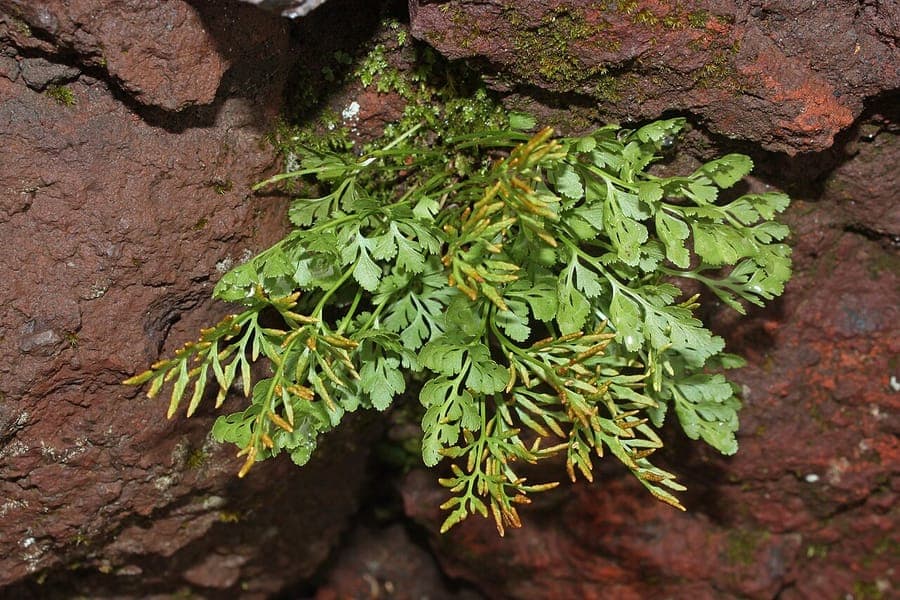
Walter Siegmund (talk) / CC BY-SA 3.0, via Wikimedia Commons
American rockbrake: complete guide
Cryptogramma acrostichoides
Want to see American rockbrake: complete guide in your garden?
1 minute, no credit card
Overview
American rockbrake (Cryptogramma acrostichoides), also known as American parsley fern or mountain parsley fern, is a small but fascinating fern belonging to the family Pteridaceae. Its natural range stretches from Alaska and the Yukon south through British Columbia, Washington, Oregon, Idaho, Montana, Colorado, Utah and New Mexico, reaching as far east as Michigan and Ontario, and even extending to Kamchatka in the Russian Far East. This remarkable distribution speaks to the plant's toughness and adaptability in cold, rocky mountain environments.
Described by the Scottish botanist Robert Brown in 1823, the species has collected several synonyms over its taxonomic history, including Cryptogramma crispa var. acrostichoides and Allosorus acrostichoides. The common names all reference the strong resemblance of the sterile fronds to flat-leafed parsley. Gardeners looking for a low-maintenance, genuinely hardy fern for a north-facing rock garden or shady border will find this species rewarding. You can explore garden design ideas that incorporate shade ferns like this one at gardenworld.app.
Appearance and growth cycle
American rockbrake produces two distinct types of fronds from a short, creeping rhizome. The sterile fronds are broadly triangular to ovate, bright to mid-green, finely divided and 2-3 pinnate, with blunt to rounded leaflets that closely resemble flat-leafed parsley. These fronds typically reach 10-25 cm in height and form a low, spreading mat.
The fertile fronds are noticeably taller and narrower than the sterile ones. Their leaflets have margins that curl under to form a protective envelope around the developing sori (spore clusters), giving these fronds a distinctly different, more rolled appearance. In summer the fertile fronds deepen in colour, and by September the spores are ripe. In autumn, both frond types yellow and die back, leaving only the rhizome to overwinter. New growth emerges in spring as tightly coiled croziers that unfurl progressively through April and May. Being a fern, this plant produces no flowers or seeds - all reproduction occurs through spores released from late July through September.
Ideal location
This mountain fern thrives in shaded to partially shaded spots where direct sunlight is limited to early morning or late afternoon at most. In the wild it colonises rocky slopes, cliff ledges, crevices in stone walls, and open birch or conifer woodland at altitude, where cool summers and moist air are the norm. These conditions should guide placement in the garden.
A north- or east-facing position sheltered from drying winds is ideal. The base of a stone wall, between large rocks in a rockery, or in a shaded raised bed all work well. Avoid south- and west-facing positions where the soil can dry out quickly in summer. In a shaded woodland garden, underplanting beneath deciduous trees or large shrubs replicates the natural habitat. Good drainage is essential: the fern handles drought less well than waterlogging, but standing water causes root rot.
Soil
American rockbrake prefers well-draining, slightly acid to neutral soil with a pH of 5.0 to 6.5. In its natural habitat it roots in the crevices of quartzite and granite rocks or in humus-rich gritty soil derived from weathered stone. Heavy clay that holds water can lead to root rot in wet winters.
For a rock garden or scree bed, improve the soil by mixing coarse grit (3-8 mm grade), leaf mould and a small amount of peat-free compost. This combination provides the drainage the plant needs while retaining just enough moisture. In a border, incorporate coarse grit through the top 20 cm of existing soil. Avoid lime-rich or chalky substrates as the fern responds poorly to alkaline conditions. A thin mulch of leaf mould applied in autumn helps insulate the rhizome and gradually improves soil texture.
Free design
Want to see American rockbrake: complete guide in your garden? Make a free design now.
Watering
During the growing season, Cryptogramma acrostichoides needs consistent moisture without waterlogging. The soil should feel lightly damp rather than wet. In dry spells - particularly during April, May and June when the new fronds are unfurling - water at the base of the plant rather than from above to reduce the risk of fungal disease on the foliage. Rainwater or softened tap water is preferable to hard, limey water.
In late summer and autumn, watering frequency can be reduced gradually as the plant enters dormancy. Once the fronds have died back in late October or November, supplementary watering is rarely necessary unless the winter is unusually dry. In wetter regions, natural rainfall is usually sufficient throughout the growing season, provided drainage is adequate.
Pruning
This fern requires very little active management. At the end of winter or in early spring, once hard frost is reliably past, remove the previous year's dead fronds using scissors or your hands, being careful not to damage the tightly coiled new croziers that emerge from the rhizome. Dead fronds can also be cleared at any time during the season if they detract from the plant's appearance.
American rockbrake does not need cutting back for size management - it is naturally compact and slow-growing. If rhizome runners extend beyond the desired planting area, these can be trimmed at the base. Pruned material can be composted or left between the rocks as a light organic mulch.
Maintenance calendar
March: Check for winter damage. Remove dead fronds carefully. Apply a light top-dressing of leaf mould if the soil looks depleted.
April - May: New croziers emerge and unfurl. Water during dry spells. Watch for slugs, which are attracted to the soft new fronds.
June - August: Both sterile and fertile fronds fully developed. Spores ripen from late July. Keep soil lightly moist in dry periods.
September - October: Spores shed; fronds begin to yellow and die back. Reduce watering gradually.
November - February: Dormancy. No feeding or watering needed. Mulch the root zone if severe frost is forecast.
Winter hardiness
American rockbrake is extremely winter-hardy and is rated USDA zone 3, tolerating temperatures down to approximately -40 degrees Celsius. In the UK and northern Europe (zones 7-8) the plant has no difficulty surviving winter. The above-ground fronds die back naturally in autumn, and the rhizome overwinters undamaged even in severe frosts, provided drainage is adequate.
In wet winters on heavy soil, waterlogging poses a greater threat than cold. If growing in containers outdoors, extra insulation around the pot (hessian or bubble wrap) is worthwhile in zones colder than zone 6. In the ground, a loose mulch of leaves or pine needles over the root zone offers adequate protection in the coldest European winters.
Companion plants
American rockbrake combines naturally with other shade-tolerant, moisture-loving plants from comparable mountain habitats. Good companions include hard shield fern (Polystichum aculeatum), mosses of various species, navelwort (Umbilicus rupestris) and small saxifrages that also thrive in rock crevices. In a designed shade border it pairs well with small-leaved hostas such as Hosta 'Halcyon' and early-flowering ground cover plants like Ajuga reptans or Viola odorata.
Avoid planting beside aggressive spreaders such as some hardy geraniums or ivy, which can outcompete the slow-growing fern. In a rockery, it makes an attractive low mat beneath taller upright grasses or compact alpine plants such as Saxifraga or Sedum. The textural contrast between its finely divided fronds and the rough surface of stone is particularly effective.
Closing thoughts
American rockbrake is a rewarding plant for gardeners who appreciate understated elegance in a shady or rocky corner. Its compact size, outstanding cold hardiness and distinctive dual-frond structure set it apart from more commonly grown ferns. With the right drainage and a lightly acidic soil, it asks for very little and delivers reliable, handsome foliage year after year.
Looking to incorporate shade ferns into a cohesive garden design? Visit gardenworld.app for tailored planting advice and professional front garden design inspiration.
Want to see American rockbrake: complete guide in your garden? Make a free design now.
Upload a photo, pick a style, and get a photorealistic design with plant list in under a minute.
10,000+ gardens designed already
No credit card required


Similar plants
Longleaf brake fern: complete guide
Pteris longifolia
Everything about Pteris longifolia: ideal location, soil, watering, winter care and companion plants for this tropical fern.
Rough Maidenhair Fern: complete guide
Adiantum hispidulum
Discover the Rough Maidenhair Fern, an elegant, low-growing fern from tropical regions with delicate fine-textured foliage. Perfect for humid, shaded locations and humid indoor environments.
Northern maidenhair: complete guide
Adiantum pedatum
Learn all about growing Adiantum pedatum (Northern maidenhair). Practical growing tips and maintenance advice for this elegant shade-loving fern.