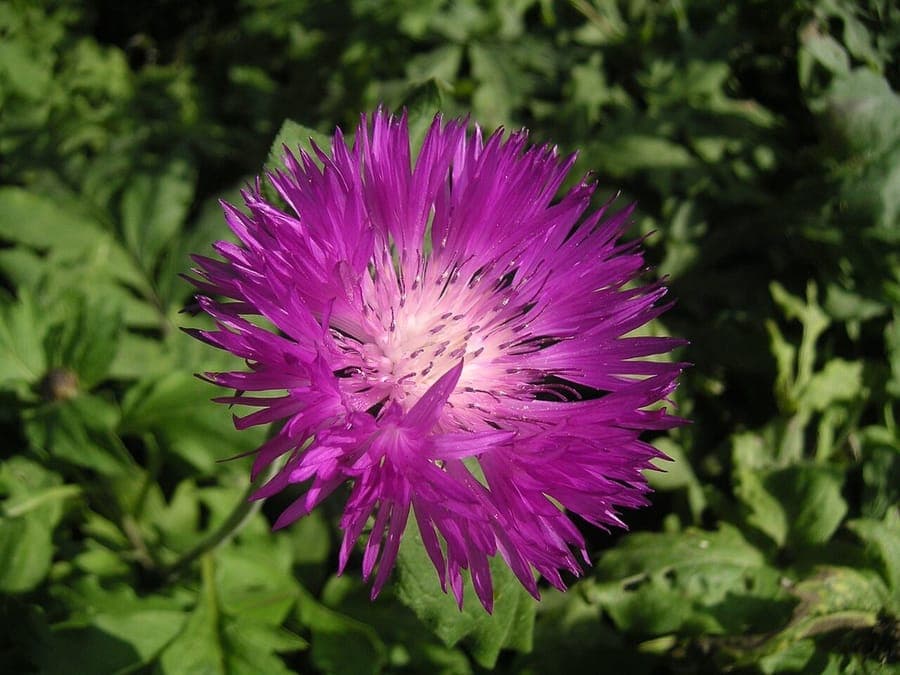
User:Carstor / CC BY-SA 3.0, via Wikimedia Commons
Persian cornflower (Psephellus dealbatus): growing guide
Psephellus dealbatus
Want to see Persian cornflower (Psephellus dealbatus): growing guide in your garden?
Full design in HD: €7.99
Look after your Persian cornflower with the GardenWorld app
Identify plants with your camera and get a care calendar with reminders for this plant.


Overview
Persian cornflower (Psephellus dealbatus) is a tough, old-fashioned border perennial that produces pink to purple flowers with a striking pale centre in early summer. Many nurseries still sell it under its former name, Centaurea dealbata, and the RHS also lists it as mealy centaury. Botanists have moved the species and a few relatives into the genus Psephellus, but for gardeners nothing changes: it remains an easy perennial in the daisy family (Asteraceae).
It comes from the Caucasus and north-eastern Turkey, where it grows in mountain meadows and woodland edges. That explains why it is so easy in gardens: it is very hardy, copes with some drought and asks for little. The species name dealbatus means "whitewashed" and refers to the undersides of the leaves, which are covered in white felt.
The plant forms a sturdy clump 50 to 80 cm tall in flower and around 50 cm wide. It spreads slowly by short rhizomes but is not invasive. The best-known cultivar is 'Steenbergii', with deeper carmine-pink flowers and slightly more vigorous growth. There are no known toxicity issues for people or pets, and it does not appear on the usual lists of poisonous garden plants. If you are planning a new sunny border, you can have a garden design made at gardenworld.app that places this cornflower among suitable neighbours.
Appearance and bloom cycle
The flower heads are 4 to 6 cm across and resemble those of the familiar cornflower, only larger. The outer florets are deeply cut and pink to lilac-purple; towards the centre they become paler and almost white, giving each head a glowing heart. The photo shows exactly that: a single large pink-purple flower head with finely cut outer florets and a white centre, set against green foliage. Beneath the head sits a rounded cup of bracts with papery, fringed edges.
The leaves are pinnately lobed, especially the large basal leaves, which can reach 30 to 40 cm. The upper surface is fresh green and the underside greyish-white and felted. Even out of flower, this finely cut foliage makes an attractive clump.
The main flowering period is June and July. If you cut back the faded stems after the first flush, a second, smaller show often follows in August or September. Bees, bumblebees and butterflies love the flowers, which also make good cut flowers. Seed heads left standing are visited by goldfinches in autumn.
Ideal location
Plant Persian cornflower in full sun or light partial shade. In a sunny spot it stays more compact and flowers most freely. In too much shade the stems become long and weak and flop over.
It suits a mixed border, a cottage garden or a naturalistic planting with grasses. Space plants about 40 to 50 cm apart, or plant in groups of three to five for a stronger effect. Because the flowering stems can splay after heavy rain, it helps to grow them among sturdy neighbours or to add a few low plant supports.
Soil requirements
Psephellus dealbatus is not fussy. Any ordinary, well-drained garden soil will do, from sandy to loamy. Moderately fertile ground is ideal; on very rich soil the stems grow too tall and less sturdy. It is happy from slightly acidic to chalky conditions.
What it really dislikes is wet soil in winter. On heavy clay that stays waterlogged, dig some coarse grit or gravel into the planting hole. Feeding is rarely necessary: a thin layer of compost in spring is enough.
Free preview
Want to see Persian cornflower (Psephellus dealbatus): growing guide in your garden? Make a free preview of your design.
Watering
After its first year, this cornflower needs little extra water. Its deep roots help it cope with short dry spells. Young plants do need regular watering during their first growing season, roughly once a week in dry weather, until they are well established.
During a long summer drought, a thorough soak at the base can prolong flowering. Water deeply and occasionally rather than little and often, and avoid wetting the leaves, which can encourage powdery mildew. No watering is needed in winter.
Pruning
After the first flush, cut faded stems back to just above the basal foliage. This keeps the plant tidy, limits self-seeding and encourages a second flush. If you want to leave seed heads for birds, remove only some of them.
In autumn or early spring, clear away the remaining dead leaves and old stems. For a more compact plant you can cut the stems back by about a third in late May; flowering will be slightly later, but the plant is less likely to flop.
Every three to four years the centre of the clump loses vigour. Lift the plant in spring or early autumn, divide it into pieces each with a few healthy shoots, and replant the younger sections.
Maintenance calendar
March-April: Remove old leaves and stems. Spread a thin layer of compost. Divide old clumps if needed.
May: Put supports in place if necessary. Shorten the stems if you want a more compact plant.
June-July: Main flowering. Cut flowers for the vase when the heads have just opened.
July-August: Cut back faded stems for a repeat flush. Water during long dry spells.
September: Smaller second flowering. A good time to plant or divide.
October-November: Leave seed heads for birds or tidy up.
December-February: Dormant period. No care needed.
Winter hardiness
Psephellus dealbatus is very hardy and tolerates temperatures down to about -30 °C (USDA zones 3 to 4). Across the UK and the Low Countries it survives every winter without protection. The top growth dies back in autumn and the plant reshoots from its rhizome in spring.
New plants are best set out in spring or in September, so they can root well before winter or the summer dry spell. You can also grow it from seed: sow in March or April in a cold frame or unheated greenhouse, or let the plant self-seed lightly. Seedlings of 'Steenbergii' do not always come true. Pests and diseases are rare; slugs sometimes nibble young shoots in spring, and a little powdery mildew may appear on the leaves in dry summers.
As with many mountain plants, the biggest danger is not cold but wet soil. In a well-drained spot it will give you years of pleasure. The plant calendar at gardenworld.app shows month by month the right times to cut back and divide perennials.
Companion plants
The pink-purple flowers of Persian cornflower look lovely with blue, white and silver. Catmint (Nepeta racemosa) and Salvia nemorosa flower at the same time and form a classic pairing with pink. Bloody cranesbill (Geranium sanguineum) covers the base of the plant and also blooms in early summer.
For a silver accent, place lamb's ears (Stachys byzantina) at the front, echoing the felted undersides of the cornflower's leaves. Yarrow (Achillea millefolium) in white or soft yellow adds a contrasting flat flower shape. In a naturalistic scheme, combine it with low ornamental grasses.
Final thoughts
Persian cornflower is a dependable perennial for any sunny border: hardy, undemanding and popular with bees and butterflies. Well-drained soil, a trim after flowering and occasional division are all that Psephellus dealbatus asks of you. In return, you get a fresh crop of pink-purple cornflowers with glowing white centres every summer.
Frequently asked questions about Persian cornflower
Is Persian cornflower winter hardy?
Psephellus dealbatus is very hardy and tolerates temperatures down to about -30 °C (USDA zones 3 to 4). Across the UK and the Low Countries it survives every winter without protection.
When and how do you prune Persian cornflower?
After the first flush, cut faded stems back to just above the basal foliage. This keeps the plant tidy, limits self-seeding and encourages a second flush.
How much water does Persian cornflower need?
After its first year, this cornflower needs little extra water. Its deep roots help it cope with short dry spells.
Where does Persian cornflower grow best?
Plant Persian cornflower in full sun or light partial shade. In a sunny spot it stays more compact and flowers most freely.
What soil does Persian cornflower need?
Psephellus dealbatus is not fussy. Any ordinary, well-drained garden soil will do, from sandy to loamy.

See it in your garden
See Persian cornflower in your garden
One photo of your garden and a few questions. You see the result in about a minute.
Try it with a photoIdentify this plant in your own garden. Identify a plant
Similar plants
Raceme catnip: complete guide
Nepeta racemosa
Nepeta racemosa, or raceme catnip, is a hardy perennial with soft lavender-blue flower spikes. Great for borders, low-maintenance beds, and pollinator gardens. Drought-tolerant and easy to grow.
Woodland sage: complete guide
Salvia nemorosa
Everything about Woodland Sage (Salvia nemorosa): planting, care, pruning and combinations. Expert tips for months of blue-violet flower spikes.
Bloody cranesbill: complete guide
Geranium sanguineum
Bloody cranesbill offers intense magenta-pink flowers and fall color. This hardy plant blooms tirelessly from May through October.
