
Primula incana: complete guide to silvery alpine primrose
Primula incana
Want to see Primula incana: complete guide to silvery alpine primrose in your garden?
1 minute, no credit card
Overview
Primula incana, commonly called silvery primrose or mealy primrose, is a charming miniature alpine native to subarctic North America. This dwarf perennial is distinguished by its exquisite, finely powdered (mealy) grey-green leaves and delicate white flowers. Unlike many other primulas, this species thrives in cool mountain environments and tolerates moister alpine conditions remarkably well. Reaching only 15 to 25 centimeters tall, it forms tight rosettes perfect for rock gardens and alpine troughs. On gardenworld.app, discover comprehensive guides for cultivating alpine plants and designing true mountain gardens.
This specialist plant rewards experienced growers with unusual, challenging varieties. With proper care, it also succeeds in lowland gardens, especially in cool-temperate climates with excellent air circulation.
Appearance and Bloom
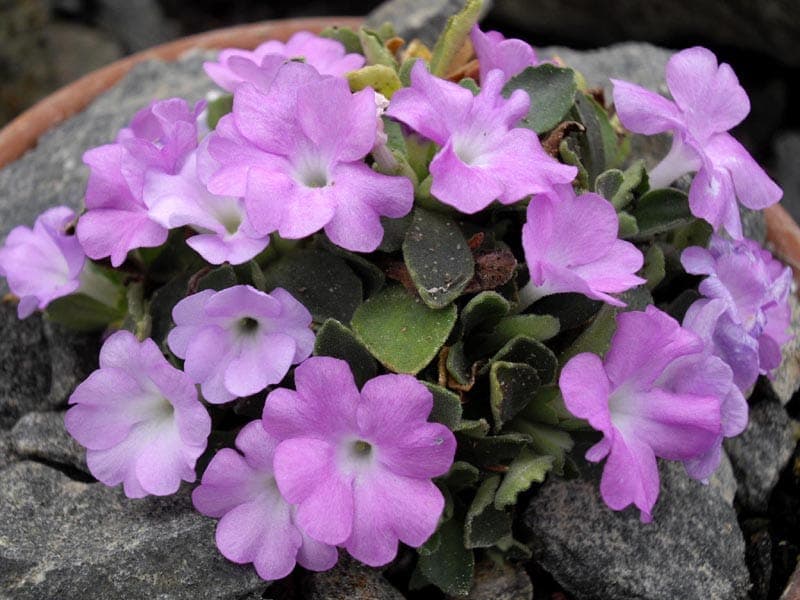
Primula incana forms compact rosettes of narrow, elongated leaves covered in a striking silvery, powdery coating (called farina). This mealy white waxy powder gives the plant a distinctive frosted appearance unlike other primula species. The leaves are grey-green and form tight cushions.
Flower stems rise erectly from the heart of each rosette, bearing 5 to 15 small white blooms. Each flower measures approximately 1 centimeter across with five rounded petals. Peak bloom occurs May through July, depending on altitude and local climate. Self-fertile seeds produce prolific self-seeding under ideal conditions.
Ideal Location
Primula incana thrives on alpine rock gardens in full sun to light shade. The plant demands cool conditions and dislikes hot, humid summers. In warm regions, afternoon shade is beneficial, especially in mid-summer peaks.
Excellent air circulation is absolutely essential; the plant cannot tolerate dense, humid, stagnant microclimates. Site it on exposed alpine troughs and raised beds where wind flows freely. Avoid low-lying, sheltered depressions.
Soil
This species is highly exacting about soil. It thrives only on extremely porous, well-draining alpine soil composed heavily of coarse mineral material. An ideal mix combines alpine grit, coarse sand, fine gravel, and light organic matter in a 7:2:1 ratio.
The pH should be neutral to slightly acidic (pH 6.0 to 7.0). Heavy clay, waterlogged alluvium, and nitrogen-rich garden soils are fatal to this plant. Avoid compost or rich amendments; poor, hungry soil is essential.
Watering
Primula incana requires regular watering during the growing season but absolutely no waterlogging. The highly porous mineral substrate should drain freely. Water whenever the soil surface feels dry to touch.
Avoid overhead watering and never wet the delicate, powdered foliage, as this encourages fungal issues. In winter dormancy, watering becomes minimal.
Pruning and Shaping
Primula incana requires no pruning. Remove only spent flower stems after bloom finishes. Never disturb or rub the silvery, mealy coating on leaves, as this damages the plant's distinctive appearance.
Allow self-seeded seedlings to establish unless self-seeding is unwanted, in which case remove seed capsules before maturation.
Maintenance Calendar
March-April: Weed carefully around young plants. Begin light watering as growth resumes. May-June: Water regularly. Enjoy delicate white flowers. Allow pollinators to work unmolested. July-August: Reduce watering as plants begin dormancy. Seed capsules ripen gradually. September-October: Minimize watering. Sow fresh seeds or store them cool and dry for spring sowing. November-February: Plant is completely dormant. Water only during extreme drought.
Free design
Want to see Primula incana: complete guide to silvery alpine primrose in your garden? Make a free design now.
Winter Hardiness
Primula incana is extremely cold-hardy, tolerating temperatures to -35 degrees Celsius without difficulty. However, it can struggle with wet winters in lowland regions. Excellent drainage is critical for overwintering success. In wet winter climates, a coarse gravel mulch helps shed excess moisture.
The plant thrives on elevated, well-ventilated sites where groundwater does not stagnate.
Companion Plants
Primula incana pairs beautifully with other alpine dwarf plants: Sempervivum, Sedum, Saxifraga, alpine Phlox, and Androsace. Silver-leaved plants like Artemisia stelleriana create striking contrast.
Plant in small groups within rock gardens to showcase its petite stature. Single specimens often lack visual impact.
Propagation
Primula incana propagates readily from seed or by careful division of established rosettes. Seed sowing is the most reliable method: collect the fine seed in July or August once capsules turn brown and split slightly. Sow fresh, since viability declines quickly in storage. Scatter seed over a mix of alpine grit and seed compost, cover barely, and keep in a cool, bright spot around 10 to 15 degrees Celsius. Germination typically takes three to six weeks and benefits from four to six weeks of cold stratification in the refrigerator beforehand.
Division works well on plants that have formed multiple rosettes after two to three years. Carry this out in March or September, avoiding periods of full bloom. Lift the clump gently, separate rosettes with a sharp knife, and ensure each division retains adequate roots. Replant immediately into a free-draining mix and keep lightly moist for the first weeks until new growth appears. Young plants from specialized alpine nurseries, often found through alpine garden societies, are usually a more reliable starting point than seed for beginning alpine gardeners, alongside named auricula relatives like Primula auricula 'Old Red Dusty Miller' that share the same farina charm. Specialist seed merchants such as Jelitto Staudensamen list wild-collected Primula incana seed lots most winters, which is worth checking before assuming propagation must start from a mature plant.
Pests and Diseases
Primula incana is generally trouble-free when growing conditions suit it, but a few issues deserve attention. Aphids may colonize young flower stems in spring; remove them with a gentle water spray or, for heavier infestations, an insecticidal soap based on potassium salts. Root aphids and vine weevil larvae can damage roots, especially in container culture; inspect the root ball if plants look unwell and treat with beneficial nematodes if needed.
Botrytis (grey mold) is the most serious threat and almost always results from overly humid, stagnant air around the leaf rosettes. Remove affected leaves immediately and improve air circulation around the plant. Slugs can strip young seedlings completely in early spring; protect seedlings with a fine grit mulch or a physical barrier. Visit gardenworld.app for more guidance on recognizing and preventing fungal problems in alpine perennials.
Final Thoughts
Primula incana is a specialist plant for alpine and mountain flora enthusiasts. Though more challenging than common garden primulas, it thrives for growers who provide excellent drainage and air movement. Seeds are available from specialized seed companies; young plants are rarely offered in commerce.
Interested in alpine gardening and mountain ecosystems? Visit gardenworld.app for complete guides on alpine flower cultivation and mountain garden design. Start by selecting proper sites and soil mixes, and you will succeed with this exquisite alpine gem.
Want to see Primula incana: complete guide to silvery alpine primrose in your garden? Make a free design now.
Upload a photo, pick a style, and get a photorealistic design with plant list in under a minute.
10,000+ gardens designed already
No credit card required


Similar plants
Mealy cowslip: complete guide
Primula pulverulenta
Grow the Mealy cowslip (Primula pulverulenta): striking candelabra flowers in red and purple tones, moisture-loving and ideal for shady, damp garden corners.
Cliff dwarf-primrose: complete guide
Androsace laevigata
Full guide to growing Androsace laevigata, a rare Pacific Northwest alpine cushion plant. Planting, care, and garden design tips explained.
Pyrenean snowbell: complete guide
Soldanella villosa
Complete guide to Pyrenean snowbell: moist acid soil, shade requirements, early spring blooms, winter hardiness and the best alpine companions.