
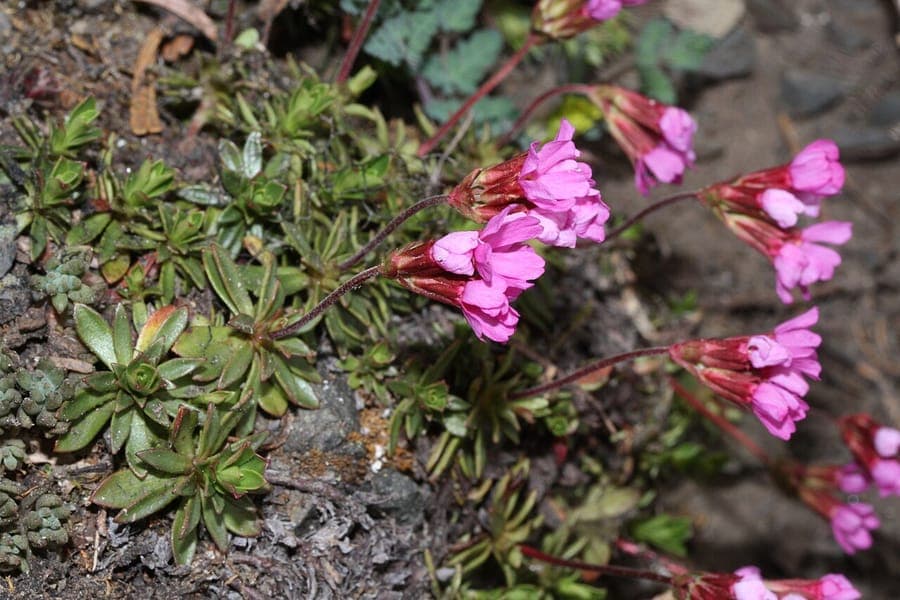
Walter Siegmund (talk) / CC BY-SA 3.0, via Wikimedia Commons
Cliff dwarf-primrose: complete guide
Androsace laevigata
Want to see Cliff dwarf-primrose: complete guide in your garden?
1 minute, no credit card
Overview
Androsace laevigata, commonly called Cliff dwarf-primrose or Cliff Douglasia, is a compact, cushion-forming alpine plant belonging to the primrose family (Primulaceae). Native to the rocky cliffs and ledges of the Pacific Northwest - from British Columbia in Canada through Washington and Oregon in the United States - this species occupies a very specific niche in both nature and the garden. It was first described by the botanist Asa Gray and later reclassified to its current position by the Norwegian botanist Per Wendelbo in 1961. Older botanical literature sometimes refers to it as Douglasia laevigata.
The genus Androsace contains over 150 species distributed primarily across the mountain ranges of Europe and Asia, making A. laevigata a distinctly North American representative. The species name 'laevigata' means smooth or polished, referring to the relatively hairless leaf surfaces that distinguish it from many of its fuzzier relatives within the genus.
For gardeners with an interest in alpine and rock garden plants, Cliff dwarf-primrose offers an outstanding combination of compact size, reliable spring flowering, and tolerance for lean, sharply drained conditions. Discover how to incorporate this specialist into your front garden design on gardenworld.app.
Appearance and bloom cycle
Androsace laevigata forms tight, dome-shaped cushions composed of small leaf rosettes. Individual leaves are lance-shaped to oval, typically 1 to 2 cm long, and noticeably smooth-textured - a key visual feature that helps identify the species. The foliage is a clean mid-green colour that remains attractive even outside the flowering season.
Flowering occurs from late spring to early summer, typically May through June. The flowers are carried on short, upright stems measuring 3 to 8 cm tall, rising directly from the leaf rosettes. Each flower head forms a small umbel - a characteristic shape within the Androsace genus - bearing five-petalled flowers in shades of pink to pale purple-pink with a white or cream eye at the centre.
The overall plant height rarely exceeds 8 to 10 cm, but a well-established mat can spread to 20 to 30 cm or wider over several years. The growth rate is moderate and expansion occurs via short stolons that produce new rosettes at their tips. After flowering, small seed capsules develop but the plant sets seed modestly under cultivation.
Ideal location
As a cliff-dwelling plant by nature, Androsace laevigata has clear preferences for its garden position. Full sun to light partial shade suits it best. Morning sun with some afternoon shelter during the hottest summer months gives an ideal balance, particularly in warmer or more continental climates.
In garden settings, the plant excels in rock gardens, raised beds, dry-stone walls, and alpine troughs or containers. The key requirement is excellent drainage combined with good air circulation around the foliage. Low-lying positions where cold, wet air collects, or spots near a downpipe where water splashes, should be avoided entirely.
A slightly elevated position on a south- or southwest-facing slope mimics the natural habitat most closely. On flat ground, raising the planting area with rocks or constructing a raised bed achieves the same effect. Good air movement around the rosettes is just as important as drainage, since still, humid conditions promote fungal diseases in dense cushion-forming plants.
Soil
Soil type is the single most important factor in the long-term success of Androsace laevigata. In nature, this species grows in mineral-rich, humus-poor substrates on cliff faces and rocky ledges where water drains away within minutes of rainfall. Replicating these conditions in the garden is the main challenge.
The ideal growing medium consists of approximately half coarse grit or fine gravel and half a lean, well-structured compost or loam. Avoid peat-based mixes, which compact over time and hold moisture poorly once they dry out. A soil pH of 6.0 to 7.8 is acceptable, though slightly acidic to neutral is preferred.
When planting in a rock garden, nestle the plant between rocks so that the root run extends into the cool, slightly moist layer beneath the stones while the crown remains elevated and dry. This combination of moist roots and dry crown is fundamental to the plant's natural biology. Garden centres in the UK and North America typically carry ready-made alpine or rock garden composts that serve as a sound base, topped up with extra perlite or coarse grit for additional drainage.
Avoid adding fertiliser or compost enrichments. Too many nutrients drive soft, lush growth that is far more vulnerable to frost damage and fungal problems.
Watering
Watering discipline is critical with Androsace laevigata. The species is well adapted to dry to moderately moist conditions and always tolerates drought better than wet feet. During the active growing season in spring and early summer, water when the top layer of growing medium has dried out completely - typically once a week in dry conditions, less often during periods of rainfall.
Avoid watering directly onto the leaf rosettes. Water sitting in the centre of a rosette, especially during cool or overcast weather, creates conditions ideal for bacterial soft rot or Botrytis. Always water at the base of the plant or use a drip system directed at the root zone.
From mid-autumn onward, progressively reduce watering as temperatures fall and the plant enters its dormant phase. During winter, natural rainfall in most North European gardens provides sufficient moisture for established plants in well-drained soil. In very wet winters, a pane of glass or a simple cloche positioned to deflect excess rain from the crowns can make a meaningful difference to winter survival.
Newly planted specimens benefit from regular watering in their first season to help establish a healthy root system, but should never sit in wet soil for extended periods. Once established, the plant is notably self-sufficient.
Free design
Want to see Cliff dwarf-primrose: complete guide in your garden? Make a free design now.
Deadheading and tidying
Androsace laevigata requires very little cutting or trimming. After flowering finishes in June or July, the spent flower stems can be snipped off as close to the rosette as possible. This keeps the plant looking tidy and prevents seed formation if vegetative spread is preferred.
In early spring, a gentle inspection of the cushion reveals any dead or winter-damaged rosettes. These can be carefully removed with fine scissors or tweezers. The goal is to improve air circulation through the cushion without disturbing healthy, growing rosettes. Aggressive cutting back or heavy trimming is counterproductive - this is a slow-growing plant that needs time to regenerate, and heavy-handed intervention can set it back significantly.
A light annual tidy-up in March or April is typically all that is needed: remove dead leaves, clear any moss or debris from the crown, and check that surrounding grit has not been washed away from around the root collar. This maintenance routine, taking no more than 15 minutes per plant, sustains vitality for many years.
Maintenance calendar
A year in the life of Androsace laevigata unfolds as follows:
February to March: Check for winter damage after hard frosts. Remove any clearly dead rosettes and ensure the grit layer around the crown is intact. Top up with fresh coarse grit if needed.
April to May: New growth resumes. Flower buds become visible. Water sparingly if the spring is dry. Do not fertilise. This is a good time to divide the plant if new specimens are wanted.
May to June: Peak flowering. Enjoy the display. Water at the base only. Avoid overhead irrigation. Take photos of your alpine trough for gardenworld.app to record the display.
July to August: Deadhead spent flower stems. Monitor for any signs of pests such as aphids on the developing seed heads. Water moderately if heat and drought persist.
September to October: Reduce watering. Mulch around (not over) the plant with coarse grit to maintain drainage and protect the root collar.
November to January: Dormant period. Minimal water. Protection from prolonged wet conditions with a cloche in particularly rainy winters.
Winter hardiness
Androsace laevigata is a reliably cold-hardy plant when given proper drainage. It tolerates temperatures down to approximately -15 degrees Celsius, placing it in USDA hardiness zone 5 or colder. For gardens across Northern Europe, including the Netherlands, Belgium, the UK, and northern Germany, this level of cold hardiness is more than sufficient for outdoor cultivation year-round.
As with most alpine cushion plants, the real threat in winter comes not from cold itself but from a combination of wet soil and mild temperatures - the classic enemy of high-altitude plants when they are brought to lower, wetter gardens. Cold, dry winters with sharp frosts cause far less damage than mild, persistently wet ones.
A generous layer of coarse grit spread over the soil surface around the plant is the single most effective winter protection measure. It keeps the crown dry, improves surface drainage, and helps prevent water from pooling against the root collar. In extreme cold snaps below -15 degrees Celsius, a loose covering of pine branches or horticultural fleece provides additional insulation. Remove any coverings promptly when warmer weather returns to prevent condensation and fungal build-up beneath.
Companion plants
Androsace laevigata works beautifully alongside other low-growing, drought-tolerant plants that share its preference for lean, well-drained soils. Good companions include:
Armeria maritima (sea thrift): the neat grass-like clumps and cheerful pink pompom flowers of sea thrift complement the Androsace cushion well. Both species thrive in similar poor, stony conditions.
Saxifraga species: the mossy and encrusted saxifrages are classic rock garden companions. Their diverse textures and early spring flowers create a varied and dynamic planting.
Sedum species: stonecrop relatives offer succulent texture, late colour, and an identical tolerance for dry, stony substrates. Sedum album and Sedum acre are particularly compatible.
Thymus serpyllum (creeping thyme): the fragrant purple carpet of creeping thyme weaves between rocks alongside the cushion of Androsace to great decorative effect.
Pulsatilla vulgaris (pasque flower): the large, silky purple flowers of pasque flower provide vertical drama above the low mats of Androsace in April and May.
Avoid large, vigorous companions that would shade out or outcompete the delicate cushion.
Closing thoughts
Androsace laevigata is a specialist plant for the dedicated alpine or rock garden enthusiast. Its small scale, clean appearance, spring flowers, and modest maintenance requirements make it a rewarding addition to troughs, rock gardens, raised beds, or dry-stone walls. The keys to success are consistent: sharp drainage, lean soil, restrained watering, and a position that keeps the foliage dry.
With these conditions met, this Pacific Northwest native rewards its grower with years of reliable flowering and a year-round cushion of attractive foliage. Explore complete alpine garden design ideas, including how to create a layered planting around specialist plants like this one, on gardenworld.app.
Want to see Cliff dwarf-primrose: complete guide in your garden? Make a free design now.
Upload a photo, pick a style, and get a photorealistic design with plant list in under a minute.
10,000+ gardens designed already
No credit card required


Similar plants
Alpine rock-jasmine: complete guide
Androsace alpina
Alpine rock-jasmine (Androsace alpina) is a delicate alpine plant with tiny pink flowers. Learn how to grow this jewel in your garden.
Marsh daisy: complete guide
Armeria maritima
How to grow Armeria maritima in UK and US gardens. Perfect for rockeries, dry borders, and coastal areas. Low maintenance and drought tolerant.