
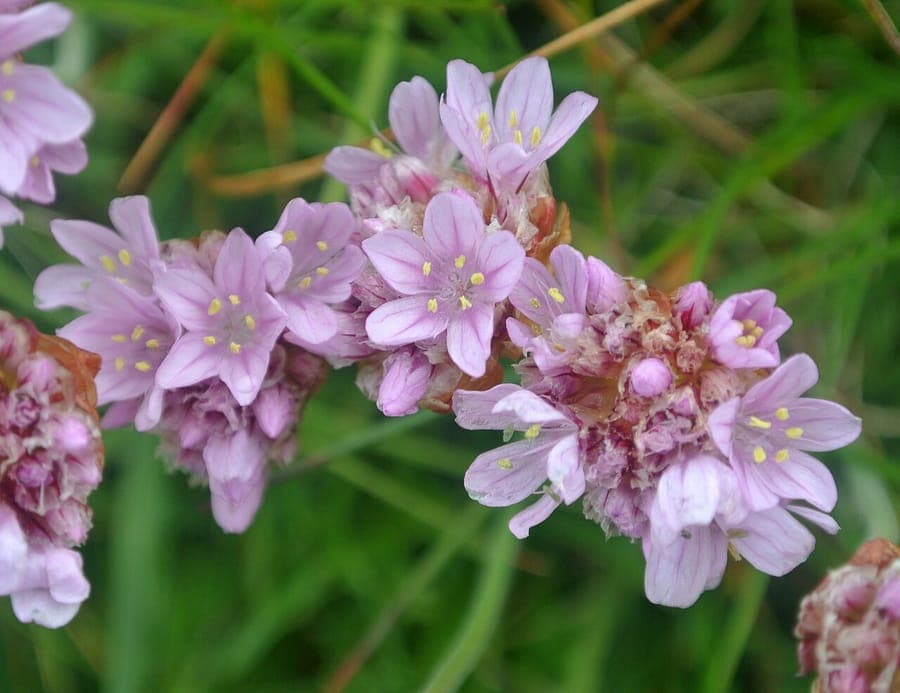
Wilson44691 / CC0, via Wikimedia Commons
Marsh daisy: complete guide
Armeria maritima
Want to see Marsh daisy: complete guide in your garden?
1 minute, no credit card
Overview
Marsh daisy, or Armeria maritima, is a rugged, compact perennial that thrives in tough garden spots where other plants struggle. Native to coastal cliffs, alpine zones, and sandy heaths across northern Europe and North America, it's adapted to wind, salt spray, and poor soils. In UK and US gardens, it's a go-to for rockeries, dry borders, and gravel gardens. Its neat habit and long-lasting blooms make it a quiet standout in naturalistic designs. Hardy, reliable, and insect-friendly - this is one of those plants that earns its place without demanding attention.
On gardenworld.app you can design a planting scheme that highlights Marsh daisy in dry, sunny areas with good drainage.
Appearance & bloom cycle
Armeria maritima forms tight, grass-like rosettes of dark green, linear leaves, growing 15–25 cm tall. From May to June, slender, leafless stems rise above the foliage, each topped with a dense, globe-shaped flower head in deep pink to purple - often described as pom-pom-like. Individual blooms last several weeks, and deadheading encourages a tidier look, though leaving seed heads provides winter interest. The foliage stays evergreen in mild winters, adding structure when little else is green.
Ideal location
This plant needs full sun - a solid 8 out of 10 on the light scale. Pick a south-facing slope, rock wall, or gravel path edge where sunlight hits all day. It won't thrive in shade or under tree canopies. It's especially effective in coastal gardens (zones 4–8) where salt and wind would kill less resilient plants. Avoid damp, sheltered corners - airflow is key to preventing fungal issues.
Soil requirements
Marsh daisy doesn't need fertile soil. In fact, rich compost or manure leads to floppy growth and fewer flowers. It prefers lean, sandy, or gritty soils with excellent drainage and a pH between 4.7 and 7.5. It tolerates alkaline conditions well. If planting in clay, raise the bed and mix in sharp sand or grit. A 50:50 blend of topsoil and horticultural grit works perfectly. Avoid water-retentive mulches like bark - use gravel instead to keep the crown dry.
Watering
Once established, Armeria maritima is highly drought tolerant. Water young plants weekly during their first spring and early summer. After that, rainfall is usually sufficient. Overwatering is the main cause of failure - soggy soil leads to crown rot. Let the soil dry out between waterings. In extended dry spells, a deep soak every 2–3 weeks is enough. Never let it sit in waterlogged conditions.
Free design
Want to see Marsh daisy: complete guide in your garden? Make a free design now.
Pruning
Pruning is minimal. Snip off spent flower stems after blooming to keep the plant looking tidy and prevent self-seeding. You can leave them for winter texture if preferred. Remove any brown or damaged foliage with sharp scissors, but avoid cutting into the woody base - recovery is slow. Don't shear the plant hard; it won't bounce back like a herbaceous perennial.
Maintenance calendar
- Jan: Check for frost heave; gently press down any lifted plants.
- Feb: No action needed.
- Mar: Clear away any matted debris; inspect for new growth.
- Apr: Prepare for growing season; lightly groom foliage.
- May: Bloom begins; watch for aphids on new stems.
- Jun: Peak flowering; deadhead as needed.
- Jul: Drought tolerant; no watering required.
- Aug: Maintain spacing; avoid overhead watering.
- Sep: Divide or transplant in early autumn if clumps get woody.
- Oct: Lift and divide mature plants; improve drainage if needed.
- Nov: Leave seed heads for winter interest and bird food.
- Dec: Protect from wet feet; ensure good airflow.
On gardenworld.app you can generate a seasonal care plan tailored to Marsh daisy's needs.
Winter hardiness
Hardy in USDA zones 4–8, Armeria maritima handles cold winters well, surviving down to -34°C. The real threat isn't cold - it's wet soil. In areas with heavy winter rain, ensure sharp drainage. Avoid organic mulches that hold moisture. A thin layer of gravel around the base keeps the crown dry and looks natural in rock gardens.
Companion plants
Pair Marsh daisy with other drought-tolerant, sun-loving plants like Sedum spectabile, Thymus serpyllum, Eryngium, or Carex species. The purple blooms contrast beautifully with silver foliage from Artemisia or Stachys. Plant it between stones or along path edges where it can form soft mounds. Avoid aggressive spreaders like mint or ground elder that can smother its rosettes.
Closing
Marsh daisy is a quiet achiever - unassuming but essential. It fills gaps in dry, sunny spots with grace and resilience. It asks for little and gives back with months of bloom and habitat for pollinators. Available at garden centres across the UK and US, including independents and chains. Look for healthy, compact plants with no yellowing leaves. With good drainage and full sun, it'll return reliably for years. For best results, plan its placement on gardenworld.app alongside other low-water perennials.
Want to see Marsh daisy: complete guide in your garden? Make a free design now.
Upload a photo, pick a style, and get a photorealistic design with plant list in under a minute.
No credit card required


Similar plants
Limonium brassicifolium: complete guide
Limonium brassicifolium
Full guide to growing Limonium brassicifolium: ideal site, soil, watering and care tips for this rare Canary Islands sea lavender.
Many-headed Thrift: complete guide
Armeria multiceps
Full guide to Armeria multiceps, the Corsican many-headed thrift: pink globe flowers, dry rock garden culture, soil, care, and companion planting.
Spiny Thrift: complete guide
Armeria pungens
Everything about Armeria pungens: location, soil, care and planting combinations for this robust Mediterranean coastal plant.