
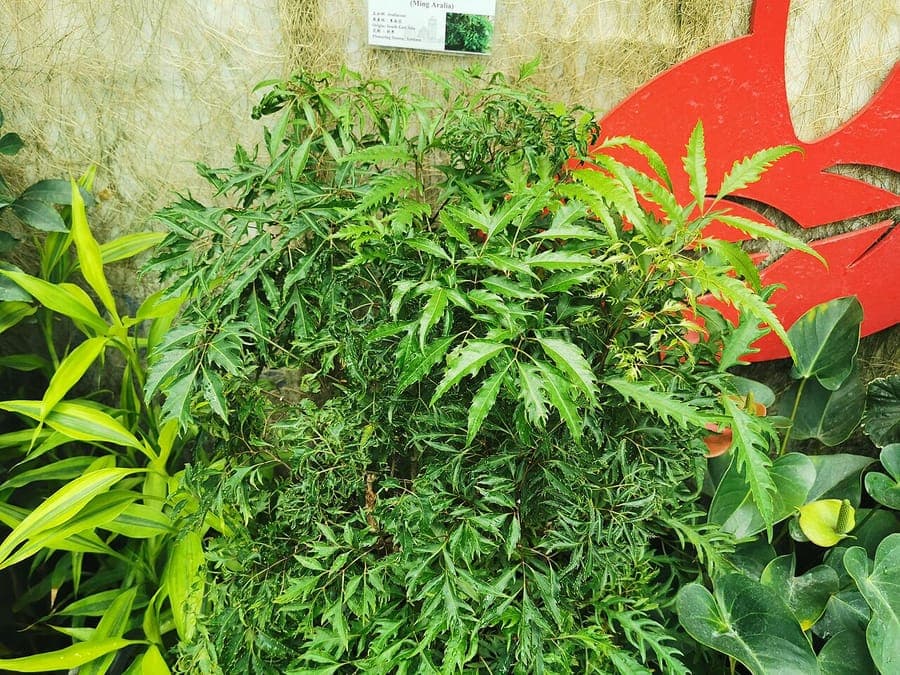
Ahmed / CC BY-SA 4.0, via Wikimedia Commons
Polyscias fruticosa: complete guide
Polyscias fruticosa
Want to see Polyscias fruticosa: complete guide in your garden?
1 minute, no credit card
Overview
Polyscias fruticosa, better known as Ming Aralia or Happiness Tree, is a tropical shrub native to Southeast Asia and the Pacific. In its natural habitat it grows as a multi-stemmed shrub reaching 4-5 meters. In gardens and greenhouses, it fascinates through artfully divided, red-yellow-green foliage that constantly changes color. The diversity of leaf colors makes every botanical leaf unique, transforming Polyscias fruticosa into living artwork. For tropical gardeners and greenhouse enthusiasts, this is a must-have specimen.
Appearance and Bloom
Ming Aralia is characterized by heavily divided, lacey leaves that can vary from green to red to yellow depending on light and growing conditions. Leaves are 10-20 cm long and intricately textured. The plant grows in an open, multi-branched structure that can appear somewhat unruly without guidance. Flowers are modest: small, creamy flower clusters appear in late summer, but they are not spectacular. The plant may lose some leaves annually under stress, which is normal.
Ideal Location
Polyscias fruticosa thrives in warm, brightly lit locations. Ideally at least 6-8 hours of bright light daily, without direct hot afternoon sun. In greenhouses, position near the glass but protected from extreme mirror heat effects. This is strictly a greenhouse or tropical interior plant; outdoors it only grows in extreme tropical climates. Regular air circulation and humidity levels of 50-70% are essential for healthy growth. Avoid drafty locations.
Soil
Polyscias fruticosa grows best in nutrient-rich, well-draining soil. A mix of general potting soil (50%), peat (30%) and perlite (20%) provides ideal conditions. Add slow-release fertilizer at planting time. Soil pH should range 6.0-7.0. For container cultivation, specialized tropical plant mixes are available that work well for this species. Ensure the pot has drainage holes to prevent waterlogging.
Watering
Keep soil evenly moist but not waterlogged. Water when top 2 cm of soil feels dry. During growth period (May-September) water more; in winter less. Regular misting of foliage helps prevent leaf drop and supports healthy growth. Use soft, non-limey water; hard water can cause leaf problems. In dry rooms or greenhouses, mist daily.
Free design
Want to see Polyscias fruticosa: complete guide in your garden? Make a free design now.
Pruning
Polyscias fruticosa responds well to regular pruning for dense, shapeable growth. Prune young wood in spring (March-April) for more compact forms. Remove lower side branches to encourage volume in the upper portions. The plant enjoys shaping, so experiment with forms. Slow-growing young specimens may initially appear unruly; with patience and pruning you'll be rewarded with a beautifully formed plant.
Maintenance Calendar
March-April: prune for compactness, refresh soil for older specimens. May-June: growth period begins, water weekly, feed biweekly. July-September: warm season, frequent water, daily misting. October: growth slowing, reduce watering, reduce feeding. November-February: dormancy, minimal water, no feeding, ensure adequate light. May-September: monthly feeding for healthy growth.
Winter Hardiness
Polyscias fruticosa is very frost-sensitive and must never be exposed to temperatures below 10 degrees Celsius. Ideal temperature range is 18-25 degrees Celsius. This is why the plant is only suitable for heated greenhouses or tropical interiors. Even brief cold exposure can cause leaf drop. In winter, ensure the plant stays in a warm location away from drafty doors and windows.
Companion Plants
In greenhouses, Ming Aralia combines well with other tropical plants:
- Anthurium species - red flowers, tropical feel
- Calathea species - beautiful foliage, moisture-loving
- Monstera deliciosa - large leaves, architectural
- Ficus benjamina - compact green, moderate moisture
- Passiflora edulis - climbing vine, flowers and fruit
Conclusion
Polyscias fruticosa is a fascinating plant for greenhouse enthusiasts and tropical gardeners. The constantly changing leaf colors and divided structure provide constant visual interest. Provide warmth, humidity, frequent misting and patient shaping, and you'll get a spectacular plant that becomes more beautiful each year. Available through specialized greenhouse plant suppliers and tropical garden centers. Online tropical plant suppliers are usually more reliable sources.
With proper care and patience, your Ming Aralia will grow into a stunning specimen that brings years of botanical beauty to your greenhouse or warm room.
Want to see Polyscias fruticosa: complete guide in your garden? Make a free design now.
Upload a photo, pick a style, and get a photorealistic design with plant list in under a minute.
No credit card required


Similar plants
American marsh pennywort: complete guide
Hydrocotyle americana
Everything about Hydrocotyle americana: location, soil, moisture and winter care. A delicate groundcover for shaded pond edges and boggy garden borders.
Devil's club: complete guide
Oplopanax horridus
Full guide to growing Oplopanax horridus: ideal site, soil, watering, and care for this dramatic spiny woodland shrub.
Water pennywort: complete guide
Hydrocotyle umbellata
Everything about Hydrocotyle umbellata: ideal location, soil, watering, winter care and pond planting. A versatile aquatic plant for garden ponds and boggy spots.