
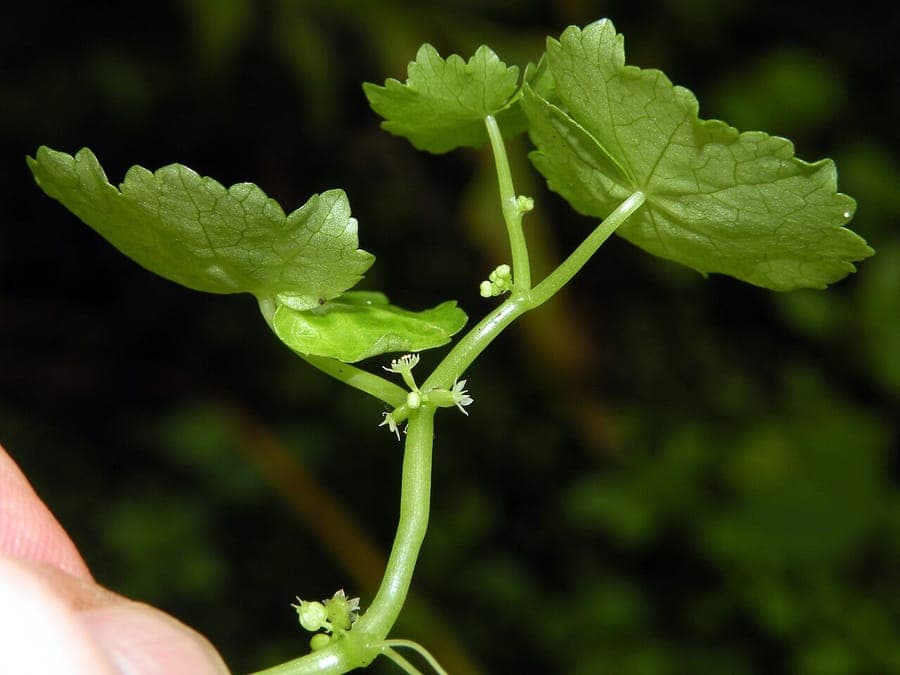
Doug McGrady from Coventry, RI, USA / CC BY 2.0, via Wikimedia Commons
American marsh pennywort: complete guide
Hydrocotyle americana
Want to see American marsh pennywort: complete guide in your garden?
1 minute, no credit card
Overview
Hydrocotyle americana, known as American marsh pennywort or American water pennywort, is a delicate and unassuming aquatic perennial in the family Araliaceae. First described by Linnaeus in his 1753 Species Plantarum, the species is native to a broad arc of eastern North America - from the Maritime Provinces of Canada (New Brunswick, Nova Scotia, Prince Edward Island, and Quebec) south through New England, the Mid-Atlantic states, and the Appalachian highlands to the Carolinas and Tennessee. Naturalised populations have also been recorded in New Zealand.
Within the genus Hydrocotyle, which includes over 100 species worldwide, H. americana stands out for its preference for shaded, permanently wet habitats. In its native range, the plant grows along streambanks, in fen and bog margins, in wet forest floor communities, and in shallow marshes - typically in partial to full shade under deciduous trees or tall shrubs. This habitat preference makes it distinctly different from the more sun-tolerant Hydrocotyle umbellata, with which it is sometimes confused.
For the garden, American marsh pennywort is an excellent choice for moist, shaded corners that are difficult to plant attractively. Its creeping stems root at every node, forming a neat, weed-suppressing mat of round green leaves that gives a natural, lush appearance to wet spots beside ponds, streams, or in bog gardens. Explore how plants like this one transform shaded water edges at gardenworld.app.
Appearance & bloom cycle
The leaves of Hydrocotyle americana are the plant's defining feature. They are nearly circular to kidney-shaped, with a gently scalloped or lobed margin, and range from 1 to 4 cm in diameter depending on growing conditions. The upper surface is a fresh, light green with a subtle shine. A key identification detail distinguishes this species from Hydrocotyle umbellata: the leaf stalk attaches at the margin of the leaf rather than at its centre, giving the leaf a slightly offset appearance rather than the parasol-like silhouette of the closely related species.
The plant spreads by creeping stems that root freely at every node as they move across the soil surface. This growth habit allows it to cover ground rapidly and form dense, overlapping mats. The stems are thin and fragile, and the whole plant has a delicate, almost translucent quality in shaded situations.
Flowers are extremely small and not showy in the traditional ornamental sense. They are white to pale yellowish-white and held in tiny umbels of typically three to five flowers per stem, rising just above the leaf mat. Each flower is only a few millimetres across. Blooming typically occurs in June and July, though the precise timing depends on local conditions. The flowers do attract small beneficial insects including hoverflies and parasitic wasps. After flowering, small, flattened fruits develop that disperse by water and small mammals.
The plant is a perennial. Above-ground growth dies back in frost, but the rhizomes and buried stem bases survive the winter and regenerate vigorously from stored energy when temperatures rise in spring.
Ideal location
American marsh pennywort has clear and specific requirements for its growing site. Unlike many aquatic and marginal plants that thrive in full sun, this species genuinely prefers partial to full shade. In nature, it grows under the canopy of riparian woodland, receiving filtered light but rarely direct sun. In the garden, this means a position on the north or north-east side of a pond, in the shade of overhanging shrubs or trees, or in a naturally shaded wet corner.
Permanent soil moisture is non-negotiable. Even brief drying of the soil surface causes rapid wilting of the delicate leaves. A position where the water table remains within a few centimetres of the surface throughout the year is ideal. The plant is well suited to the margins of natural ponds, the banks of garden streams, and wet, shaded spots that drain too slowly for most ornamental plants.
Full sun is not suitable for this species. Direct sunlight causes leaf scorch quickly, and the plant's relatively low drought tolerance compared to more sun-adapted aquatic plants means it struggles to recover from heat stress in exposed positions.
Soil requirements
Hydrocotyle americana prefers light, humus-rich soil that remains permanently moist to waterlogged. A slightly acidic to neutral pH between 5.5 and 7 is acceptable. Heavy clay is less suitable unless it is consistently saturated, as compaction can cause anaerobic conditions in the deeper root zone that damage the rhizomes.
For pond-edge planting: use a clay-based pond substrate topped with a thin layer of coarse sand or fine pond gravel. The plant roots excellently in shallow water up to about 5 cm above the root level. Deeper water should be avoided as the stems become excessively elongated and the plant loses its competitive compact form.
For bog garden or shaded border use: incorporate generous amounts of well-rotted garden compost or leaf mould into the soil. The organic matter helps retain moisture and keeps the soil structure open enough for good root development despite the constantly wet conditions. A mulch of leaf mould or bark chips 5 to 8 cm deep around the plants helps maintain moisture and moderate soil temperature.
Specialist bog plant or moisture-retentive compost mixes, available at most garden centres, provide a ready-to-use substrate that matches the plant's requirements well.
Free design
Want to see American marsh pennywort: complete guide in your garden? Make a free design now.
Watering
As a true wetland plant, Hydrocotyle americana needs permanently moist soil. When grown at a pond edge or in a bog garden with a reliably high water table, no additional watering is usually needed. However, during dry summer spells, even a well-established bog garden can lose moisture rapidly, particularly in warm weather. Monitor the moisture level regularly and water thoroughly if the surface soil feels dry to the touch even 1 to 2 cm below the surface.
For plants growing as groundcover in a shaded border away from standing water, consistent supplemental watering is essential. In warm, dry periods, watering two to three times per week may be necessary. Check soil moisture by pressing a finger into the soil - the top 2 cm should feel damp at all times. Applying a mulch layer of 5 to 8 cm of leaf mould or composted bark around the plants reduces surface evaporation significantly and cuts the need for frequent watering.
In winter, water requirements decrease as the plant enters dormancy. However, the root zone should not be allowed to dry out completely. In frost-free periods during winter, water once every two to three weeks to keep the soil slightly moist.
Pruning
American marsh pennywort needs very little active pruning. The plant self-manages to a large extent: older stems die off naturally while new ones are produced continuously during the growing season. The main maintenance task is trimming back wandering stems that stray beyond the intended planting area. The thin stems are easily cut with scissors or a sharp knife - avoid pulling, which can disturb the shallow root system and tear out sections of the planting.
In early spring (late March to early April), remove any dead or damaged stems from the previous season before new growth begins. This gives the plant a clean start and reduces the risk of disease or pest harbour in the dead material. In autumn, you can leave the dying stems in place as they provide a light natural mulch that protects the overwintering rhizomes.
To propagate the plant, simply take stem cuttings with one or two nodes and press them into moist soil. They root within a week and can be used to establish new planting areas quickly, or to share with fellow gardeners.
Maintenance calendar
January to February: Plant is dormant. Ensure the soil or water level remains adequate. In severe frost, protect the root zone with a covering of straw or dry leaves 10 cm deep.
March: First new shoots appear as temperatures rise. Remove dead stems from the previous season. Apply a thin top-dressing of leaf mould or compost to enrich the soil surface.
April: Regrowth accelerates. Check that the planting site has adequate moisture and that invasive weeds are not colonising the area. Take cuttings for propagation if desired.
May: Active growth. Monitor spread weekly. Increase watering frequency if the weather is warm and dry.
June to July: Flowering period and peak growth. Maintain mulch layer in warm weather. Trim wandering stems that exceed the planting boundary.
August to September: Growth slows gradually. Monitor soil moisture carefully during late summer heat. Check for any pest or disease issues.
October to November: Above-ground growth dies back. Leave old stems on the ground as a light mulch for the overwintering rhizomes.
December: Winter dormancy. Minimal maintenance. Monitor for frost protection needs.
Winter hardiness
Hydrocotyle americana is naturally adapted to the cold winters of eastern North America, including the harsh winters of New England, Quebec, and the Appalachian highlands. It is reliably hardy to USDA zones 4 to 9, making it an excellent choice for most of western Europe, including the UK, the Benelux, and northern France, which fall in USDA zones 7 to 8.
Above-ground growth will die back completely in frost. The rhizomes and buried stem bases survive the winter, however, and regenerate strongly in spring. In pond-edge conditions, the root zone is protected by the surrounding water mass, which freezes much more slowly than air temperature would suggest and rarely reaches the deeper substrate levels where the roots are anchored.
In severe winters with sustained temperatures below -15 degrees Celsius, protect plants growing in bog beds or border conditions with a mulch layer of 10 to 15 cm of straw or dry leaves. Container-grown plants are more vulnerable and should be moved to an unheated but frost-free location if temperatures are expected to drop below -10 degrees Celsius for extended periods. Visit gardenworld.app for further guidance on selecting and caring for pond-edge plants in the European climate.
Companion plants
Hydrocotyle americana associates naturally and attractively with plants that share its love of shade and permanent moisture:
-
Carex pendula (pendulous sedge): a graceful, arching sedge that thrives in the same wet, shaded conditions. Its tall, drooping seed heads provide a strong vertical element against the low-growing pennywort mat.
-
Caltha palustris (marsh marigold): an early-blooming native of wet habitats, producing brilliant yellow flowers in March and April. Its bold flowers and foliage complement the delicate, round leaves of the pennywort at the pond margin.
-
Lysimachia nummularia (creeping Jenny): another round-leaved creeping plant that thrives in moist shade. The two plants combine into a natural-looking mat, and the golden-yellow flowers of Lysimachia add a colour accent from June to August.
-
Mimulus guttatus (monkey flower): an attractive bloomer with showy yellow flowers from June to August, growing happily in the same wet, semi-shaded conditions. Adds vertical interest above the pennywort carpet.
-
Filipendula ulmaria (meadowsweet): a stately native plant with fragrant white plume flowers in June and July, suited to wet soils. Its airy, tall flower heads rise well above the ground-hugging pennywort, creating a layered planting.
Space companion plants 20 to 30 cm from the pennywort, and monitor each spring to ensure a good balance is maintained as the plants establish.
Conclusion
American marsh pennywort (Hydrocotyle americana) is a quiet, refined plant that earns its place in any garden with a wet, shaded spot to fill. Its round, fresh-green leaves bring a natural, lush feel to pond edges, stream banks, and boggy borders, while its low maintenance requirements - once moisture is maintained - make it a practical choice for the ecologically minded gardener. Hardy, attractive, and easy to propagate, this pennywort species is a rewarding addition to the water garden palette.
Want to see American marsh pennywort: complete guide in your garden? Make a free design now.
Upload a photo, pick a style, and get a photorealistic design with plant list in under a minute.
10,000+ gardens designed already
No credit card required


Similar plants
Devil's club: complete guide
Oplopanax horridus
Full guide to growing Oplopanax horridus: ideal site, soil, watering, and care for this dramatic spiny woodland shrub.
Water pennywort: complete guide
Hydrocotyle umbellata
Everything about Hydrocotyle umbellata: ideal location, soil, watering, winter care and pond planting. A versatile aquatic plant for garden ponds and boggy spots.
Aralia hispida: complete guide
Aralia hispida
Bristly sarsaparilla: native North American shrub with white flowers and black berries. Shade specialist.