
Ranjith-chemmad / CC BY-SA 4.0, via Wikimedia Commons
Water pennywort: complete guide
Hydrocotyle umbellata
Want to see Water pennywort: complete guide in your garden?
1 minute, no credit card
Overview
Hydrocotyle umbellata, commonly known as water pennywort or manyflower marshpennywort, is a fascinating aquatic plant in the family Araliaceae. Native to the Americas, from Florida and Louisiana through Mexico and the Caribbean down to Ecuador, Bolivia, Paraguay, and beyond, this species has a vast natural range that testifies to its remarkable adaptability. Botanist Linnaeus formally described it in 1753, making it one of the older species in European botanical literature.
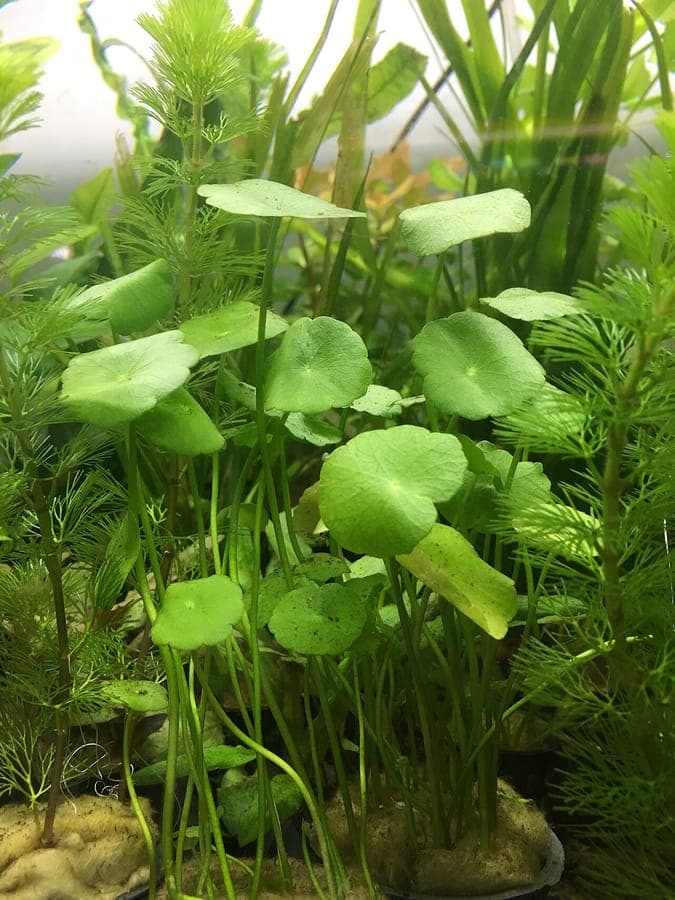
In garden settings, water pennywort has gained significant popularity as an ornamental marginal plant for garden ponds and water features. The glossy, round to kidney-shaped leaves that float elegantly on the water surface or emerge just above it create a carpet of fresh green that is hard to match for visual appeal. At the same time, the plant provides an ecological service: like many aquatic plants, it absorbs excess nutrients from the water, helping to suppress algae and maintain water clarity.
Beyond pond margins, Hydrocotyle umbellata can also serve as a fast-spreading groundcover in wet, boggy corners of the garden where other plants struggle. Its creeping stolons root at every node, forming dense mats within a single growing season. This growth habit makes it excellent for stabilising the banks of natural ponds or streams where erosion can be a problem.
For gardeners planning a new water feature or looking for a plant to fill a persistently wet area, water pennywort deserves serious consideration. Visit gardenworld.app to explore how aquatic plants like this one fit into a balanced, modern garden design.
Appearance & bloom cycle
The leaves of Hydrocotyle umbellata are its most distinctive feature. They are perfectly round to slightly kidney-shaped, with a shiny, bright green upper surface and a pale green underside. Diameter ranges from 2 to 6 cm, varying with growing conditions, water temperature, and nutrient availability. The petiole (leaf stalk) attaches at the centre of the leaf, giving each leaf a parasol-like appearance - hence the informal name 'dollarweed' referring to both the round shape and the coin-like appearance.
Flowering occurs from June through September. The flowers are small and white, carried in compact umbels (hence the species name umbellata) that rise just above the water or ground surface. Individual flowers are only a few millimetres across, but they are numerous and regularly arranged, creating a delicate display. After flowering, small, flattened fruits develop that disperse by water and by animals, explaining the plant's wide natural distribution.
The growth habit is strongly creeping and horizontal. Stolons can extend 30 to 60 cm in a single season, rooting at every node. In warm summers with ample moisture, this spread can be impressive - something to account for when planning the plant's position in the garden. The dense mat suppresses most competing vegetation, which is both an advantage and something to manage responsibly to prevent the plant from becoming dominant.
In autumn, growth slows as temperatures drop. The above-ground parts die back partially or fully in colder climates, but the root system remains active, and the plant regrows vigorously from stored energy in spring. In mild winters such as those increasingly common in the UK and western Europe, some foliage may persist year-round.
Ideal location
As a true aquatic and marginal plant, Hydrocotyle umbellata has clear preferences for its growing environment. It thrives best in shallow water or at the permanently moist edge of a pond, where roots can be in water or saturated soil. Ideal water depth ranges from 0 to 15 cm above the root level. Deeper water is possible - the plant can float freely - but rooted growth in shallow water is more stable and vigorous.
Light requirements are flexible: the plant tolerates full sun to partial shade. In full sun, growth is faster and flowering more profuse, but in hot summers some afternoon shade reduces water stress and prevents the delicate leaf stalks from wilting. A position on the north-east or north-west side of a pond, receiving morning or evening sun with midday shade, often gives excellent results.
Shelter from strong winds is beneficial. The long, slender petioles are somewhat fragile, and persistent wind can cause physical damage. A position with some wind protection - perhaps near a fence, a hedge, or larger shrubs - helps the plant maintain its attractive form throughout the season.
Soil requirements
The soil requirements of Hydrocotyle umbellata reflect its wetland origins. It performs best in light, humus-rich soil that remains permanently moist or waterlogged. The ideal pH range is 5.5 to 6.5 - slightly acidic to neutral. At pH 7 or above, the plant frequently shows chlorosis and reduced vigour.
For pond basket planting, use dedicated aquatic compost, available from most garden centres. Regular potting compost is unsuitable: its fibrous content floats when submerged, clouds the water, and lacks the weight needed to keep the basket stable. Aquatic compost provides the right nutrient balance without releasing excessive nutrients into the pond water.
For bog garden or groundcover use in moist garden beds, a mixture of 2 parts peat (or peat-free acid compost), 2 parts loam, and 1 part coarse sand works well. This provides moisture retention, structural stability, and sufficient drainage to prevent complete anaerobic conditions in the root zone. Incorporate a slow-release fertiliser at planting time, and top-dress annually in spring with a thin layer of compost.
Free design
Want to see Water pennywort: complete guide in your garden? Make a free design now.
Watering
When grown in a pond or bog garden with a permanently high water table, Hydrocotyle umbellata needs no additional watering. The challenge in these settings is rather maintaining the correct water level. During dry summers, shallow ponds can lose significant water to evaporation, leaving roots exposed. Monitor the water level regularly and top up as needed to maintain at least 2 to 5 cm of water above the roots.
When used as a groundcover in a moist garden bed away from the pond, regular watering is essential. The soil must never dry out completely. During warm, dry spells, watering two to three times per week may be necessary. Applying a mulch layer of 5 to 8 cm of bark chips or leaf mould around the plants helps retain soil moisture and keeps the root zone cool.
In winter, water requirements decrease significantly. However, even dormant plants should not be in completely dry soil. In frost-free periods, water once every two weeks to keep the root zone slightly moist.
Pruning
Hydrocotyle umbellata requires minimal pruning. The main maintenance task is containing the plant's spread. Once established, it can expand rapidly via its stolons and may crowd out neighbouring plants if not managed. Remove excess stolons at the edges of the planting in mid-spring and early autumn to keep the plant within its designated area.
In early spring (late March to early April), remove any damaged or dead stems from the previous season. This encourages the plant to direct energy into fresh new growth. Spent flower heads can be removed after blooming in late summer if you wish to limit self-seeding, though the plant rarely becomes invasive in cool European climates.
For plants growing in aquatic baskets: every two years, lift the basket, remove half the root mass, and replant the healthier half in fresh aquatic compost. This prevents congestion and maintains vigorous growth. If the plant has escaped the basket and is rooting in the pond sediment, trim back any stolons that have strayed beyond the intended area.
Maintenance calendar
January to February: Plant is dormant or near-dormant. Check that the pond water level is adequate and that the water surface is not completely frozen. In severe frost, protect the pond and root zone.
March: Remove dead or damaged stems from the previous season. First new leaves appear when soil temperatures exceed 8 °C.
April: Regrowth accelerates. Check pond water pH and top up nutrients if needed. This is also a good time to divide and propagate the plant by potting up rooted stolons.
May: Active growth. Monitor the rate of spread weekly and contain if necessary. Begin regular watering for any groundcover plants outside the pond.
June to August: Flowering period. Maintain water levels during dry spells. Remove faded flower heads if a tidy appearance is desired.
September: Growth slows. Reduce watering gradually. Cut back excess stolons to confine the plant.
October to November: Cut back and prepare for winter. Mulch any plants growing in bog beds.
December: Minimal maintenance. Monitor frost conditions.
Winter hardiness
Hydrocotyle umbellata has moderate winter hardiness, suitable for USDA zones 6 to 10 in its typical garden applications. In European terms, this corresponds to most of France, the Benelux, and western Germany, where winters rarely dip below -15 °C for extended periods.
Plants growing in ponds deeper than 60 cm are well protected: the water insulates the roots from freezing even when air temperatures drop sharply. In shallow ponds or bog beds, the risk of root damage increases in severe winters. Applying a thick mulch layer of straw or dried leaves (10 to 15 cm) over the root zone provides effective insulation down to approximately -10 °C.
In climates with harsh winters (sustained temperatures below -15 °C), it is advisable to overwinter container-grown plants indoors in a frost-free, bright location, keeping the soil moist but not waterlogged. Alternatively, divide and pot up a small portion of the plant as insurance against winter loss, keeping it in a cool greenhouse or on a bright windowsill until spring.
Companion plants
Hydrocotyle umbellata associates beautifully with a range of aquatic and marginal plants that share similar moisture requirements:
-
Iris pseudacorus (yellow flag iris): the upright, golden-yellow flowers in May and June provide striking vertical contrast to the low, round-leaved carpet of pennywort. Hardy to USDA zone 5, it grows well at water depths of 5 to 20 cm.
-
Caltha palustris (marsh marigold): an early-flowering native of wet habitats, producing brilliant yellow flowers in April and May. Pairs excellently with the emerging green mat of Hydrocotyle umbellata.
-
Pontederia cordata (pickerelweed): its blue-purple flower spikes from July to September add a colour dimension that complements the plain green of the pennywort. Grows at 10 to 30 cm water depth.
-
Myosotis scorpioides (water forget-me-not): small blue flowers perfect for the transition zone between water and land. Self-seeds freely, filling gaps in the planting.
-
Mentha aquatica (water mint): aromatic and bee-friendly, thriving in the same moist conditions. The fragrant foliage adds sensory interest to the planting.
When spacing companion plants, allow 20 to 30 cm between Hydrocotyle umbellata and its neighbours to prevent immediate competition from the spreading stolons. Review and adjust the balance each spring.
Conclusion
Water pennywort (Hydrocotyle umbellata) is a rewarding plant for anyone with a garden pond, water feature, or a persistently wet area that resists other plantings. Its attractive round leaves, ecological water-purifying function, and adaptability to various marginal and bog conditions make it one of the more versatile aquatic plants available to European gardeners.
With the right location, periodic containment, and basic pH management, this plant thrives with minimal effort and provides year-round visual interest in the garden. Discover more design inspiration for water gardens and mixed plantings at gardenworld.app and see how aquatic plants can transform an unused corner into a living feature.
Want to see Water pennywort: complete guide in your garden? Make a free design now.
Upload a photo, pick a style, and get a photorealistic design with plant list in under a minute.
10,000+ gardens designed already
No credit card required


Similar plants
American marsh pennywort: complete guide
Hydrocotyle americana
Everything about Hydrocotyle americana: location, soil, moisture and winter care. A delicate groundcover for shaded pond edges and boggy garden borders.
Devil's club: complete guide
Oplopanax horridus
Full guide to growing Oplopanax horridus: ideal site, soil, watering, and care for this dramatic spiny woodland shrub.
Aralia hispida: complete guide
Aralia hispida
Bristly sarsaparilla: native North American shrub with white flowers and black berries. Shade specialist.