
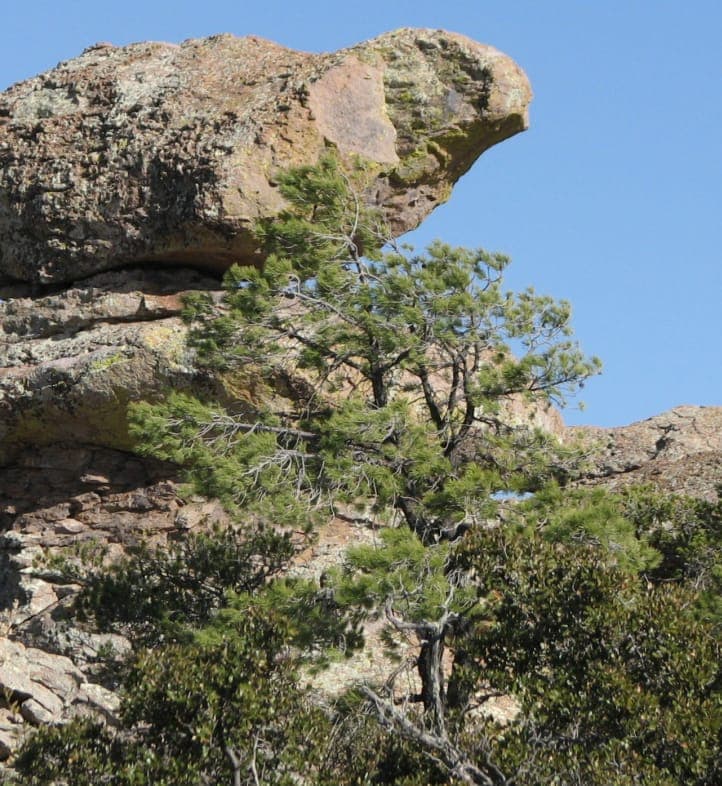
cibomahto on Flickr / CC BY-SA 2.0, via Wikimedia Commons
Pinus leiophylla: complete guide
Pinus leiophylla
Want to see Pinus leiophylla: complete guide in your garden?
1 minute, no credit card
Overview
Pinus leiophylla, commonly called Chihuahuan pine or smooth-leaved pine, is an elegant conifer native to the mountains of southeastern Arizona, southwestern New Mexico, and Mexico. This tree belongs to the Pinaceae family (the pine family) and distinguishes itself through characteristically fine, soft needles and elegantly balanced structure. Unlike many other pines featuring coarse needle fascicles, Pinus leiophylla presents a much more refined appearance ideal for gardens seeking subtle botanical beauty.
The name "leiophylla" literally means "smooth leaf" and references its characteristic thin, delicate needles. This tree is increasingly popular in Dutch garden designs, particularly among conifer enthusiasts seeking alternatives to typical spruce or thuja varieties.
Appearance and Growth
Pinus leiophylla is a medium to large conifer capable of reaching 15 to 25 meters under optimal conditions, though in colder climates and container culture it remains substantially smaller. The tree grows in an elegant, fairly regular conical form with a strong central trunk. Branches develop in whorls (tiers) along the trunk length, creating a rhythmic, architecturally attractive structure.
The needles are the most striking feature. They are exceptionally fine and soft, typically arranged in bundles of three (tri-foliate), distinguishing this species from many other pines. Needles reach approximately 7 to 12 centimeters in length and display bright green coloration. This refined needle package gives the tree a light, almost ethereal appearance, markedly different from coarser pines.
The bark is smoother and lighter than many other pines, displaying grayish-brown coloration. Mature trees produce characteristic cones (seed cones) measuring 5 to 7 centimeters long with yellowish-brown coloring.
Ideal Location
Pinus leiophylla thrives optimally on sunny sites receiving 6 to 8 hours direct sunlight daily. Full sun is preferred. The tree also accepts lightly shaded locations, though form remains more compact and regular in full sun.
The tree is moderately hardy in Netherlands conditions and can grow in large portions of the country, though northern regions may require protection during extremely cold winters. In southern Netherlands, it grows without difficulty. The tree accepts acidic to neutral soil conditions.
The tree requires well-drained locations. Waterlogging, especially during winter, can be harmful. Positioning on elevated, well-drained ground supports long-term health.
Soil
Pinus leiophylla grows optimally in well-drained, moderately fertile soils. The tree accepts acidic to neutral pH (5.5 to 7.5) and grows even in poor soils, though performs better in soils with some nutrient content. Sand, gravel, and loamy soils are all acceptable; the critical factor is drainage.
Avoid heavy clay soils without amendment. Addition of sand, gravel, or organic material substantially improves drainage in heavy soils. At planting, incorporate generous compost in the planting hole to encourage establishment.
Annual fertilization is unnecessary. A careful application of slow-release, balanced fertilizer in early spring can support growth, but is not essential.
Free design
Want to see Pinus leiophylla: complete guide in your garden? Make a free design now.
Watering
Pinus leiophylla requires regular watering during the first growing year following planting, particularly during dry periods. Thereafter, the tree is relatively drought-tolerant and requires supplemental watering only during extended dry periods.
Once established, the tree generally requires no regular watering in Dutch climate with normal rainfall patterns. However, during exceptionally dry years, supplemental summer watering may prove beneficial.
During the first winter following planting, ensure some moisture availability without waterlogging. In subsequent years, the tree can generally sustain itself.
Pruning and Maintenance
Pinus leiophylla requires minimal pruning. The tree develops naturally attractive form without shaping. Some light pruning may be applied in early spring to remove obviously misshapen branches or subtly enhance form.
Once established, further pruning is unnecessary unless damaged branches require removal. Removing lower dead branches sometimes helps keep the tree clean for winter appearance, but this is not essential.
Watch for diseases and insect pests, though these are generally not problematic in Dutch gardens.
Maintenance Calendar
APRIL-MAY: Growing season begins. Ensure regular moisture for newly planted trees. Light pruning of misshapen branches in April.
JUNE-AUGUST: Peak growing period. Supplemental watering during dry spells. Monitor for diseases.
SEPTEMBER-OCTOBER: Growth slows, prepare for winter. Ensure some watering during dry autumn.
NOVEMBER-MARCH: Winter time. Minimal maintenance. Check moisture after extended dry periods.
Winter Hardiness
Pinus leiophylla is moderately hardy in Netherlands conditions. In southern Netherlands, it grows without difficulty. In central Netherlands, it survives most years, though extremely cold winters with temperatures below minus 20 degrees Celsius may cause some damage.
In northern Netherlands, the tree is not recommended for permanent outdoor cultivation without protection. For these regions, container cultivation is preferable, allowing overwintering in protected environments.
Young, newly planted trees benefit from protection during their first two winters. Mulching around the base helps protect roots against extreme cold.
Companion Plants
Pinus leiophylla combines beautifully with other conifers such as fir, blue spruce, and other Pinus species. It also pairs nicely with deciduous trees and shrubs creating layered forest structure.
In larger gardens, the tree can serve as a specimen. In mixed plantings, it provides architectural interest. The contrast of fine needles with coarser foliage of other plants creates visual tension and interest.
Avoid companions creating heavy shade, as this can limit the tree's development.
Closing Thoughts
Pinus leiophylla represents a refined choice for gardeners seeking conifers that differ from standard cultivars. The fine needle package and elegant growth habit make it a botanically interesting element in both modern and traditional gardens.
This tree is not for beginners in tree cultivation, but for conifer enthusiasts willing to explore the species' potential, it offers worthwhile botanical value. Availability may be limited in Dutch garden centers, so online tree nurseries or specialized conifer suppliers are best options.
With attention to good drainage, moisture balance, and winter tolerance, one can enjoy this elegant tree for many years. Gardenworld.app offers opportunities to incorporate this fine conifer into garden designs.
Want to see Pinus leiophylla: complete guide in your garden? Make a free design now.
Upload a photo, pick a style, and get a photorealistic design with plant list in under a minute.
No credit card required


Similar plants
Abies delavayi: complete guide
Abies delavayi
Delavayi fir is an elegant, medium-sized coniferous tree from the Pinaceae family with dark green needles. This Asian evergreen is perfect for alpine gardens and large landscapes.
Taiwan fir: complete guide
Abies kawakamii
Discover the magnificent Taiwan fir, a rare evergreen conifer from Taiwan's mountain regions. Learn growth requirements, care tips, and why this beautiful tree is perfect for collectors of unique garden specimens.
Farges fir: complete guide
Abies fargesii
Discover the majestic Farges fir, an impressive conifer from China's mountains with elegant foliage and columnar form. Ideal for large gardens.