
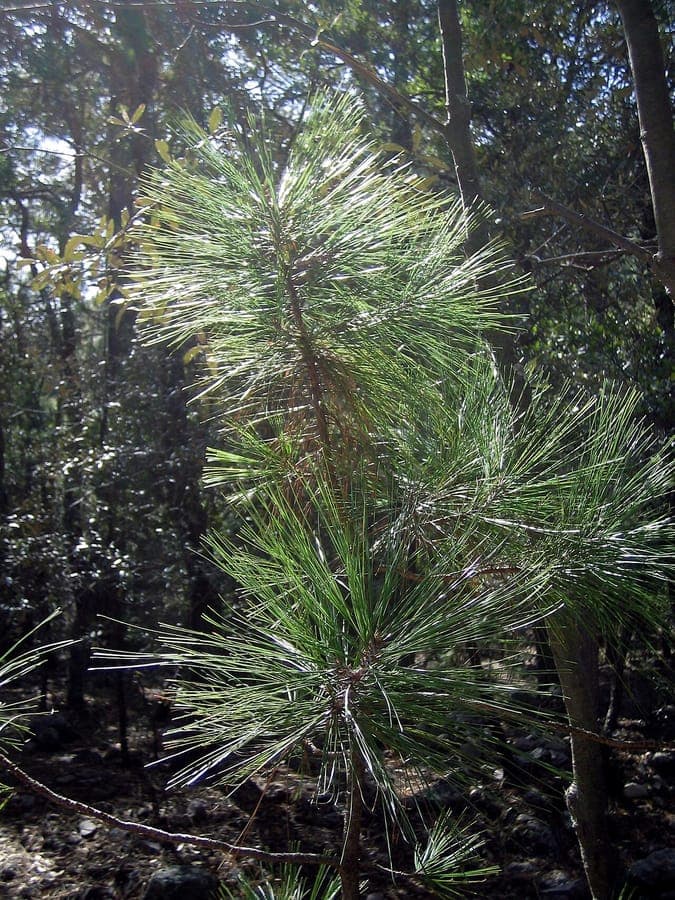
karenandbrademerson on Flickr / CC BY 2.0, via Wikimedia Commons
Pinus arizonica: complete guide
Pinus arizonica
Want to see Pinus arizonica: complete guide in your garden?
1 minute, no credit card
Overview
Pinus arizonica, commonly known as Arizona pine or yellow pine, is a medium to large conifer that thrives in warm, dry climates. This tree is native to desert regions and mountain slopes of Arizona, New Mexico, and northern Mexico. Unlike its slower-growing cousin Pinus aristata, Pinus arizonica exhibits moderate growth rates, making it more practical for gardeners seeking visible progress within several years.
The tree tolerates heat, drought, and windy conditions better than many other conifers. This makes it particularly suited for modern gardens in southern European regions, Mediterranean landscapes, and even warm microclimates in northern countries. It adds height and visual depth without requiring the moist soils many conifers prefer.
Appearance and Bloom
Pinus arizonica develops a broadly conical silhouette, typically reaching 15 to 25 meters at maturity. In garden settings, the tree adjusts its size to available space, though it rarely remains below 12 meters. The needles are distinctive: arranged in bundles of five, approximately 5 to 10 centimeters long, with a characteristically yellowish or yellow-green coloration that distinguishes it from other Pinus species and earned it the common name "yellow pine."
The bark is dark gray to brownish and splits into irregular plates, giving the mature tree exceptional character. Flowering occurs in May to June. Male flowers are red to orange and cluster at twig terminals. Female cones are brown, approximately 7 to 10 centimeters long, and mature within two to three years.
Ideal Location
Pinus arizonica performs best in full sunlight: minimum eight hours of direct sun daily. This is not a tree for shady gardens. A south to southwest-facing position is ideal, especially in warmer climates. In colder regions, a south-facing wall or protected east-facing position may be better to avoid early frost damage.
This tree accepts wind well and grows even stronger in windy situations. This makes it perfect for coastal gardens or terraces with good air circulation. Avoid only the most sheltered spots where stagnant winter air could cause damage.
Soil
Pinus arizonica is far more tolerant of varied soils than many conifers. It grows well in sandy, loamy, and even moderately clay soils, provided drainage exists. pH can range from acidic (pH 5.0) to neutral (pH 7.0). This offers considerable flexibility in placement.
The tree accepts poor soils and nutrient-limited situations. Add mature compost around the root base at planting, though excessive nutrition is unnecessary. Mulch with coarse sand or gravel aids drainage during wet periods.
Waterlogging remains dangerous, so ensure drainage. In very heavy clay, elevate the planting area or thoroughly amend the soil.
Watering
Once established, Pinus arizonica is highly drought-resistant. In its natural range, it grows on 500 to 1,500 mm annual precipitation, considerably lower than most European gardens. This means regular water is necessary during the first two years, then irrigation can be substantially reduced.
Water deeply twice weekly during dry periods for the first two years. Thereafter, reduce to once every two weeks in normal climates. In Mediterranean or dry years, continue watering twice monthly for optimal health.
Avoid waterlogging. In very rainy winters, additional drainage may be necessary.
Free design
Want to see Pinus arizonica: complete guide in your garden? Make a free design now.
Pruning
Pinus arizonica grows largely in its natural form without requiring artificial pruning. Remove only dead branches, damaged needles, and branches encroaching on buildings. This is best done in April to May, as the tree recovers from winter.
If you wish to thin the lower portions (useful near buildings), carefully remove lower branches to points where they're growing away from the structure. This must be done extremely carefully and never beyond one-third of the height, which could result in imbalance.
Natural growth is preferred. Keep irregular pruning to minimum, as the tree recovers slowly.
Maintenance Calendar
April-May: inspect for winter damage, remove dead branches, apply feeding if needed. June-July: monitor watering, especially during dry periods; check for insect infestations. August-September: intensify watering if drought continues; add mulch around base. October-November: reduce watering as rain increases; perform final winter preparation. December-February: monitor snow damage on heavy branches after storms; check for ice coating. March: remove frost-damaged needles; prepare for growing season.
Winter Hardiness
Pinus arizonica is winter hardy to approximately -15 to -20 degrees Celsius, making it suitable for temperate climates through approximately USDA zone 8-9. In much of the Netherlands, northern German areas, or comparable climates, it may experience frost damage in very cold years. In southern regions, it will overwinter without problems.
Protection from cold winds can be useful in northern locations. Do not plant in fully exposed mountain passes. Young trees may require protection with burlap or mulch layers during extremely cold winters.
Companion Plants
Pinus arizonica grows excellently in dry, sunny compositions with Mediterranean herbs, gray-foliaged shrubs, and drought-resistant evergreens. Combine with lavender varieties, rosemary, sage species, and alpine geraniums. Other drought-resistant trees such as Quercus ilex (holm oak) work well.
Avoid wet-soil groundcovers or nutrient-intensive plants directly adjacent. Always maintain space around the trunk for air circulation.
Closing
Pinus arizonica is ideal for warmth-loving gardeners seeking robust, reliable growth in dry situations. This is not a tree for shady, wet gardens, but in sunny, dry terraces it adds architectural value and natural beauty. With minimal maintenance, it will grow for decades.
When purchasing, seek healthy specimens without damage to lower branches. Major garden centers occasionally carry Pinus arizonica, particularly in southern locations. Verify well-developed roots before purchase. Gardenworld.app can assist with complete designs for sunny, dry gardens featuring Pinus arizonica as a core planting.
Enjoy your Arizona pine! Appreciate its sunny character and drought-tolerant growth.
Want to see Pinus arizonica: complete guide in your garden? Make a free design now.
Upload a photo, pick a style, and get a photorealistic design with plant list in under a minute.
No credit card required


Similar plants
Abies delavayi: complete guide
Abies delavayi
Delavayi fir is an elegant, medium-sized coniferous tree from the Pinaceae family with dark green needles. This Asian evergreen is perfect for alpine gardens and large landscapes.
Taiwan fir: complete guide
Abies kawakamii
Discover the magnificent Taiwan fir, a rare evergreen conifer from Taiwan's mountain regions. Learn growth requirements, care tips, and why this beautiful tree is perfect for collectors of unique garden specimens.
Farges fir: complete guide
Abies fargesii
Discover the majestic Farges fir, an impressive conifer from China's mountains with elegant foliage and columnar form. Ideal for large gardens.