
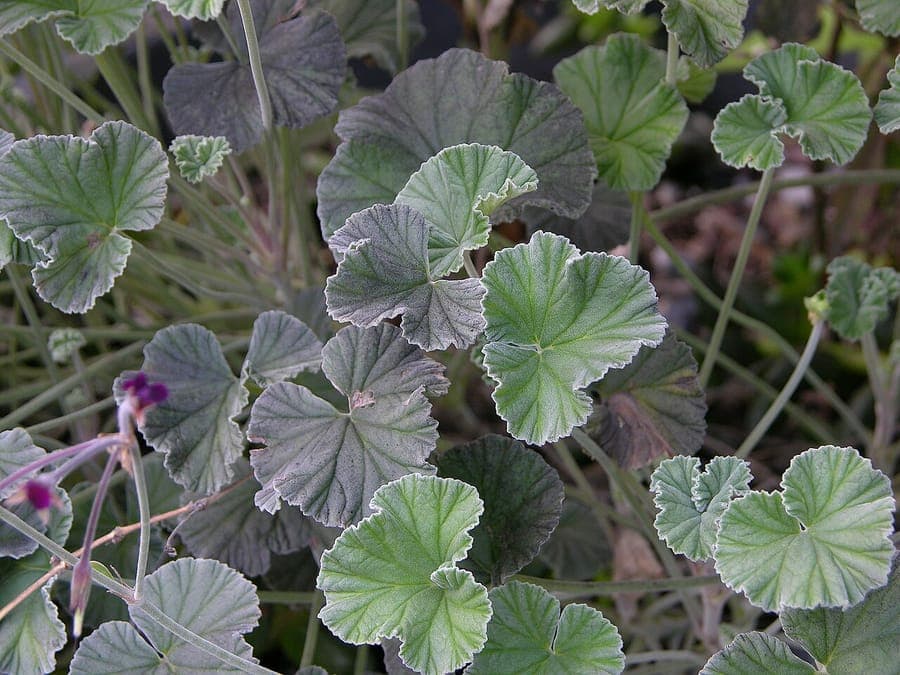
Photo by and (c)2006 Derek Ramsey (Ram-Man). Location credit to the Chanticleer Garden. / CC BY-SA 3.0, via Wikimedia Commons
Dark pelargonium: complete guide
Pelargonium sidoides
Want to see Dark pelargonium: complete guide in your garden?
1 minute, no credit card
Overview
Pelargonium sidoides, known as kalwerbossie in Afrikaans or dark pelargonium, is a remarkable species from the Geraniaceae family native to southern South Africa. This is not primarily a plant for its showy blooms, though these are certainly present, but recognised foremost for its traditional medicinal applications. In South Africa, the plant has been used in traditional medicine for centuries, particularly for respiratory infections. Modern scientific research has partly validated these traditional uses. The plant grows as a compact to moderately spreading shrub and tolerates dry, rocky conditions exceptionally well.
Appearance & Bloom
Pelargonium sidoides reaches approximately 30-50 cm in height and develops a compact to moderately spreading growth pattern depending on conditions. The plant has distinctive leaves that are green-edged and sometimes display reddish tints, especially when exposed to full sun. The flowers are the most characteristic trait: they are deep purple to dark red, almost blackish in certain light. Flowers appear in small, dense clusters on relatively long stems that rise above the foliage. Each bloom measures about 1-1.5 cm across. The flowering period is long - from early spring through late autumn in temperate climates, with peak bloom in summer. The dark flowers against comparatively light foliage create a subtle visual statement.
Ideal Location
Pelargonium sidoides thrives in full sun. Minimum 5-6 hours of direct sunlight daily ensures healthy growth and prolific flowering. Shade causes leggy growth and reduced bloom production. The plant also performs well in warm, sheltered conditions; against warm south-facing walls is ideal. Wind is not a concern; this robust shrub holds together well. The plant also grows in gravel, impoverished locations where much other plant material would fail.
Soil
This pelargonium thrives in poor to moderately fertile, well-draining potting soil. A mixture of universal potting soil with 25-30% sand, perlite, or gravel is ideal. Heavy clay without any amendment does not work well; always improve drainage. Soil pH between 6.0 and 7.5 is acceptable. In ground planting, it also grows in lean, stony soils. Over-rich soils promote foliage at the expense of flowers.
Free design
Want to see Dark pelargonium: complete guide in your garden? Make a free design now.
Watering
Water regularly during the growing season but avoid waterlogging. Allow the top layer to dry slightly between waterings. Once weekly is usually sufficient in summer. During rainy periods, supplemental watering may be unnecessary. In autumn and winter, water sparingly. The plant tolerates short dry spells better than prolonged wetness. In pot culture, check moisture more frequently.
Pruning
Pruning promotes compact growth. In spring, cut the plant back to about two-thirds its current height for better branching. After flowering, spent flower clusters can be removed. Remove dead branches as soon as noticed. Annual pruning keeps the plant compact and full.
Maintenance Calendar
Spring: Resume watering. Fertilise every two weeks with standard feeding. Perform pruning. Check for pests. Summer: Water regularly. Continue fertilising every two weeks. Remove spent parts. Autumn: Gradually reduce water. Fertilise every three weeks. Clear dead wood. Winter: Keep watering minimal. No feeding. Place in cooler location for dormancy.
Winter Hardiness
Pelargonium sidoides tolerates light frost better than many pelargoniums. Minimum approximately 0 to 5 degrees Celsius. Severe frost may cause damage. In cold climates, bring to shelter or provide mulch. In mild winters, it can remain outside without extra protection. Established plants are hardier than young material.
Companion Plants
Combine with other South African material such as Erica species, Protea, and Leucadendron. Grasses like Restio work botanically authentic. Mediterranean plants such as lavender, rosemary, and thyme also harmonise well. Because the plant itself is quite subtle, larger groupings create better effect than individual plantings.
Closing
Pelargonium sidoides is for those who appreciate what this plant means biologically and historically. Its traditional medicinal value and subtle elegance make it special. Some specialised nurseries and herbal collectors stock it. The plant grows relatively quickly and remains compact with care. Ideal for xeriscaping and dry garden scenarios. For gardenworld.app projects where South African character is desired, this is a valuable choice. A plant with both heritage and present value.
Want to see Dark pelargonium: complete guide in your garden? Make a free design now.
Upload a photo, pick a style, and get a photorealistic design with plant list in under a minute.
No credit card required


Similar plants
Fleshy-stalk pelargonium: complete guide
Pelargonium carnosum
The distinctive fleshy-stalk pelargonium with thick succulent stems and delicate pink flowers. Drought-tolerant and ideal for modern gardens.
Kopata geranium: complete guide
Pelargonium inodorum
The scentless geranium from Australia and New Zealand. Strong grower with continuous pink flowers and odourless foliage. Perfect for modern garden designs.