
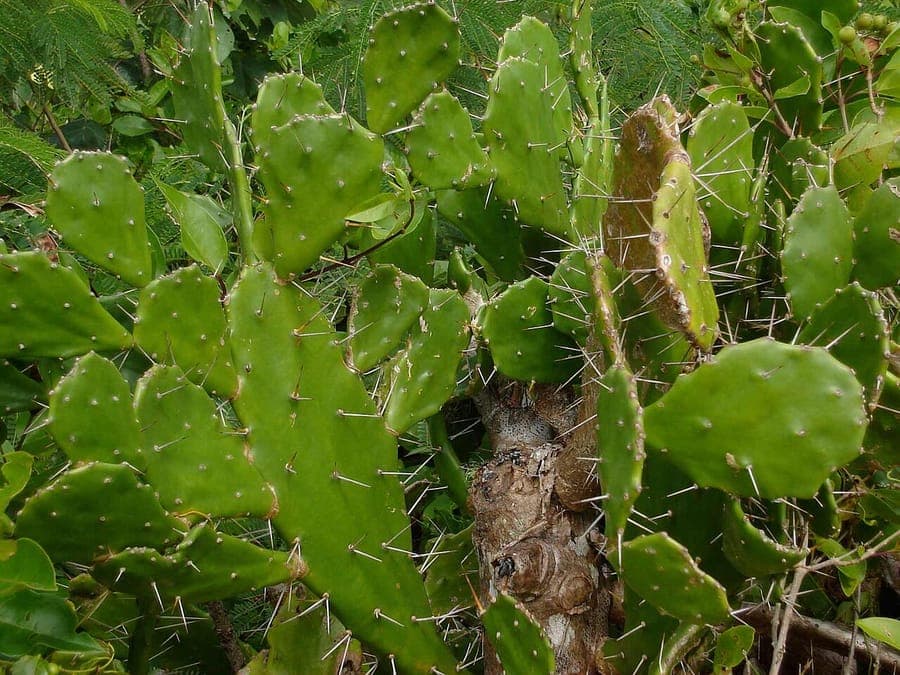
Tauʻolunga / CC BY-SA 3.0, via Wikimedia Commons
Opuntia monacantha: complete guide
Opuntia monacantha
Want to see Opuntia monacantha: complete guide in your garden?
1 minute, no credit card
Overview
Opuntia monacantha, also known as drooping prickly pear or single-spine opuntia, is an ornamental form of opuntia with unique weeping-pendulous growth habit. This plant originates from South America (likely Brazil) and is less cold-hardy than O. humifusa. It grows best in containers in temperate climates or outdoors in warm, sheltered situations. The plant is known for its hanging branches and yellow to red flowers.
Appearance and bloom
Opuntia monacantha forms weeping, thin branches with flat, oblong pads approximately 7-15 cm long. The pads typically have only a few large spines and many glochides (irritating hairlike bristles). In summer-fall, lovely yellow flowers (sometimes orange or red-tinged) about 3-4 cm across appear. After flowering, yellow to reddish-purple fruits develop. The weeping habit is quite ornamental for hanging baskets or elevated planters.
Ideal location
Opuntia monacantha thrives best in warm, sunny spots protected from cold wind. In temperate climates: pot and place outdoors in summer, bring indoors in winter. In warmer zones: plant in very dry, sunny locations on raised beds. Full sun is essential; shade causes weak, spindly growth.
Soil
For container culture: use cactus potting mix or prepare (30% humus, 70% sand/gravel). For ground: very well-draining, sandy to gritty soil. Add copious perlite and sand. pH may be acidic to neutral. No fertilizer needed; too-rich soil causes weak growth.
Free design
Want to see Opuntia monacantha: complete guide in your garden? Make a free design now.
Watering
Water sparingly: once weekly during growing period (May-October). Water only when soil is completely dry. In winter (November-April): do not water or water only once monthly. For container plants: ensure drainage holes in pot. Overwatering is likely the greatest risk.
Pruning
Pruning is not needed for form. Remove only damaged or diseased pads carefully. Place in hanging baskets or elevated planters so weeping branches can hang elegantly. Let plant grow naturally.
Maintenance calendar
May-June: move outdoors, water when dry. July-September: growth and possible flowering, water moderately. October-November: prepare for overwintering, reduce watering. December-March: indoors, minimal water. April: prepare for moving outdoors. Check annually for pests.
Winter hardiness
Opuntia monacantha is hardy to zone 10 (minimum -5C). In temperate climates, do NOT leave outdoors during winter. Bring pots indoors before first frost (October). Plant will rot if exposed to cold and wet together. Overwinter dry and cool (10-15C ideal).
Companion plants
Lovely together in warm beds: other subtropical succulents, Aloe, Agave. Also suitable with Euphorbia. For containers: other weeping succulents, String of Pearls. Combine in Mediterranean patios with other cacti.
Closing
Opuntia monacantha is a fascinating, ornamental subtropical cactus with elegant weeping form. Perfect as a container plant or in warm garden sections. Requires dry overwintering in temperate climates. At gardenworld.app, we help you integrate subtropical elements into your design. At gardenworld.app, we create gardens that embrace warmth, light, and exotic charm.
Want to see Opuntia monacantha: complete guide in your garden? Make a free design now.
Upload a photo, pick a style, and get a photorealistic design with plant list in under a minute.
No credit card required


Similar plants
Plains prickly pear: complete guide
Opuntia polyacantha
All about plains prickly pear cactus: hardiness, soil, placement and care. One of the most cold-tolerant cacti for temperate gardens.
Saguaro: complete guide
Carnegiea gigantea
Everything about growing saguaro cactus: container care, watering, overwintering, and companion plants for this iconic desert giant.
Cylindropuntia imbricata: complete guide
Cylindropuntia imbricata
The Tree Cholla offers distinctive segmented stems and vibrant red flowers. A unique ornamental succulent perfect for sunny, dry gardens and large containers.