
Skoch3 / CC BY-SA 3.0, via Wikimedia Commons
Cylindropuntia imbricata: complete guide
Cylindropuntia imbricata
Want to see Cylindropuntia imbricata: complete guide in your garden?
1 minute, no credit card
Overview
Cylindropuntia imbricata, commonly known as the Tree Cholla or Candelabrum Cactus, is a unique and highly decorative cactus from the southwestern United States. This remarkably distinctive plant from the Cactaceae family grows naturally in dry desert and semi-desert areas from Arizona to Kansas and Mexico.
This plant offers gardeners something truly special: a highly unique, architectural growth habit with characteristic overlapping stem segments. With its red-purple blooms in summer and decorative fruits, Tree Cholla is an absolute showstopper in any garden.
Appearance and bloom
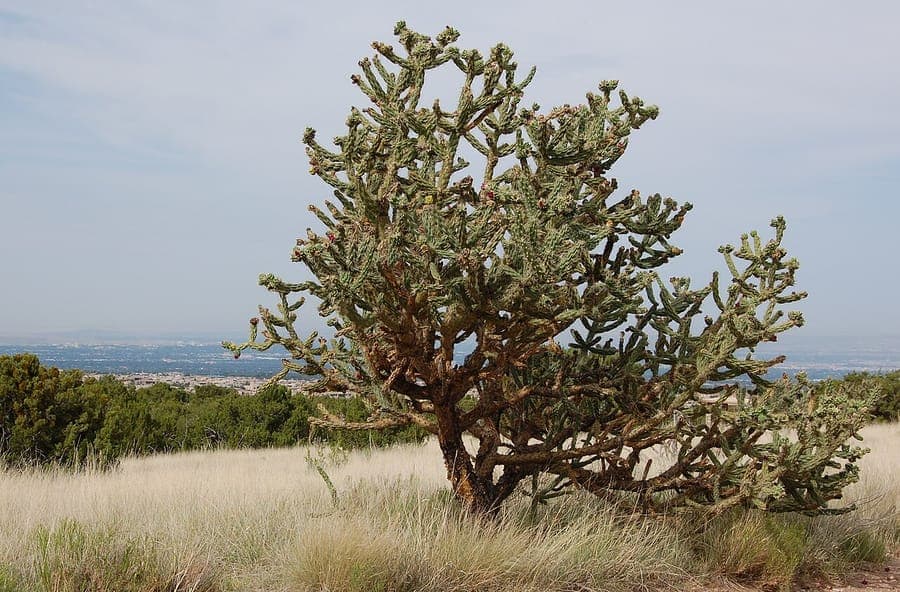
The Tree Cholla grows as a highly distinctive plant, usually 1 to 2 meters tall. The plant forms from many stem segments (cladodes) that grow vertically above one another, creating a candelabra-like silhouette.
The stem segments are cylindrical and approximately 15 to 30 centimeters long. They are green to grey-green and have short, scattered spines. The stems are densely connected in a characteristic scale-like pattern typical of the Cylindropuntia genus.
In July and August, beautiful red to pink flowers appear at the stem tips. These blooms are approximately 3 to 4 centimeters in diameter and highly attractive to hummingbirds and insects. Following flowering, elongated yellow fruits form and can persist for months.
The plant may lose leaves in cold winters and regenerate from dormant nodes in spring.
Ideal location
Tree Cholla grows best in fully sunny locations. At least six to eight hours of direct sun daily is essential. In shade, the plant will not grow well.
The plant can tolerate wind and is suitable for exposed locations. The plant grows ideally in warm, dry climate. In areas with heavy rain, the plant may suffer from moisture-loving fungal infections.
Use Tree Cholla as a specimen plant, in groups, in rock gardens, or in large containers. Its unique form makes it an absolute showstopper in any garden setting. In containers, it can be brought indoors during very cold winters.
Soil
Cylindropuntia imbricata grows best in very well-drained, sandy or gritty soils. The plant accepts both acidic and alkaline soils. Heavy clay soils must be significantly improved with sand and small gravel.
The plant grows best in poor soils and requires no feeding. Excessive nutrition can be harmful. The plant requires far less nutrition than most other plants.
When planting in containers, cactus mix with plenty of sand and gravel is recommended. The plant cannot tolerate poor drainage - this will surely lead to root rot.
Free design
Want to see Cylindropuntia imbricata: complete guide in your garden? Make a free design now.
Watering
Tree Cholla should be watered carefully. During the growing season (spring and summer), water can be applied regularly, but it is essential that the soil drains well.
In autumn and winter, watering should be significantly reduced. In winter, the plant should remain practically dry. This promotes successful overwintering and helps the plant set flowers for the next year.
In containers, water carefully, usually weekly during the growing season. Overwatering is the most common death sentence for cacti - ensure water drains well.
Pruning
Tree Cholla requires no pruning. The plant grows naturally in a beautiful, distinctive form. Only damaged or diseased stem segments can be carefully removed.
When removing stems, do so carefully with gloves on due to sharp spines. Removed segments can be planted in sand and will root to form new plants.
Avoid pruning in autumn and winter, as this may impair growth potential.
Maintenance calendar
March-April: Plant begins new growth. Start adding water. Inspect for frost damage. May-June: Plant grows actively. Water regularly. Good drainage essential. July-August: Plant flowers. Beautiful red blooms. Water normally. Enjoy the flowers. September-October: Flowering ends. Fruits ripen. Begin reducing watering. November-December: Plant goes dormant. Water very minimally. Prepare for winter. January-February: Winter dormancy. Almost no water. Protect against frost.
Winter hardiness
Cylindropuntia imbricata can tolerate temperatures down to approximately -8 to -10 degrees Celsius, depending on moisture levels. The plant can survive brief frost, but prolonged frost can be harmful.
In colder areas, the plant can be grown in containers and brought indoors during winter. In warm gardens, the plant can remain outdoors, especially if it stays dry.
The plant tolerates wet snow poorly - ensure snow is removed from the plant to prevent stem and joint damage.
Companion plants
Combine Tree Cholla well with other drought-lovers. Good companions include other Cylindropuntia species, Opuntia species, and other desert drought-plants.
In borders, it pairs well with low-growing xerophytes like Sedum, Delosperma, and other succulents. The red flowers provide nice contrast with silver-grey foliage of Artemisia and grey grasses.
In contemporary gardens, it combines well with rocky layers and minimal plantings. The plant also suits ceramic pots.
Conclusion
Cylindropuntia imbricata offers years of unusual beauty with its distinctive growth and vibrant red blooms. This plant is ideal for gardeners seeking something truly special.
Whether you wish to enhance a dry, sunny corner or seek an exotic statement piece, Tree Cholla is an excellent choice. Plant material is available from specialized cactus nurseries.
Want to see Cylindropuntia imbricata: complete guide in your garden? Make a free design now.
Upload a photo, pick a style, and get a photorealistic design with plant list in under a minute.
No credit card required


Similar plants
Plains prickly pear: complete guide
Opuntia polyacantha
All about plains prickly pear cactus: hardiness, soil, placement and care. One of the most cold-tolerant cacti for temperate gardens.
Saguaro: complete guide
Carnegiea gigantea
Everything about growing saguaro cactus: container care, watering, overwintering, and companion plants for this iconic desert giant.
Opuntia undulata: complete guide
Opuntia undulata
Barbary fig grows as a fascinating cactus with edible fruits. Learn all about cultivating this exotic plant in your front garden.