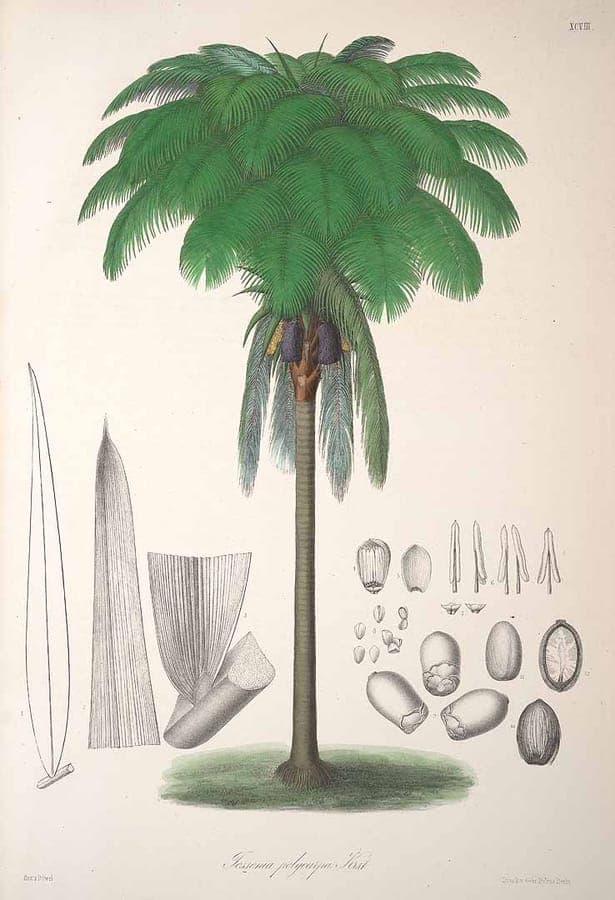
Gustav Karl Wilhelm Hermann Karsten / Public domain, via Wikimedia Commons
Oenocarpus bataua: complete guide
Oenocarpus bataua
Want to see Oenocarpus bataua: complete guide in your garden?
Full design in HD: €7.99
Look after your Oenocarpus bataua with the GardenWorld app
Identify plants with your camera and get a care calendar with reminders for this plant.


Overview
Oenocarpus bataua, known as Bataua palm or Seje palm, is an elegant, slender tropical palm native to South America. This palm is valued for its fine, green foliage and distinctive architectural form. In its natural habitat, it grows in rainforests of the Amazon basin.
Appearance & growth
The Bataua palm grows upright with a slender trunk and develops beautiful, feathery fronds arranged in an elegant cluster at the top. The leaflets are fine and evenly distributed. This palm reaches a respectable height and provides vertical accent. In the wild, it can grow up to 20 meters tall.
Ideal location
Seek a spot with bright light but protection from direct, strong midday sun in hot climates. The palm appreciates a warm location with humidity. In cooler regions, you can cultivate it in a large container and move indoors when cold arrives.
Soil
Use rich, well-draining soil with plenty of organic matter. A mix with coconut fiber, compost and some sand works perfectly. In containers, use a palm-specific potting mix. Ensure excellent drainage to prevent root rot.
Free preview
Want to see Oenocarpus bataua: complete guide in your garden? Make a free preview of your design.
Watering
This palm likes to stay moist but not waterlogged. Water regularly during the growing season, less in winter. Mist the fronds regularly in dry environments. In containers, you can maintain better control through regular watering.
Pruning
Minimal pruning is needed. Remove only dead fronds and damaged petioles. Never cut into the heart of the palm, as this can be fatal. If fronds yellow, they can simply remain until fully dead.
Maintenance calendar
Spring & Summer: Feed monthly with a palm fertilizer. Water regularly and mist fronds. Fall: Begin reducing watering. Winter: Minimal watering, no feeding.
Winter hardiness
This tropical palm cannot tolerate frost. Temperatures below 10-13C can be harmful. In temperate climates, you must protect it or bring it indoors. This is typically a greenhouse or houseplant.
Companion plants
Bataua palm grows well with other tropical plants. Underplant with shade-loving ground covers for a rainforest-like effect. Bromeliads can be interesting visual additions.
Closing
Oenocarpus bataua brings true tropical elegance to your garden or home. With good drainage soil, regular watering, and warmth, this palm will flourish. Enjoy its slender silhouette and beautiful fronds. For more plant advice, check gardenworld.app!
Frequently asked questions about Oenocarpus bataua
Is Oenocarpus bataua winter hardy?
This tropical palm cannot tolerate frost. Temperatures below 10-13C can be harmful.
When and how do you prune Oenocarpus bataua?
Minimal pruning is needed. Remove only dead fronds and damaged petioles.
How much water does Oenocarpus bataua need?
This palm likes to stay moist but not waterlogged. Water regularly during the growing season, less in winter.
Where does Oenocarpus bataua grow best?
Seek a spot with bright light but protection from direct, strong midday sun in hot climates. The palm appreciates a warm location with humidity.
What soil does Oenocarpus bataua need?
Use rich, well-draining soil with plenty of organic matter. A mix with coconut fiber, compost and some sand works perfectly.

See it in your garden
See Oenocarpus bataua in your garden
One photo of your garden and a few questions. You see the result in about a minute.
Try it with a photoIdentify this plant in your own garden. Identify a plant
Similar plants
Metallic palm (Chamaedorea metallica): complete guide
Chamaedorea metallica
Everything about the metallic palm (Chamaedorea metallica): light, watering, compost, repotting, propagation and what is known about its safety for pets.
Areca palm: complete guide
Dypsis lutescens
Everything about the areca palm (Dypsis lutescens): light, compost, watering, humidity and overwintering for this popular, lush indoor palm.
Kentia palm: complete guide
Howea forsteriana
Everything about the kentia palm (Howea forsteriana): indoor position, compost, watering, leaf care and overwintering for this classic houseplant palm.
