Kembangraps / CC BY-SA 3.0, via Wikimedia Commons
Lemon basil: sowing and harvesting Ocimum × citriodorum
Ocimum × citriodorum
Want to see Lemon basil: sowing and harvesting Ocimum × citriodorum in your garden?
Full design in HD: €7.99
Look after your Lemon basil with the GardenWorld app
Identify plants with your camera and get a care calendar with reminders for this plant.


Overview
Ocimum × citriodorum, better known as lemon basil, is a hybrid between sweet basil (Ocimum basilicum) and Ocimum americanum. The result is a finer, lighter basil with a strikingly fresh lemon scent. Rub a leaf and you immediately smell lemon zest, with the familiar sweet basil note underneath. The fragrance comes from citral and limonene, the same compounds found in lemongrass and lemon peel.
In South-East Asia lemon basil is an everyday kitchen herb. In Indonesia it is called kemangi and is served with raw vegetables and sambal; in Thailand and Laos it goes into soups, curries and salads. It is also grown in parts of Africa and the Middle East. In Britain it is quickly becoming popular in herb gardens and on balconies, because it brings a new flavour to fish, salads, fruit and drinks.
Here lemon basil is grown as an annual. It reaches 30 to 50 cm in height and 25 to 35 cm across, grows quickly and flowers earlier than sweet basil. It suits a pot on the windowsill, a sunny patio or the vegetable garden. If you want to plan a herb corner that keeps producing all season, gardenworld.app can create a garden design that already marks out the sunniest spots.
Appearance and bloom cycle
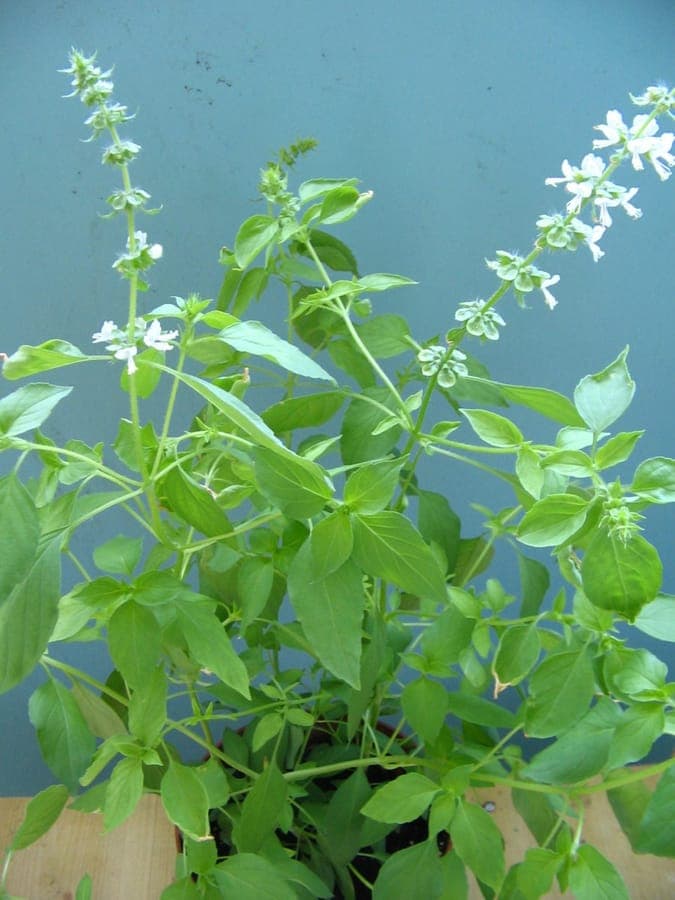
The plant is more finely built than large-leaved sweet basil. The stems are square, pale green and branch freely. The leaves are narrowly oval to lance-shaped, 2 to 5 cm long, pale to fresh green and flatter than those of Genovese basil. The edges are smooth or faintly toothed.
From July, sometimes as early as June, slender spikes with whorls of small white lipped flowers form at the shoot tips. Beneath them sit green calyces that hold the seeds after flowering. Bees and bumblebees love the flowers. Once the plant is in full bloom, the leaves become smaller and less aromatic, so for the kitchen it is best to pinch out flower buds early. The seeds turn gelatinous when wet, like those of other basils, and are used in desserts and drinks in Asia.
Ideal location
Lemon basil loves warmth. It wants a sunny, sheltered spot with at least six hours of sun a day. Against a south-facing wall, on a sunny terrace or in a greenhouse it grows best. Cold winds and chilly nights slow it down badly; below 10 °C growth stops and the leaves easily develop spots.
In a typical British summer it often does better in a pot than in open ground, because a container warms up faster and can be moved when the weather turns cold. A pot 20 to 25 cm across per plant, or a 60 cm trough for three plants, is ideal. It also grows well on a sunny windowsill, though it stays a little smaller there.
Sowing and planting out
Lemon basil is easy to raise from seed. Sow indoors from late March to late April in a seed tray of fine seed compost. Scatter the seeds thinly and press them in lightly; basil germinates in light, so barely cover them. Keep the compost just moist at 20 to 25 °C. Seedlings appear after a week to ten days. Prick them out into individual pots once they have two true leaves.
Only move plants outside after mid-May, when nights stay above 10 °C, or in colder parts of the country early June. Harden them off for a week first by putting them out by day and bringing them in at night. Space plants 25 to 30 cm apart. You can also sow directly outdoors in a warm bed in May or June, but you will harvest later.
Soil requirements
Lemon basil wants light, free-draining and moderately fertile soil. In the vegetable garden, work a few spadefuls of compost into the top 20 cm. Heavy, cold clay or a spot where water lies is unsuitable, as the roots soon rot. A pH between 6 and 7.5 is fine.
In containers use good multi-purpose compost, ideally with some sand or perlite for drainage. From June, give a liquid organic herb feed every two or three weeks. Too much feeding makes plants soft and dulls the scent.
Free preview
Want to see Lemon basil: sowing and harvesting Ocimum × citriodorum in your garden? Make a free preview of your design.
Watering
Keep the soil lightly moist but never soggy. Water in the morning if you can, directly onto the soil rather than over the leaves. Wet foliage that does not dry before evening invites diseases such as basil downy mildew, recognisable by yellow patches on top of the leaf and grey fuzz beneath.
Check pots daily in summer; on hot days a container needs water every day. Use water at room temperature, as cold tap water checks growth. Do not leave water standing in the saucer.
Pruning
Regular pinching is the secret of a full, bushy plant. As soon as the plant is 15 cm tall, snip the tip just above a pair of leaves. Two new shoots will grow from the leaf joints. Repeat this every time you harvest.
Lemon basil runs to flower faster than sweet basil. Remove flower spikes as soon as they appear and the plant will keep producing leaves for longer. If you want to save seed or give the bees a treat, leave a few spikes at the end of summer.
Harvesting and uses
You can harvest from June until the first cold nights in September or October. Always cut whole tips, never single leaves from the bottom, since nothing regrows there. Use lemon basil as fresh as possible and add it at the end of cooking; long heating drives off the lemon scent.
It is wonderful with fish and seafood, in tomato or cucumber salads, in a lemony pesto, in Thai curries and soups, over grilled vegetables, and surprisingly good with strawberries, peaches or melon. A few sprigs in a jug of water or iced tea make a refreshing summer drink. Dried leaves lose much of their aroma. Freezing works better: chop the leaves and freeze them with a little olive oil in ice-cube trays.
Basil is considered non-toxic to dogs and cats. Large amounts can, however, cause mild stomach upset.
Maintenance calendar
March–April: Sow indoors at 20 to 25 °C. Prick out into individual pots.
May: Harden off young plants. Plant out after mid-May once nights stay warm.
June–August: Pinch out regularly. Remove flower spikes. Water in the morning and give liquid feed every two or three weeks. Harvest freely.
September: Root cuttings in water for the windowsill. Let a few spikes set seed if you wish.
October: Pick the last tips before the first frost. Clear the plants.
November–February: Rest; store seed for next year. A cutting on the windowsill still gives a few leaves.
Winter hardiness
Ocimum × citriodorum is not hardy at all. At temperatures around 5 °C the leaves already develop black spots, and a light frost kills the plant outright. That is why it is grown as an annual and sown afresh each spring.
If you want to keep something of your plant, take 8 to 10 cm cuttings in September. Remove the lower leaves and stand them in a glass of water on a bright windowsill. After a week or two they form roots; then pot them up. In a warm, bright spot they keep growing through winter, though short days hold them back.
Companion plants
Lemon basil is a classic neighbour for tomatoes (Solanum lycopersicum): both love warmth, sun and regular watering, and the basil draws pollinators to the tomato flowers. Signet marigolds (Tagetes tenuifolia) and nasturtiums (Tropaeolum majus) add colour and are edible themselves.
In a herb trough, combine it with sweet basil (Ocimum basilicum) and coriander (Coriandrum sativum) for an Asian or Mediterranean kitchen corner. Do not put it next to drought-loving herbs such as rosemary and thyme, which need far less water.
Final thoughts
Ocimum × citriodorum brings a fresh lemon note to the kitchen that sweet basil cannot match. It is easy to sow, quick to grow and productive all summer, as long as you keep it warm, pinch it regularly and remove the flowers in good time.
The plant calendar on gardenworld.app shows when to sow, plant out and harvest each month, so you will not miss the right moment once the frosts are over. Sow a tray of lemon basil this spring and taste the difference in July.
Frequently asked questions about Lemon basil
Is Lemon basil winter hardy?
Ocimum × citriodorum is not hardy at all. At temperatures around 5 °C the leaves already develop black spots, and a light frost kills the plant outright.
When and how do you prune Lemon basil?
Regular pinching is the secret of a full, bushy plant. As soon as the plant is 15 cm tall, snip the tip just above a pair of leaves.
How much water does Lemon basil need?
Keep the soil lightly moist but never soggy. Water in the morning if you can, directly onto the soil rather than over the leaves.
Where does Lemon basil grow best?
Lemon basil loves warmth. It wants a sunny, sheltered spot with at least six hours of sun a day.
What soil does Lemon basil need?
Lemon basil wants light, free-draining and moderately fertile soil. In the vegetable garden, work a few spadefuls of compost into the top 20 cm.

See it in your garden
See Lemon basil in your garden
One photo of your garden and a few questions. You see the result in about a minute.
Try it with a photoIdentify this plant in your own garden. Identify a plant
Similar plants
Basil: complete guide
Ocimum basilicum
Discover how to grow Ocimum basilicum successfully in your garden or on your balcony. From light needs to harvesting tips, everything you need to know.
Tomato: complete guide
Solanum lycopersicum
Everything you need to know about growing tomatoes: ideal conditions, care tips, soil needs, and companion plants. Perfect for backyard gardens and containers.
tagetes tenuifolia: complete guide
Tagetes tenuifolia
Learn how to grow Tagetes tenuifolia with expert tips on location, soil, watering and care.
