
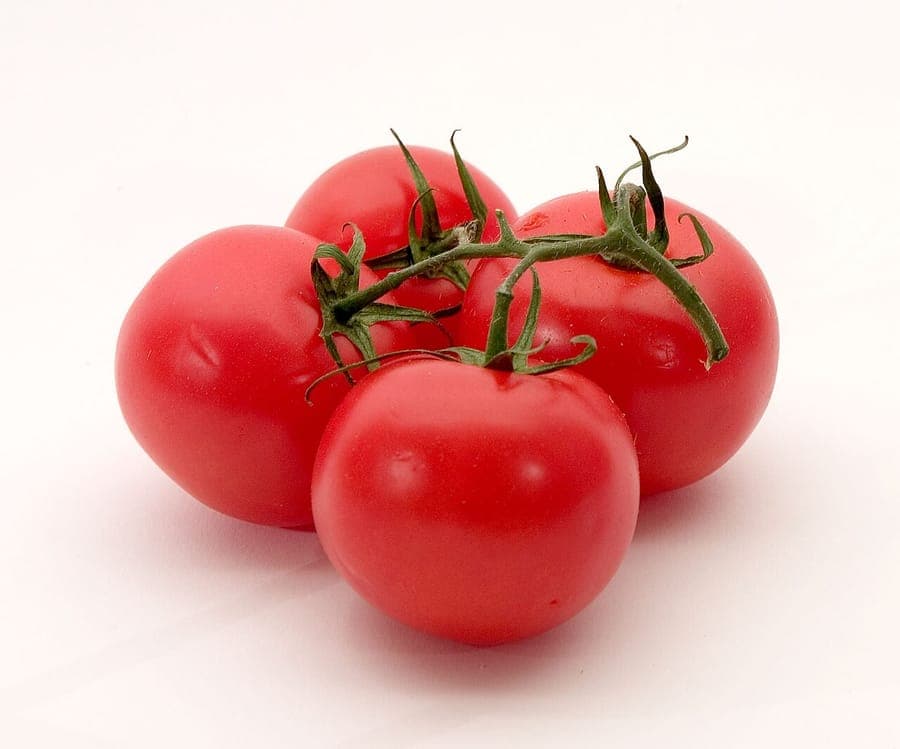
Softeis / CC BY-SA 3.0, via Wikimedia Commons
Tomato: complete guide
Solanum lycopersicum
Want to see Tomato: complete guide in your garden?
1 minute, no credit card
Overview
The tomato (Solanum lycopersicum) is a staple in nearly every home garden across the UK and North America. Originating in Peru, it thrives in warm, sunny conditions and rewards gardeners with juicy, flavorful fruits from midsummer through early autumn. While often treated as a vegetable, it's botanically a fruit - and one that demands attention to detail. Whether you're growing in a greenhouse, on a patio, or in a raised bed, success comes down to light, temperature, and consistent care. Most varieties mature in 60 to 80 days, producing fruits that range from cherry-sized to beefsteak.
On gardenworld.app, you can create a custom garden plan that positions your tomatoes where they'll get maximum sun and airflow.
Appearance & bloom cycle
Tomato plants are herbaceous with a upright or vining growth habit, reaching up to 200 cm in height depending on variety. The stems are slightly hairy, and the leaves are pinnately compound with a strong, distinctive scent. From late spring to early summer, small yellow flowers appear in clusters. Each cluster can set 5–12 fruits. After pollination - often aided by wind or gentle shaking - green fruits form and grow steadily. Ripening takes 4–8 weeks, turning from green to red, yellow, or even purple depending on the cultivar. Popular types include 'Alicante' for outdoor growing, 'Sungold' for sweet cherry tomatoes, and 'Brandywine' for large heirloom fruits.
Ideal location
Tomatoes need a light level of 8 - meaning 6 to 8 hours of direct sunlight daily. A south-facing spot is ideal, whether in a garden, greenhouse, or container on a sunny balcony. In cooler climates (USDA zones 5–6), a greenhouse or cloche helps extend the season. Avoid shaded areas or spots with strong winds, which can damage flowers and dry out plants. If growing in containers, use pots at least 30 cm wide and 40 cm deep. On gardenworld.app, use the sun mapping tool to pinpoint the sunniest corner of your garden before planting.
Soil requirements
The ideal pH is neutral to slightly alkaline: 7.0–7.5. Use a well-draining, nutrient-rich soil with plenty of compost or well-rotted manure. For containers, choose a high-quality potting mix labeled for tomatoes or vegetables. Avoid heavy clay soils; amend with perlite or coarse sand. Tomatoes have deep root systems - up to 40 cm - so deep beds or large pots are essential. Before planting, loosen the soil and mix in slow-release organic fertilizer.
Free design
Want to see Tomato: complete guide in your garden? Make a free design now.
Watering
Consistent moisture is key. Water deeply 2–3 times a week, increasing to daily in hot weather - about 1.5 to 2 liters per plant. Always water at the base to prevent fungal diseases like blight. Morning watering is best, allowing foliage to dry. Mulch with straw or compost to retain moisture and suppress weeds. Irregular watering causes blossom end rot or fruit splitting, so keep soil evenly moist.
Pruning
Indeterminate (cordon) varieties need regular pruning. Remove side shoots (suckers) that form in leaf axils when they're 5–10 cm long. This directs energy into fruit production. Support plants with stakes, canes, or cages - tie stems loosely every 30 cm. Determinate (bush) types, like 'Tumbler' or 'Balcony', require little to no pruning. At season's end, remove lower leaves to improve air circulation and reduce disease risk.
Maintenance calendar
- Jan: Start seeds indoors at 20–22°C under grow lights
- Feb: Continue sowing, keep seedlings well-lit
- Mar: Pot on seedlings, ensure night temps stay above 15°C
- Apr: Harden off plants, prepare beds or containers
- May: Plant out after last frost (zone-dependent), support immediately
- Jun: Begin weekly feeding with tomato fertilizer, monitor for pests
- Jul: Peak flowering and fruiting, hand-pollinate in greenhouses if needed
- Aug: Harvest regularly, check for aphids, blight, and whitefly
- Sep: Reduce feeding, let late fruits ripen
- Oct: Pick green tomatoes before frost, ripen indoors
- Nov–Dec: Clear plants, compost, clean tools
Winter hardiness
Tomatoes are tender annuals, hardy only in USDA zones 10–11. They cannot survive frost and growth halts below 15°C. In temperate regions, grow them as summer crops. Do not overwinter outdoors. Use the off-season to plan next year's layout and test saved seeds.
Companion plants
Good companions include basil, which improves flavor and deters thrips, and marigolds, which repel nematodes. Onions, garlic, and chives help deter aphids. Avoid planting near cabbage, corn, or fennel, which can inhibit growth. Potatoes are a no-go - both are prone to blight and compete for nutrients. Carrots and lettuce can grow beneath tomato plants, using the shade to their advantage. For tested combinations, check gardenworld.app's companion planting database.
Closing
Growing tomatoes is deeply rewarding. Whether you're a beginner with a single pot or a seasoned grower managing a full bed, the key is consistency. Buy young plants from garden centres in late spring, or start from seed for more variety. Use quality soil, water wisely, and stay on top of pruning. With a little effort, you'll enjoy sun-warmed tomatoes fresh off the vine - a taste no store-bought fruit can match.
Want to see Tomato: complete guide in your garden? Make a free design now.
Upload a photo, pick a style, and get a photorealistic design with plant list in under a minute.
No credit card required


Similar plants
Solanum dolichosepalum: complete guide
Solanum dolichosepalum
Discover Solanum dolichosepalum, an Andean nightshade with striking long sepals. Growing tips, hardiness, and companion planting for your patio.
Solanum ripense: complete guide
Solanum ripense
Discover Solanum ripense, a moisture-loving Andean nightshade for pond edges and conservatories. Growing tips, hardiness, and companions.
Solanum tomentosum: complete guide
Solanum tomentosum
Discover Solanum tomentosum, a thorny South African nightshade with felted leaves. Growing tips, hardiness, and companion planting ideas.