
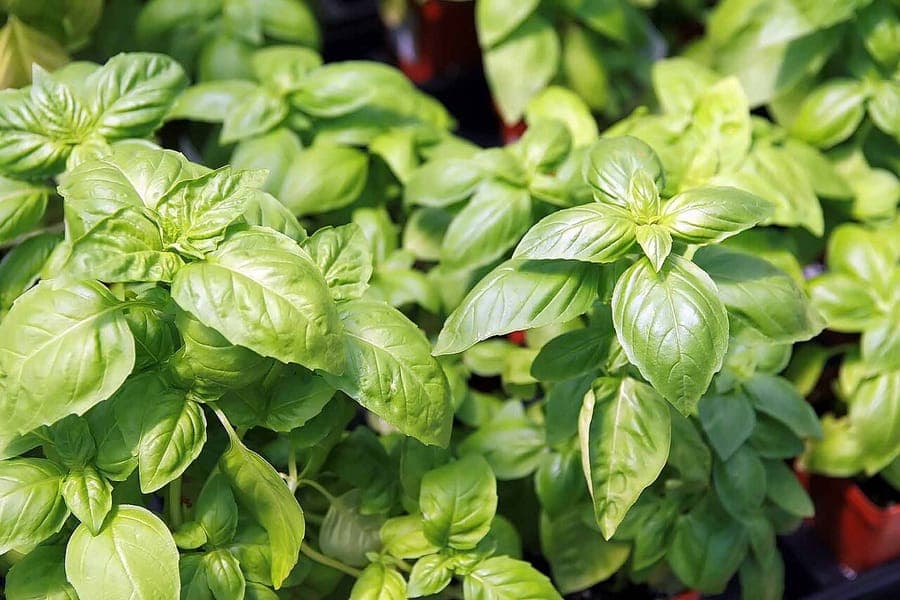
Photo by David J. Stang / CC BY-SA 4.0, via Wikimedia Commons
Basil: complete guide
Ocimum basilicum
Want to see Basil: complete guide in your garden?
1 minute, no credit card
Overview
Basil (Ocimum basilicum) is a fragrant, versatile herb beloved in kitchens worldwide. A member of the Lamiaceae family, it's native to warm regions like India, Bangladesh, and Southeast Asia. In temperate climates such as the UK and northern Europe, it's grown as an annual, though it can be perennial in USDA zones 10–11. It thrives with a light requirement of 7 out of 10-meaning it needs full sun but benefits from partial shade during the hottest part of the day.
This herb grows 30 to 60 cm tall with a bushy, upright habit. It's perfect for containers, herb gardens, or mixed beds. Whether you're making pesto, garnishing salads, or steeping tea, homegrown basil offers unmatched flavour. On gardenworld.app, you can design a custom garden layout that highlights basil's role in your edible space, pairing it with companion plants for both function and beauty. The plant prefers a slightly neutral soil with a pH between 6.5 and 7.0 and dies back after the first autumn frost.
Appearance & bloom cycle
Basil has broad, oval, bright green leaves with a glossy sheen. They grow in opposite pairs along square stems-a hallmark of the mint family. From mid-summer (July onwards), it may produce small white or pale purple flowers on slender spikes. While attractive, flowering signals a drop in leaf flavour. Pinch off flower buds to keep the plant productive.
Cultivars vary widely: 'Genovese' is ideal for pesto, 'Lettuce Leaf' has wide, crinkled foliage, and 'Dark Opal' offers deep purple leaves for visual contrast. Each type brings a unique taste-sweet, anise-like, or slightly spicy-so choose based on your culinary needs. For striking garden designs, gardenworld.app offers visual tools to mix textures and colours, using basil as a focal point in your herb arrangement.
Ideal location
Basil needs 6–8 hours of direct sunlight daily. A south- or southeast-facing spot on a patio, balcony, or garden bed works best. In peak summer, protect it from intense afternoon sun (1–4 PM), especially in containers, which heat up quickly.
Use pots at least 20 cm in diameter with drainage holes. Terra cotta works well because it breathes, but plastic or glazed ceramic are fine too. Elevate pots on feet to prevent waterlogging. Indoors, place near a bright window or under grow lights. If growing outdoors, wait until after the last frost (typically late May in the UK) to transplant seedlings.
Soil requirements
Well-draining soil is non-negotiable. Mix standard potting compost with perlite or coarse sand (1:4 ratio) to improve aeration. In garden beds, loosen heavy clay with compost and grit. Avoid water-retentive soils to prevent root rot.
Aim for a pH of 6.5–7.0. Test your soil before planting. Amend with a light dose of well-rotted manure or worm castings at planting time. Steer clear of high-nitrogen fertilisers-they boost leaf growth but reduce essential oils, weakening flavour.
Free design
Want to see Basil: complete guide in your garden? Make a free design now.
Watering
Water when the top 2–3 cm of soil feels dry. In summer, this may mean every 2–3 days for potted plants; in-ground plants need less frequent watering. Always water at the base to keep foliage dry and reduce fungal risks like powdery mildew.
Use room-temperature water-cold tap water can shock roots. Water in the morning so excess moisture evaporates in daylight. Never let basil sit in standing water. Mulch garden beds lightly with straw to retain moisture and suppress weeds.
Pruning
Regular pruning encourages bushy growth. Once the plant reaches 15 cm, pinch off the top set of leaves just above a leaf node. This forces side shoots to develop. Repeat every few weeks.
Always cut above a pair of leaves, leaving at least two nodes on the stem. Harvest no more than one-third of the plant at once. Use the trimmings fresh, dried, or frozen. Remove flower spikes promptly to delay bolting.
Maintenance calendar
- March–April: Sow seeds indoors at 20–25°C. Use seed trays with moist, light compost.
- May: Harden off seedlings. Transplant outdoors after frost risk passes.
- June–July: Water regularly, prune weekly, monitor for pests.
- August: Harvest frequently. Avoid cutting in full sun to prevent wilting.
- September: Prevent flowering. Remove any buds that form.
- October: Plants blacken after frost. Pull and compost dead material.
Winter hardiness
Basil is not frost-tolerant. It struggles below 10°C and dies at 5°C. In USDA zones 9 and below, it won't survive winter outdoors. Indoor overwintering is possible but often fails due to low light and dry air. Start fresh each spring.
Companion plants
Basil pairs well with tomatoes, peppers, and marigolds. It repels aphids and whiteflies and may enhance tomato flavour. Avoid planting near cucumbers or rue-they can inhibit growth.
In containers, combine with chives, parsley, or dwarf marigolds. In the veg patch, place near beans or leafy greens. Its scent also deters thrips when planted near roses.
Closing
Growing basil is simple with the right conditions: sun, warmth, and consistent care. Harvest often to keep it productive, and don't skip the pruning. For gardeners in the UK and similar climates, buy young plants from garden centres in late spring or start seeds indoors. Check out gardenworld.app to visualise herb bed layouts and companion planting schemes tailored to your space. With a little attention, you'll enjoy fresh basil from early summer to first frost.
Want to see Basil: complete guide in your garden? Make a free design now.
Upload a photo, pick a style, and get a photorealistic design with plant list in under a minute.
No credit card required


Similar plants
Apple mint (Mentha x villosa): complete guide
Mentha x villosa
Meet apple mint (Mentha x villosa): a fruity-scented kitchen herb with woolly leaves, perfect for tea and mojitos.
Salvia peyronii: complete guide
Salvia peyronii
Discover Salvia peyronii, a rare Lebanese mountain sage. Growing tips, hardiness, and companion planting for a Mediterranean gravel garden.
Bigleaf mint (Mentha x rotundifolia): complete guide
Mentha x rotundifolia
Discover bigleaf mint: cultivation, care tips, and garden uses. Learn how to grow this aromatic herb with soft, hairy leaves.