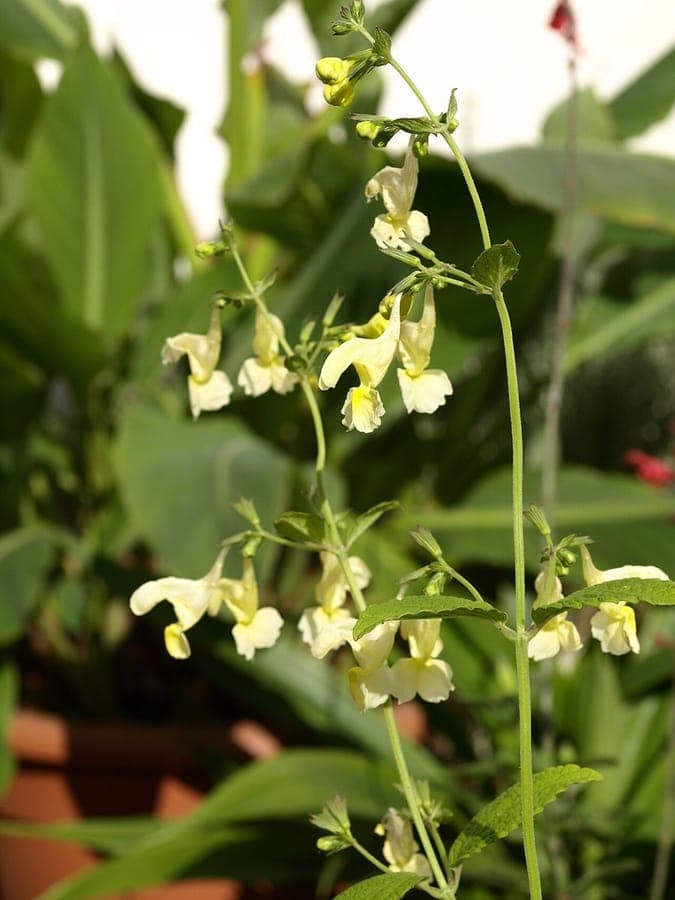
Scott Zona / CC BY 2.0, via Wikimedia Commons
Nepeta govaniana: yellow catmint from the Himalaya
Nepeta govaniana
Want to see Nepeta govaniana: yellow catmint from the Himalaya in your garden?
Full design in HD: €7.99
Look after your Nepeta govaniana with the GardenWorld app
Identify plants with your camera and get a care calendar with reminders for this plant.


Overview
Nepeta govaniana is a catmint you would hardly recognise as one. Where most species flower blue or purple on a low, grey mound, this plant stands tall and airy, with pale yellow flowers hanging like little lanterns from slender side shoots. It comes from the western Himalaya, where it grows in mountain meadows, woodland clearings and along forest edges at considerable altitude. Summers there are cool and moist, and that is exactly what it looks for in a garden.
It is widely known as yellow catmint, a name that tells you just what you get. The RHS has given it an Award of Garden Merit, a reliable sign that it performs well in a temperate climate. In nurseries you will usually find it simply as Nepeta govaniana.
The plant reaches 60 to 90 cm tall and about 50 cm across. It forms a loose clump of upright, branching stems that together make a see-through screen: you look through it to the plants beyond. That makes it ideal for the middle of a border, where it links plantings without hiding them. Curious how such an airy plant would work in your own garden? gardenworld.app can create a garden design that takes your light and soil into account.
Appearance and bloom cycle
The leaves are ovate with scalloped edges, 5 to 10 cm long and soft grey-green to fresh green. When touched they release a pleasant herby scent with a lemony note, gentler than the classic catmint smell. Most foliage sits low on the plant; higher up the stems become thinner and more sparsely leaved.
Flowering starts in July and continues into September, sometimes longer in a cool autumn. The flowers are scattered loosely in open panicles rather than in the dense spikes typical of other catmints. Each is a tubular, two-lipped bloom roughly 2.5 to 3 cm long, pale primrose yellow, with a hooded upper lip and a slightly paler lower lip. Look closely and you may see fine brownish streaks in the throat.
Bumblebees love these flowers, and honeybees and hoverflies visit too. Because the blooms are so widely spaced, the plant never looks heavy; the effect is more of a yellow haze hovering over the border, especially lovely in late-afternoon light.
Ideal location
Give Nepeta govaniana light shade or sun with some shelter from the hottest part of the day. In its native range it is rarely hot and dry, so a baking south-facing slope is not the right spot. An east- or west-facing border, the edge of a woodland garden or a bed that falls into the shade of a tree or hedge in the afternoon is ideal.
Full sun works in a cool climate on moist soil, but you will need to water in dry summers. Protect the plant from strong winds, as its tall, slim stems can blow over. Space plants 45 to 60 cm apart, ideally in a group of three so the airy effect really shows.
Soil requirements
Whereas many catmints thrive on lean, dry ground, this species wants cool, humus-rich soil that holds moisture yet drains well. Good, deeply cultivated garden soil enriched with compost is ideal. On light, sandy soil, work plenty of compost or leaf mould into the top 30 cm at planting time.
Heavy clay is fine as long as water does not sit there in winter; open it up with compost and a little grit if needed. A slightly acidic to slightly alkaline pH is perfectly acceptable. A spring mulch of compost is all the feeding it needs.
Watering
This is the least drought-tolerant catmint you are likely to grow. Water regularly in the first year, once or twice a week in dry weather. Even once established, the plant benefits from a thorough soak at the base during dry spells in summer. Drooping stems and brown leaf margins are clear signs of thirst.
A mulch of compost or leaf mould keeps the roots cool and moist. Water in the morning if you can, and avoid wetting the leaves. In winter the plant needs no extra water; at that time of year soggy soil is the bigger risk.
Free preview
Want to see Nepeta govaniana: yellow catmint from the Himalaya in your garden? Make a free preview of your design.
Pruning
Pruning is straightforward. Leave the plant alone after flowering; the spent panicles still give a delicate structure in autumn. Cut them down to just above ground level in late autumn, or leave them as winter shelter for insects and remove them in March before new growth appears.
Because the stems are tall and thin, it helps to push a few twiggy sticks in among the young shoots in May, so the plant has hidden support later on. Every four or five years, divide the clump in spring if the centre starts to look bare.
Maintenance calendar
March: Cut back old stems. Divide older clumps if needed.
April: Spread a layer of compost. Watch out for slugs on the young leaves, which they love.
May: Plant new specimens. Insert twiggy supports among the shoots if you wish.
June: Water in dry spells, especially young plants.
July to September: Flowering. Water during dry periods. Take cuttings from non-flowering shoots if you like.
October: Leave the plant standing or cut back spent stems. Collect seed if you want to sow.
November to February: Dormancy. No work needed.
The plant calendar on gardenworld.app sets out jobs like these month by month for every plant in your garden.
Winter hardiness
Nepeta govaniana is a mountain plant and fully hardy. It tolerates frost down to around -20 °C and is regarded by British growers as completely hardy. Across the UK and northern Europe it needs no winter protection. The top growth dies back in autumn and new shoots emerge from the rootstock in spring.
As with many perennials, the greatest winter threat is cold, waterlogged soil over a long period. In a reasonably well-drained spot this is rarely a problem. If you grow it in a pot, stand it against a wall in winter and make sure excess water can drain away.
Little is recorded about toxicity; catmints in general are not known to be poisonous to people, dogs or cats. Cats seem less drawn to this species than to true catnip (Nepeta cataria), though you cannot rule out the occasional interested visitor.
Companion plants
Nepeta govaniana looks best among other plants that enjoy cool, moist soil. Thalictrum delavayi, with its clouds of lilac flowers, and the milky bellflower Campanula lactiflora make an airy combination in soft pastels. Pale yellow beside lilac or light blue is a classic, restful pairing.
Masterwort (Astrantia major) and meadow cranesbill (Geranium pratense) fill the foreground. For a wilder, more naturalistic look, add great burnet (Sanguisorba officinalis) with its dark red bobbles. Avoid pairing it with confirmed drought lovers such as lavender or sage: their needs are a world away from those of this Himalayan catmint.
Final thoughts
Nepeta govaniana is a rewarding choice for anyone who wants to add something to the border that you do not see in every garden. It gives months of soft yellow flowers, attracts bumblebees, is fully hardy and is perfectly suited to part shade. What it asks for is simple: cool, moisture-retentive soil, some shelter from the fiercest midday sun and water in dry summers.
Plant a group of three in the middle of a part-shade border and from July to September you will have a light, yellow haze that softens everything around it. Well worth growing if you would like to see catmint from a completely different angle.
Frequently asked questions about Nepeta govaniana
Is Nepeta govaniana winter hardy?
Nepeta govaniana is a mountain plant and fully hardy. It tolerates frost down to around -20 °C and is regarded by British growers as completely hardy.
When and how do you prune Nepeta govaniana?
Pruning is straightforward. Leave the plant alone after flowering; the spent panicles still give a delicate structure in autumn.
How much water does Nepeta govaniana need?
This is the least drought-tolerant catmint you are likely to grow. Water regularly in the first year, once or twice a week in dry weather.
Where does Nepeta govaniana grow best?
Give Nepeta govaniana light shade or sun with some shelter from the hottest part of the day. In its native range it is rarely hot and dry, so a baking south-facing slope is not the right spot.
What soil does Nepeta govaniana need?
Whereas many catmints thrive on lean, dry ground, this species wants cool, humus-rich soil that holds moisture yet drains well. Good, deeply cultivated garden soil enriched with compost is ideal.

See it in your garden
See Nepeta govaniana in your garden
One photo of your garden and a few questions. You see the result in about a minute.
Try it with a photoIdentify this plant in your own garden. Identify a plant
Similar plants
Chinese meadow-rue: complete guide
Thalictrum delavayi
Chinese meadow-rue brings elegance and airiness to borders with delicate lilac flowers. Learn how to grow this stately perennial successfully.
Milky Bellflower: complete guide
Campanula lactiflora
The Milky bellflower is an impressive perennial flowering plant. Learn how to cultivate and care for this striking tall campanula with our practical tips.
Astrantia: complete guide
Astrantia major
Complete care guide for Astrantia major: bloom time, ideal location, soil, watering and companion plants. Perfect for shady borders.
