
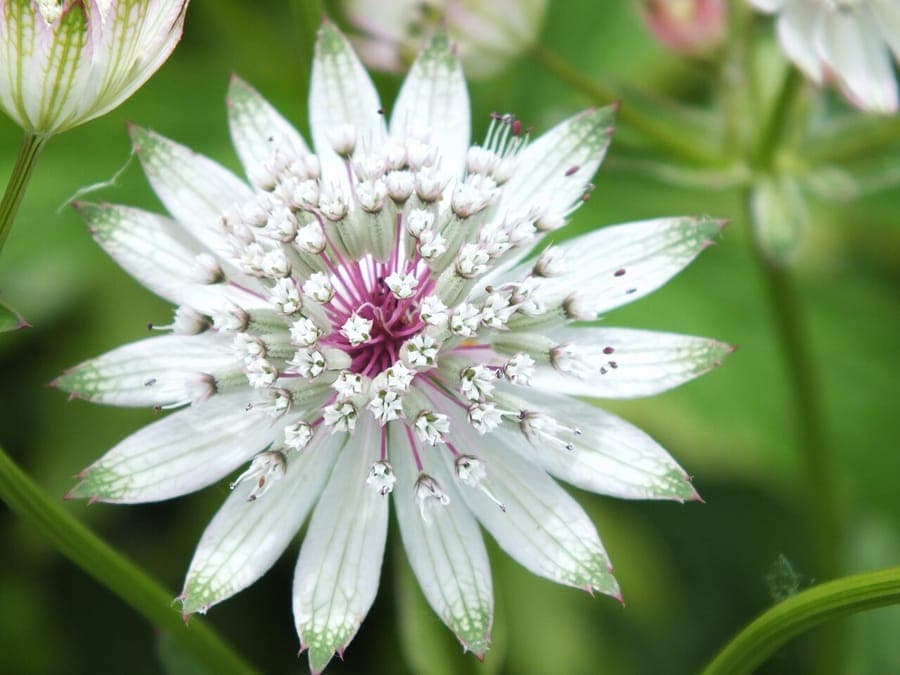
Nathan MacInnes / CC BY-SA 4.0, via Wikimedia Commons
Astrantia: complete guide
Astrantia major
Want to see Astrantia: complete guide in your garden?
1 minute, no credit card
Overview
Astrantia major, commonly known as great masterwort, is a graceful perennial that brings subtle charm to the garden. Native to woodland edges and mountain meadows across central and southern Europe, it thrives in UK and North American gardens within USDA zones 4 to 8. It grows as a clump-forming herbaceous plant, reaching 60–80 cm in height with a spread of about 40 cm. Once established, it returns reliably each year, making it a dependable choice for structured borders or naturalistic planting schemes.
This plant isn't flashy, but it earns its place through longevity and elegance. On gardenworld.app, you can design a planting plan that integrates Astrantia seamlessly with shade-tolerant companions, ensuring balanced texture and bloom timing.
Appearance & bloom cycle
The bloom period runs from June through August, sometimes stretching into early September if deadheaded. The flowers are star-shaped, typically white, though some cultivars offer pink or green-tinged variations. Each bloom consists of a tight central cluster of tiny florets surrounded by a dramatic ring of pointed bracts-giving the impression of a ruffled star.
The foliage is palmate, deeply lobed, and a rich green. It forms a dense basal mound that remains attractive even after flowering. In late summer, dried flower heads add structural interest to the autumn garden.
Ideal location
Astrantia major performs best in partial shade-think dappled light or 4 to 6 hours of morning or late-day sun. Full sun is acceptable only if the soil stays reliably moist. In hot climates, afternoon shade is essential to prevent scorching and stress.
Ideal placements include the middle to back of a mixed border, beneath deciduous trees, or alongside shaded pathways. It's a natural fit for cottage gardens, woodland plantings, or modern shady schemes with architectural ferns and grasses.
Soil requirements
It prefers fertile, humus-rich soil with a pH between 6.5 and 7.0. The soil must retain moisture but drain well-avoid waterlogged clay or dry sandy patches. Before planting, amend the bed with compost or well-rotted manure to boost organic content.
Mulching in spring with leaf mould or garden compost helps maintain moisture and suppress weeds. Replenish the mulch annually for best results.
Watering
Keep the soil consistently moist, especially during the first growing season and in dry summers. Water deeply once a week rather than shallow daily sprinkles. Mature clumps are somewhat drought-tolerant but will bloom better with regular hydration.
Reduce watering in autumn as growth slows. In winter, natural rainfall is usually sufficient unless the season is unusually dry.
Free design
Want to see Astrantia: complete guide in your garden? Make a free design now.
Pruning
Deadhead spent blooms to encourage a second, lighter flush in late summer. Cut flower stems back to the base after blooming. In autumn, you can leave the old foliage for winter structure, or cut it back in early spring before new growth emerges.
Divide overcrowded clumps every 3–4 years in early spring to maintain vigour. Replant divisions immediately or share with fellow gardeners.
Maintenance calendar
- Jan: Check for heaving or frost damage; top up mulch if needed
- Feb: Prepare tools, inspect crowns for rot
- Mar: Cut back old foliage, divide if necessary
- Apr: Apply slow-release fertiliser, monitor for aphids
- May: Water during dry spells, stake tall stems if needed
- Jun: Bloom begins; deadhead regularly
- Jul: Continue deadheading, maintain soil moisture
- Aug: Watch for slugs on young shoots, remove spent stems
- Sep: Allow some seed heads to remain or collect for propagation
- Oct: Clear debris, apply fresh mulch
- Nov: Protect tender young plants with extra mulch
- Dec: Minimal care; avoid walking on frozen crowns
Winter hardiness
Astrantia major is reliably hardy in USDA zones 4–8. In colder regions, a winter mulch of leaf litter or compost helps insulate the crown. Avoid heavy, wet mulches that might promote rot.
The plant dies back completely in winter. Old stems provide some protection, so consider leaving them until early spring cleanup.
Companion plants
Choose partners with similar moisture and light needs. Excellent companions include:
- Hosta – for bold foliage contrast
- Ferns (e.g., Dryopteris or Athyrium) – for texture
- Geranium (e.g., G. macrorrhizum) – for ground cover
- Digitalis purpurea – for vertical accent
- Epimedium – for early spring interest
Plant 30–40 cm apart to allow for natural spread. Use gardenworld.app to visualise spacing and avoid overcrowding in your border design.
Closing
Astrantia major earns its place in any garden through quiet reliability and long seasonal interest. It's not a head-turner, but it's the kind of plant that makes a border feel complete. Available at most garden centres, including independents and chains, look for healthy, well-rooted pots in late spring. With simple care and the right spot, you'll enjoy its delicate blooms for years. Whether you're planting a cottage border or a shaded urban garden, this perennial delivers.
Want to see Astrantia: complete guide in your garden? Make a free design now.
Upload a photo, pick a style, and get a photorealistic design with plant list in under a minute.
No credit card required


Similar plants
Whorled carrot: complete guide
Daucus involucratus
Daucus involucratus is a Mediterranean umbellifer with white flower heads framed by lacy bracts. Growing this gravel garden gem.
Daucus muricatus: complete guide
Daucus muricatus
Daucus muricatus, the spiny wild carrot, grows wild on Mediterranean coasts. Discover sowing, June-July bloom, and wildflower meadow use.
Daucus pumilus: complete guide
Daucus pumilus
Daucus pumilus is a dwarf wild carrot relative with white lacy umbels, thriving on dunes and coastal rock in poor, fast-draining soil.