
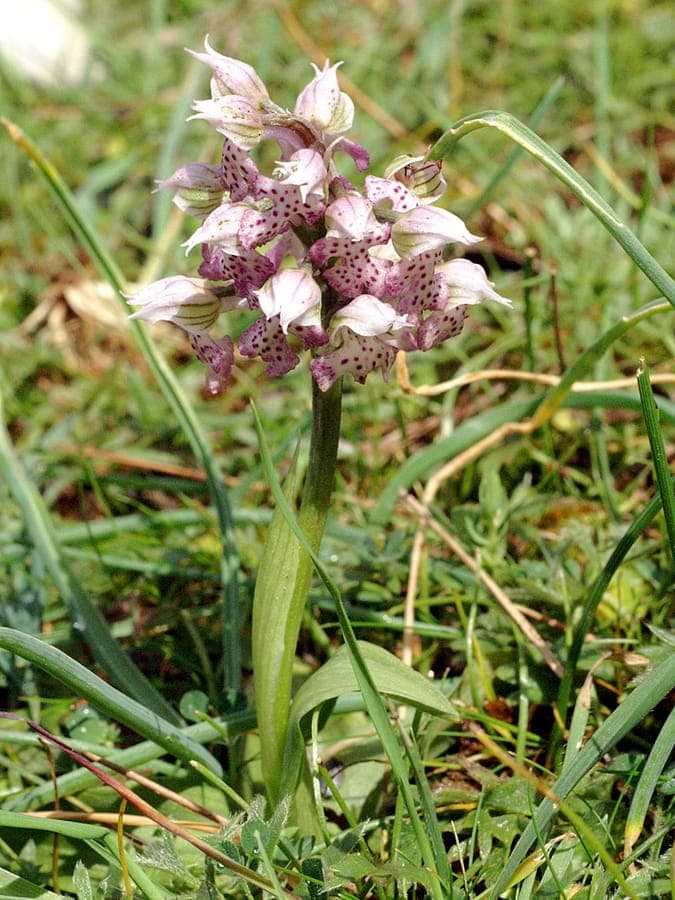
Orchi / CC BY-SA 3.0, via Wikimedia Commons
Neotinea lactea: complete guide
Neotinea lactea
Want to see Neotinea lactea: complete guide in your garden?
1 minute, no credit card
Overview
Neotinea lactea, called milky orchid, is a tiny terrestrial orchid from the Orchidaceae family. This alpine-to-Mediterranean species occurs wild throughout western and eastern Mediterranean regions, including parts of France, Italy, Balearic Islands, Sardinia, and North Africa (Algeria, Tunisia). It demands fastidious cultivation for dedicated orchid collectors and botanical enthusiasts capable of providing specific microclimate and nutrition.
Appearance and Bloom
Neotinea lactea forms small basal rosettes of linear, blue-green leaves reaching 10 to 15 centimeters long. The plant reaches only 20 to 40 centimeters tall. From March to May, slender flower stems emerge bearing tiny white or pale pink flowers densely packed in compact spikes. The flowers emit a delicate, sweet fragrance most noticeable in morning. This small orchid possesses great charm.
Ideal Location
Neotinea lactea requires full sun to light partial shade for optimal blooming. Position where it receives seven to eight hours direct sunlight daily. In very hot Mediterranean zones, afternoon shade may be beneficial. Protect from strong winds. Well-ventilated sites prevent fungal infections.
Soil Requirements
This orchid is very particular about soil composition. Use highly draining mix combining orchid bark, sphagnum moss, sand, and gravel. The plant prefers pH 7.0 to 8.0 (neutral to slightly alkaline). In habitat it grows on limestone-derived soils. Add calcium supplement through crushed shells or gravel. Plant in small containers with excellent drainage.
Free design
Want to see Neotinea lactea: complete guide in your garden? Make a free design now.
Watering
Water moderately during growing season but never waterlogged. Once blooming begins, provide regular watering. After blooming, drastically reduce water. In winter, minimal water. Rainwater is better than tap water. Ensure water drains thoroughly from the plant.
Pruning
No pruning needed. Remove only dead or withered flower stems once they stop blooming. Leave dry leaves on the plant until naturally yellowing.
Maintenance Calendar
Winter: Dormancy; minimal water. Early Spring: Growth resumes; water regularly. Spring: Blooming; follow watering schedule. Summer to Autumn: Gradually reduce water; prepare dormancy.
Winter Hardiness
Neotinea lactea is hardy to about minus 5 degrees Celsius. In temperate zones it can overwinter outdoors provided drainage is perfect and heavy rain is avoided. In cold or very wet climates, better overwintered in pots under glass.
Companion Plants
Neotinea lactea grows beautifully in rock gardens with other alpine orchids and mountain plants. Combine with Sempervivum, small Saxifraga species, and fine grasses. In containers position near other small spring bloomers like Primula.
Closing Thoughts
Neotinea lactea is for the serious orchid enthusiast and botanical gardener. This milky-white Mediterranean orchid brings elegance and botanical rarity to your garden, provided you can meet its very specific cultural needs.
Want to see Neotinea lactea: complete guide in your garden? Make a free design now.
Upload a photo, pick a style, and get a photorealistic design with plant list in under a minute.
No credit card required


Similar plants
Ram's-head lady's slipper: complete guide
Cypripedium arietinum
Everything you need to know about growing Cypripedium arietinum, a rare woodland orchid for cool, moist garden settings. Soil, care and planting tips.
Sparrow's-egg lady's slipper: complete guide
Cypripedium passerinum
Everything about growing Cypripedium passerinum, a cold-hardy subarctic orchid suited to cool, moist, shaded garden spots. Soil, care and companion plants.
Algerian Butterfly-orchid: complete guide
Platanthera algeriensis
Everything about Platanthera algeriensis, the rare Mediterranean orchid with greenish flowers native to Algeria, Morocco, Corsica and Spain.