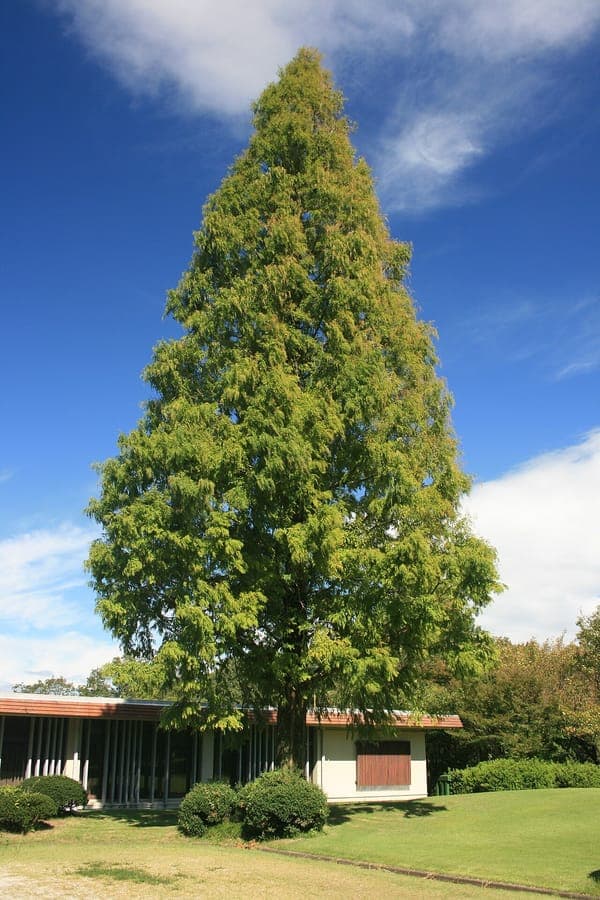
Alpsdake / CC BY-SA 3.0, via Wikimedia Commons
Dawn redwood: complete guide to living fossil
Metasequoia glyptostroboides
Want to see Dawn redwood: complete guide to living fossil in your garden?
Full design in HD: €7.99
Look after your Dawn redwood with the GardenWorld app
Identify plants with your camera and get a care calendar with reminders for this plant.


Overview
The dawn redwood (Metasequoia glyptostroboides), also called Chinese redwood, is an impressive conifer from central and southeast China. This 'living fossil' - surviving from the Mesozoic era - brings prehistoric character to modern gardens. Fast-growing and majestic, it becomes a stunning specimen for gardeners with space. Unique reddish bark and deciduous needle display make it spectacular year-round.
Appearance and bloom
Dawn redwood grows rapidly to 15-35 meters with a pyramidal form. Needles are delicate and feathery, bright green in summer, turning golden-orange in autumn before shedding. This is a deciduous conifer - the only genus Metasequoia! Bark is russet-brown and beautifully furrowed. Decorative in all seasons.
Ideal location
Dawn redwood requires full sun for optimal growth. Plant where it receives at least 6 hours of direct sunlight daily. The tree prefers a sheltered position away from strong winds. Ideal as a specimen tree. Allow space for full height development.
Soil
Dawn redwood thrives in well-draining, moist soil, pH 6.2-8.4. Add organic matter at planting. Heavy clay: incorporate sand and perlite. The tree dislikes both waterlogging and drought - consistent, regular moisture essential.
Free preview
Want to see Dawn redwood: complete guide to living fossil in your garden? Make a free preview of your design.
Watering
Ensure consistent moisture, especially in first growth years. Mature trees prefer regularly moist soil. Water deeply and less frequently than shallow daily watering. Winter: water only in dry spells.
Pruning
Pruning is rarely needed. The tree forms a natural pyramidal shape. Remove only damaged branches or those causing problems. Allow natural form to develop; it is already beautiful.
Maintenance calendar
Spring: Growing season begins, water regularly. Summer: Maintain consistent moisture, protect from drought stress. Autumn: Dramatic color change, reduce watering. Winter: Dormant period, minimal care needed.
Winter hardiness
Dawn redwood is very frost-hardy to -25C and thrives in all temperate climates. Can handle heavy snow loads well.
Companion plants
Dawn redwood grows best alone as a specimen; it does not compete well. Plant in protected garden setting. Beautifully complemented by lower conifers and shade plants.
Closing
The dawn redwood is an extraordinary conifer delivering drama, growth, and natural beauty. With adequate space, this tree reaches full glory. Perfect for designers seeking distinctive specimens. Visit gardenworld.app/en for more inspiration!
Frequently asked questions about Dawn redwood
Is Dawn redwood winter hardy?
Dawn redwood is very frost-hardy to -25C and thrives in all temperate climates. Can handle heavy snow loads well.
When and how do you prune Dawn redwood?
Pruning is rarely needed. The tree forms a natural pyramidal shape.
How much water does Dawn redwood need?
Ensure consistent moisture, especially in first growth years. Mature trees prefer regularly moist soil.
Where does Dawn redwood grow best?
Dawn redwood requires full sun for optimal growth. Plant where it receives at least 6 hours of direct sunlight daily.
What soil does Dawn redwood need?
Dawn redwood thrives in well-draining, moist soil, pH 6.2-8.4. Add organic matter at planting.

See it in your garden
See Dawn redwood in your garden
One photo of your garden and a few questions. You see the result in about a minute.
Try it with a photoIdentify this plant in your own garden. Identify a plant
Similar plants
Cupressus macnabiana: complete guide
Cupressus macnabiana
The Fragrant Cypress offers elegant growth with fine, aromatic foliage. Perfect for temperate climates and as specimen trees in contemporary gardens.
Cupressus guadalupensis: complete guide
Cupressus guadalupensis
The Guadalupe cypress: an elegant conifer for gardens. Complete cultivation guide for this Mexican cypress. Information about care, location, form and maintenance.
Austrocedrus chilensis: complete guide
Austrocedrus chilensis
Discover Austrocedrus chilensis, the Chilean Cedar ornamental conifer. Elegant specimen with fine foliage and columnar form for permanent structure.
