
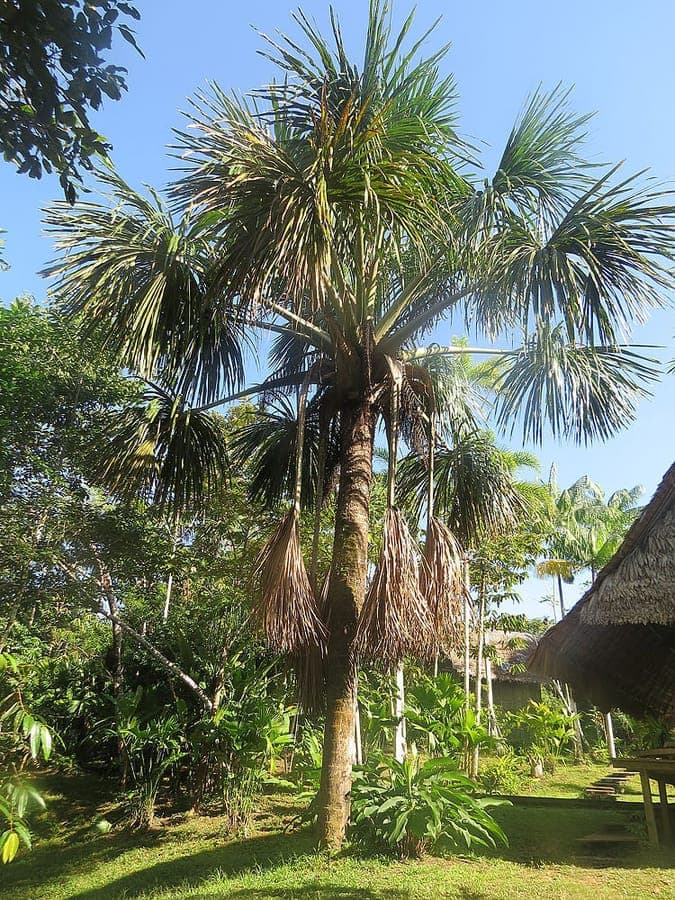
Dick Culbert from Gibsons, B.C., Canada / CC BY 2.0, via Wikimedia Commons
Mauritius Palm: complete guide
Mauritia flexuosa
Want to see Mauritius Palm: complete guide in your garden?
1 minute, no credit card
Overview
Mauritia flexuosa, known as Tree of Life, Moriche Palm or Buriti, is a very large tropical palm native to South America. This majestic tree reaches heights of 20 to 40 meters in nature and forms an important part of tropical ecosystems. The palm has been used by indigenous peoples for centuries for food, tools and construction. In gardens outside tropical regions, this palm is only suitable for very large conservatories or botanical gardens with conditioned growing space.
Appearance and bloom
The palm forms a solid, grayish-brown trunk with characteristic roots that are visible above ground. The leaves are very large, up to 2 meters in length, and have an elegant feathered structure with many small leaflets on each side. The leaves form a dense crown at the top. The flowers are small and inconspicuous, yellowish-white, and form dense plumes between the leaves. After flowering, large round fruits develop the size of apples, olive-brown in color, with edible flesh that local people eat.
Ideal location
This palm grows only in fully tropical climate with minimal temperature fluctuations and high humidity. It thrives best in warm, humid, enclosed environments or very large warm greenhouses. In temperate zones it can only grow in professional botanical gardens. If you try to grow this palm outside the tropics, provide very warm protected location with temperatures never below 15 degrees Celsius. Maximum intense sun as much as possible.
Soil
The palm grows in rich, moist, nutrient forest soil in its native habitat. Use high-quality potting soil or mixture of garden soil, compost and coco fiber in equal parts. The palm does much better on intended rich soil. Good drainage is essential despite preference for moisture. Adding thicker mulch helps moisture retention and temperature stabilization. In gardens provide very rich, compost-heavy soil. Heavy fertilizing can be provided because growth is intensive.
Free design
Want to see Mauritius Palm: complete guide in your garden? Make a free design now.
Watering
Keep the soil moist permanently, almost wet. This palm grows naturally in swampy soils and tolerates no drought. Water daily in warm climates. In areas with seasons, water abundantly during growth but less during rest. High humidity levels are essential. Regular spraying of the leaves increases air humidity and helps prevent leaf insects. Use rainwater or softened water. Salt-containing water can cause leaf scald in enclosed environments.
Pruning
Minimal pruning needed. Remove only dead leaves and shattered branches. Promote healthy growth by allowing growth. Never cut off the growing tip as this can cause palm death. If old leaves accumulate, gently remove them at the base without damaging the trunk. Be very careful with pruning because the palm grows slowly. Regular inspection for pests and diseases is much more important than pruning.
Maintenance calendar
Annually: Check for pests, remove dead leaves, add compost. Growth period: Water abundantly, fertilize monthly. Resting period: Less water, minimal fertilizing. All seasons: Monitor temperature, humidity, light. Annual leaf cleaning helps health.
Winter hardiness
Mauritia flexuosa is not hardy outside tropical regions. Temperatures below 15 degrees Celsius can cause damage. Temperatures below 5 degrees are lethal. In non-tropical zones, grow only in heated conservatories or very special facilities. Protect against wind, in case of unexpected frost. Annual adjustment of temperature control is required. Move to protected space if outside frost is expected.
Companion plants
In tropical gardens grows with other large palms and tropical trees. Shade support from larger trees helps young plantings. Under- and interplanting with tropical shrubs and groundcovers provides stability. In conservatories, other large tropical plants provide shade and moisture regulation. Avoid competing root systems. Combination with orchids and other air plants can provide favorable microclimates.
Closing
Mauritia flexuosa is an iconic tropical palm with cultural and ecological importance. While growth outside the tropics is very difficult, it is valuable for research in scientific institutions. At gardenworld.app you can explore tropical garden designs and choose appropriate plant material for your climate. For tropical regions, palm combination advice for optimal growing.
Want to see Mauritius Palm: complete guide in your garden? Make a free design now.
Upload a photo, pick a style, and get a photorealistic design with plant list in under a minute.
No credit card required


Similar plants
Needle palm: complete guide
Rhapidophyllum hystrix
Everything about the needle palm: the world's hardiest palm, suitable for gardens in temperate climates down to USDA zone 7b.
Saw palmetto: complete guide
Serenoa repens
A complete guide to saw palmetto (Serenoa repens), the iconic fan palm from Florida and the southeastern United States, prized for its toughness.
Puerto Rican hat palm: complete guide
Sabal causiarum
Grow Puerto Rican hat palm successfully. A majestic fan palm with tropical presence suited to sheltered Mediterranean-style gardens.