
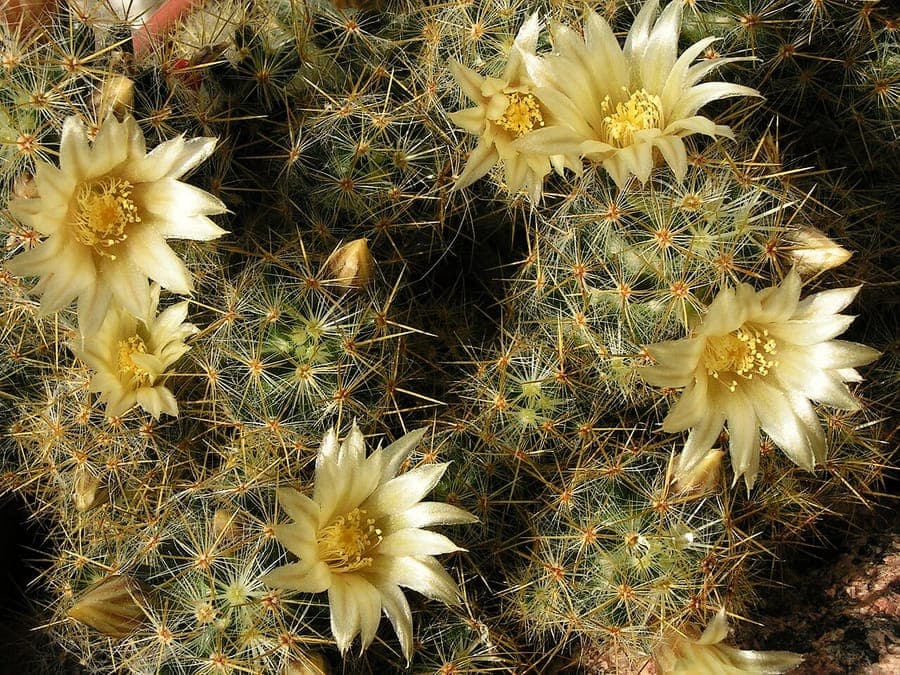
Bff / CC BY-SA 3.0, via Wikimedia Commons
Mammillaria prolifera: complete guide to 'Little Candles' mammillaria cactus
Mammillaria prolifera
Want to see Mammillaria prolifera: complete guide to 'Little Candles' mammillaria cactus in your garden?
1 minute, no credit card
Overview
Mammillaria prolifera, commonly called 'Little Candles' or silver cluster cactus, is a popular and easy-to-grow cactus native to Texas and Mexico. This compact plant is prized for its distinctive warty appearance and charming yellow flowers. It is an excellent choice for beginners and experienced collectors due to its hardiness and attractive form.
This true desert dweller adapts well to dry climates and indoor environments. The plant produces numerous tiny offsets at its base, explaining its name 'prolifera' (proliferating).
Appearance and bloom
Mammillaria prolifera forms compact, globular green bodies covered with warty tubercles rather than true spines. The plant reaches 3-5 cm in diameter and forms clusters of small bodies. Each body is distinctive with its soft, warty texture.
During the growing season (spring through summer), numerous tiny, glossy yellow flowers bloom around the base of the plant. These flowers are approximately 1 cm across and highly attractive. The plant produces small red or purple seed pods after flowering.
New tiny offsets continuously form at the plant's base, making this species highly prolific. This growth habit gives rise to the name 'prolifera'.
Ideal location
Mammillaria prolifera thrives in full sunlight. Place this cactus on a sunny windowsill or patio where it receives at least 6 hours of direct sunlight daily. More sun results in compact growth and prolific flowering.
Indoors, bright south or west-facing windows are best. Under grow lights, plants can flower year-round. Avoid shade, as this leads to weak growth and reduced flowering.
The plant tolerates extreme heat of 35-40 C with minimal stress. Good air circulation is beneficial.
Soil
Mammillaria prolifera requires very well-draining cactus soil. Use commercial cactus and succulent mix or create your own by combining sand, perlite, and potting soil.
Add extra perlite or coarse sand to standard potting soil for maximum drainage. The plant prefers less fertility than most plants.
Slightly acidic to neutral soil (pH 6.0-7.5) is ideal. Avoid heavy, water-retentive soils.
Free design
Want to see Mammillaria prolifera: complete guide to 'Little Candles' mammillaria cactus in your garden? Make a free design now.
Watering
Mammillaria prolifera is a desert plant and extremely drought-tolerant. Water sparingly and only when soil is completely dry. During the growing period (May-September), water when the top 2-3 cm of soil is dry.
During winter (October-April), reduce watering almost completely. The plant enters dormancy and requires minimal moisture. Overwatering is the primary cause of death for this species.
Ensure perfect drainage and use terracotta pots, which provide better aeration.
Pruning
Mammillaria prolifera requires minimal pruning. The plant naturally maintains a compact form. Remove only damaged or diseased portions.
Old or dead bodies may be carefully removed. Young offsets can be harvested for propagation.
Avoid hard pruning, which damages the plant.
Maintenance calendar
April-May: Start growing season, water moderately. June-August: Blooming period, water regularly. September-October: Prepare for dormancy, reduce watering. November-March: Winter rest, minimal watering.
Winter hardiness
Mammillaria prolifera has limited hardiness. The plant tolerates temperatures down to about -2 C for brief periods, but frost damage occurs with prolonged exposure.
In frost-prone regions, keep the plant indoors. In warmer climates (zone 9+), it can grow outdoors with frost protection.
Companion plants
Mammillaria prolifera pairs well with other small cacti in a collection. Combine with Rebutia spinosissima, Parodia leninghausii, or Echinopsis hybrids.
In a cactus garden or xeriscape design, combine with Agave parviflora, Graptopetalum species, and Festuca glauca.
For textural contrast, pair with Aloe arborescens or Echeveria pullidonis.
Closing remarks
Mammillaria prolifera is an excellent cactus for collectors of all levels. With minimal care, infrequent watering, and plenty of sun, this plant thrives and flowers reliably. The tiny yellow blooms and abundant offsets make it a constantly interesting specimen.
This plant is available at garden centers across North America and Europe. For more information, visit gardenworld.app.
Want to see Mammillaria prolifera: complete guide to 'Little Candles' mammillaria cactus in your garden? Make a free design now.
Upload a photo, pick a style, and get a photorealistic design with plant list in under a minute.
No credit card required


Similar plants
Plains prickly pear: complete guide
Opuntia polyacantha
All about plains prickly pear cactus: hardiness, soil, placement and care. One of the most cold-tolerant cacti for temperate gardens.
Saguaro: complete guide
Carnegiea gigantea
Everything about growing saguaro cactus: container care, watering, overwintering, and companion plants for this iconic desert giant.
Cylindropuntia imbricata: complete guide
Cylindropuntia imbricata
The Tree Cholla offers distinctive segmented stems and vibrant red flowers. A unique ornamental succulent perfect for sunny, dry gardens and large containers.