
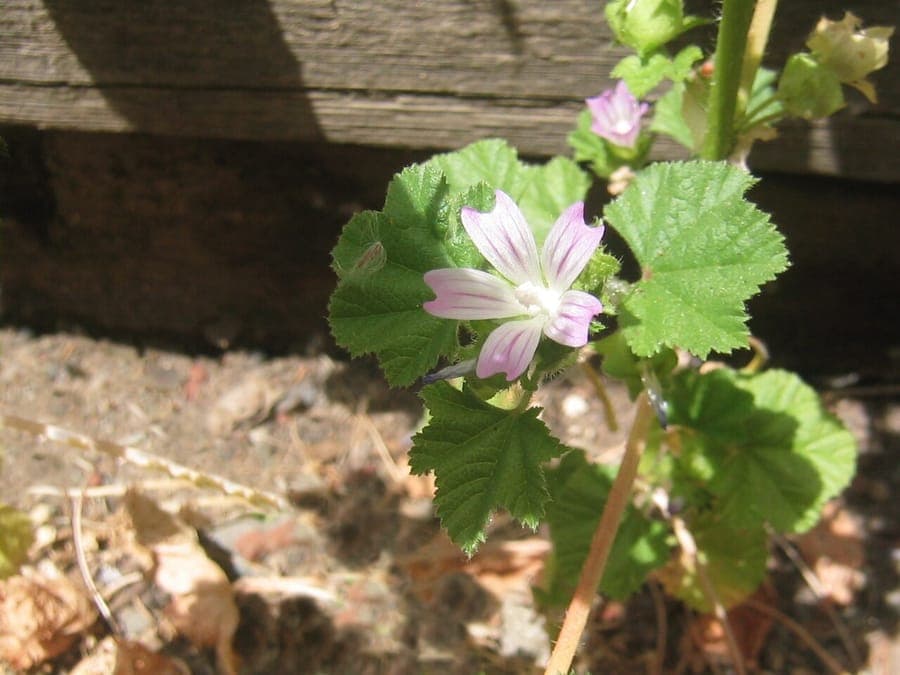
carol / CC BY-SA 3.0, via Wikimedia Commons
Malva neglecta: complete guide
Malva neglecta
Want to see Malva neglecta: complete guide in your garden?
1 minute, no credit card
Overview
Malva neglecta, commonly referred to as common mallow or dwarf mallow, is a remarkable biennial to short-lived annual plant naturally distributed from the Canary Islands and Morocco through continental Europe extending to central Asia and the western Himalaya. This versatile member of the Malvaceae family is noted for its exceptional adaptability to a remarkably broad range of growing conditions and ecological niches. Despite its modest stature and often overlooked appearance, Malva neglecta plays important ecological roles as a food source for numerous insect and bird species throughout its lifecycle. The plant is frequently overlooked by gardeners (hence the species epithet 'neglecta'), yet genuinely merits greater appreciation as an easily-grown groundcover and prolific seed producer. The plant develops rapidly from seed, often reaching flowering maturity within a single growing season, making it ideal for gardeners seeking quick results from direct sowing. The primary advantage of Malva neglecta lies in its exceptional drought tolerance once established, rendering it highly useful in contemporary drought-adapted garden designs. At gardenworld.app, we recognize this species as deserving increased attention for sustainable and low-maintenance gardening approaches. The plant is perfectly suited for meadow gardens, pollinator-supporting landscapes, and xeriscape designs that minimize water utilization.
Appearance and Bloom Period
Malva neglecta forms a low, spreading plant typically achieving heights of only 20-40 cm with extensive lateral branches extending nearly horizontally, creating a ground-hugging framework 30-60 cm in width. The foliage consists of round to kidney-shaped leaves displaying 5-9 shallow lobes with crenate (toothed) margins. Individual leaves reach 2-5 cm in diameter, bearing soft, fine hairs throughout giving a notably soft appearance and texture. Flowers emerge from May through October in moderate abundance along the leaf axils. Each bloom measures a modest 0.8-1.2 cm in diameter - substantially smaller than its larger relatives - displaying pale pink to lilac coloration, sometimes nearly white with darker pink or purple striping patterns. The open flower form clearly displays yellow-orange stamens making pollen collection straightforward for visiting pollinators. Following fertilization, the plant produces characteristic disc-shaped fruits (schizocarps) containing 7-10 individual chambers, each housing a single seed. These fruits demonstrate notable attractiveness to seed-consuming birds actively seeking this food resource.
Ideal Location and Light Requirements
Malva neglecta succeeds in virtually any location, accepting full sun through part-shade exposures. The plant accommodates both south- and north-facing sites equally well. In warm climates, it even appreciates afternoon shade. USDA hardiness zones 3-11 encompass this species' range, indicating suitability across virtually all European regions. Single-season cultivation in temperate climates typically suffices for establishment and self-seeding.
Free design
Want to see Malva neglecta: complete guide in your garden? Make a free design now.
Soil Requirements
Malva neglecta develops successfully in virtually every soil type, from extremely lean to richly amended. The plant accepts sandy, clayey, gravelly substrates, and even nutrient-poor mountain soils. Soil pH tolerance extends from extremely acidic to extremely alkaline (pH 4.5-8.0). This species demonstrates the greatest soil adaptability of all Malva species. For container cultivation, standard potting compost suffices. Drainage proves less critical than for other Malva species.
Seed Propagation
Malva neglecta self-seeds extremely readily and generously. Direct sowing into garden soil in spring proves straightforward. Seeds germinate within 1-2 weeks. No covering necessary - simply sow seeds directly on soil surface. The plant reaches flowering maturity from seed within a single season. Volunteer seedlings appear monthly provided the parent plant remains to produce seeds.
Watering Requirements
Malva neglecta demonstrates extreme drought tolerance once established. Regular watering during initial establishment - approximately the first 2-3 weeks - improves survival, thereafter the plant survives nearly completely without water. This species suits dry summer gardens, xeriscapes, and water-limited landscapes perfectly. It equally tolerates wet conditions, though it still prefers well-draining substrate.
Maintenance Calendar
April-May: Self-seeding begins, occasional watering if needed May-June: Rapid seedling growth, flowering commences July-October: Continuous flowering, continuous self-seeding October-November: Seed maturation, plants may die in freezing conditions December-March: In temperate climates usually killed by frost
Self-Seeding Management
Malva neglecta's self-seeding can be managed at any point by removing spent flowers before seed maturation. Many gardeners allow unrestricted self-seeding, creating natural populations. This proves especially beneficial in xeric and dry garden designs where minimal intervention is desired.
Companion Planting
Malva neglecta combines effectively with:
- Dianthus species - structural interest and white flowers
- Sedum species - fine texture, drought tolerant
- Oreganum species - aromatic foliage, simultaneous blooming
- Ornamental grasses - textural interest and movement
- Salvias - structural foliage contrast
Ecological Value
Despite modest appearance, Malva neglecta provides essential nutrition for numerous insect and bird species. Nectar sources prove important for early spring pollinators (May-June), and seeds feed numerous bird species throughout autumn and winter. This plant supports food webs in elegant, unobtrusive fashion.
Conclusion
Malva neglecta represents an overlooked treasure for ecologically-conscious gardeners. This plant deserves greater recognition as an ecologically-valuable, drought-tolerant self-seeding species perfect for contemporary sustainable garden designs. At gardenworld.app, we recommend actively cultivating this species as integral to ecologically-healthy gardens.
Want to see Malva neglecta: complete guide in your garden? Make a free design now.
Upload a photo, pick a style, and get a photorealistic design with plant list in under a minute.
No credit card required


Similar plants
Crimean linden: complete guide
Tilia × euchlora
Crimean linden is an elegant, fast-growing shade tree ideal for large gardens. Discover cultivars, spacing, maintenance tips and winter hardiness.
California flannelbush: complete guide
Fremontodendron californicum
Everything about California flannelbush (Fremontodendron californicum): sunny placement, drainage, pruning and care for this spectacular yellow-flowering shrub.
Hairy rose mallow: complete guide
Hibiscus moscheutos subsp. lasiocarpos
Full growing guide for hairy rose mallow (Hibiscus moscheutos subsp. lasiocarpos): location, soil, watering, winter hardiness and garden design tips.