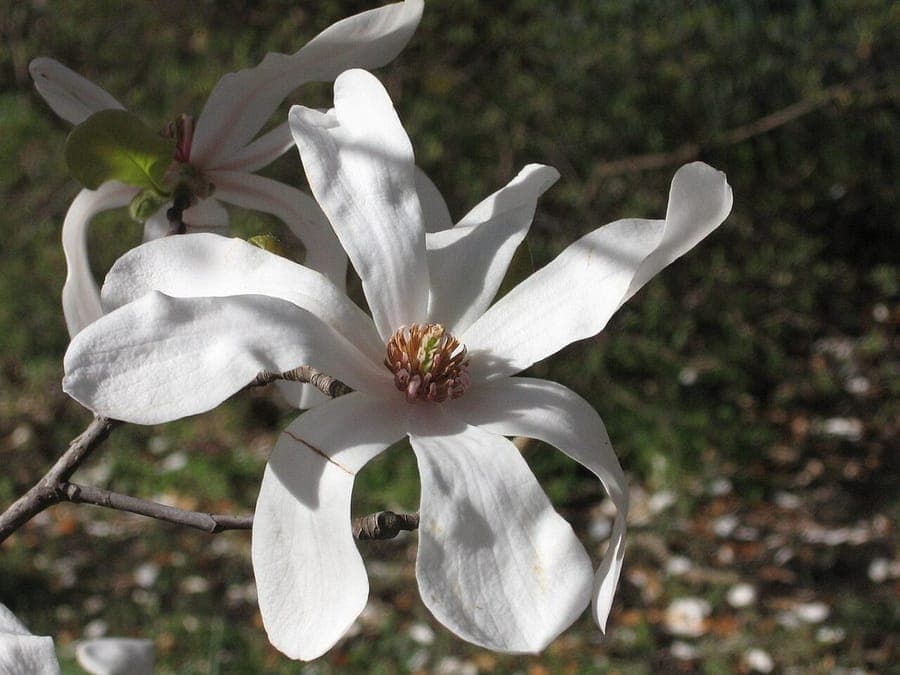
A. Barra / CC BY-SA 4.0, via Wikimedia Commons
Loebner magnolia: complete guide
Magnolia × loebneri
Want to see Loebner magnolia: complete guide in your garden?
Full design in HD: €7.99
Look after your Loebner magnolia with the GardenWorld app
Identify plants with your camera and get a care calendar with reminders for this plant.


Overview
Loebner magnolia (Magnolia × loebneri) is one of the most rewarding magnolias for an ordinary garden. It is a cross between two Japanese species, the kobushi magnolia (Magnolia kobus) and the star magnolia (Magnolia stellata). The German horticulturist Max Löbner made the cross at Pillnitz near Dresden in the years before the First World War; the first seedlings flowered in 1917 and the hybrid was named after him in 1920. From one parent it inherited vigour and a tree-like habit, from the other its graceful star-shaped flowers and its willingness to bloom while still young.
The result is a small tree or large multi-stemmed shrub that, given many years, can reach 6 to 8 metres in height with a similar spread. For the first decade it usually stays at around 3 to 4 metres, which suits medium-sized gardens well. The best-known cultivars are 'Merrill', with large pure white flowers, and 'Leonard Messel', with lilac-pink flowers that are paler on the inside. 'Merrill' was selected at the Arnold Arboretum in Boston in 1939 and is known for flowering heavily and reliably.
Wondering whether your garden has room for a magnolia? You can have a garden design drawn up on gardenworld.app that already allows for the tree's eventual canopy.
Appearance and bloom cycle
The great appeal of Magnolia × loebneri lies in its early display. In late March or early April, before any leaves appear, the furry buds split and the tree fills with star-shaped flowers. Each bloom measures 10 to 15 cm across and has ten to fifteen narrow, gently wavy tepals that open fully flat in sunshine. At the centre sits a cone of pink-tinged stamens around a green pistil. The flowers carry a soft, sweet fragrance, most noticeable on a calm, sunny day.
A further advantage is that this hybrid flowers young, often in the second or third year after planting, whereas Magnolia kobus may keep you waiting for more than ten years. Flowering lasts two to three weeks, depending on the weather.
The leaves follow the flowers: obovate, 8 to 15 cm long, mid-green and matt. In autumn they turn buttery yellow before falling. In some years knobbly fruit cones form in September and split open to reveal bright red seeds. The tree is attractive in winter too, with smooth grey bark and silvery, hairy flower buds at the tips of the twigs.
Magnolias are not known to be toxic to people, dogs or cats, and there are no reported cases of poisoning from this tree.
Ideal location
Give the tree a spot in full sun or light shade; the more sun, the better the flowering. Pay attention to morning sun, though: flowers that are warmed suddenly by early sunshine after a night frost turn brown. A west- or south-facing position sheltered from cold easterly winds is therefore ideal.
Think ahead when planting. Magnolias dislike being moved and should stay in the same place for many years. Allow for a canopy at least 5 metres wide and plant about 3 metres from walls and paths. It looks its best as a specimen in a lawn, in a front garden or at the edge of a border where you can watch it flower from the house. A young tree will manage a few years in a large container, but in the long run it belongs in open ground.
Soil requirements
Magnolia × loebneri is less demanding than many other magnolias. Where most species insist on acidic soil, this hybrid also tolerates neutral and mildly alkaline ground. The ideal is a humus-rich, moisture-retentive but well-drained soil with a pH between 5.5 and 7.5. On heavy clay, work plenty of compost and some coarse grit into the planting area; on poor sandy soil, add extra compost or well-rotted manure.
The root system deserves special care. Magnolias have fleshy, shallow roots that are easily damaged, so never dig or hoe beneath the canopy. Keep the soil covered instead with a 5 to 8 cm mulch of leaf mould or bark chips, or with low ground cover that offers little competition. Plant the tree no deeper than it sat in its pot.
Free preview
Want to see Loebner magnolia: complete guide in your garden? Make a free preview of your design.
Watering
During the first two years after planting the tree needs regular watering. In dry weather give 15 to 20 litres once a week so that the soil around the root ball is moistened deeply. A thorough soaking now and then is better than frequent sprinkles.
An established tree copes on its own in most summers, but a long drought in July and August can scorch the leaves and weaken the formation of next year's buds. In that case, water generously every other week. Mulch helps the soil hold moisture and protects the shallow roots from drying out. No extra water is needed in winter.
Pruning
Prune a magnolia as little as possible. It develops a handsome, well-balanced shape on its own, and large wounds heal poorly. If you must intervene, remove only dead, damaged or crossing branches, plus any shoots sprouting from the base.
The best time is midsummer, in July, when the tree is in full leaf and cuts close quickly. Avoid pruning in winter or early spring: the tree bleeds sap and you remove the flower buds as well. A light trim straight after flowering, in May, is possible, but summer is preferable. Cut thicker branches in stages to avoid tearing the bark, and leave the branch collar intact.
Maintenance calendar
March–April: Flowering. If a hard night frost is forecast, cover a young tree with fleece. This is also the best period to plant new trees.
May: Leaves emerge. Top up the mulch and apply an organic shrub fertiliser.
June–August: Water during drought, especially young trees. July is the best moment for any light pruning.
September–October: Fruit cones with red seeds may appear. Leaves turn yellow. Stop feeding.
November–February: Dormancy. The furry flower buds are already visible. Do not dig beneath the canopy.
Winter hardiness
Magnolia × loebneri is fully hardy throughout Britain, Ireland and the Low Countries and withstands temperatures down to about -25 °C, which corresponds to USDA zone 5. Wood and buds come through severe winters without protection.
Its one weakness is the early flowering. A frost of a few degrees below zero while the tree is in bloom will brown the open flowers. The tree itself is unharmed, and buds that are still closed often open later. Avoid planting in a frost pocket and keep it out of full morning sun after a frosty night. Young trees in containers should spend the winter against a wall with the pot wrapped.
Companion plants
Because the magnolia flowers so early, the best partners are spring bulbs and perennials at its feet. A carpet of blue Siberian squill (Scilla siberica) beneath a white 'Merrill' is a classic picture. Wild daffodils (Narcissus pseudonarcissus) and dog's-tooth violets (Erythronium dens-canis) flower at the same time and cope well with the light shade the tree casts later in the year.
For foliage that stays attractive for the rest of the season, Brunnera macrophylla and Lenten rose (Helleborus orientalis) are excellent choices. Neither roots deeply, so they will not disturb the magnolia. Avoid rampant ground cover and large shrubs right under the canopy.
Final thoughts
Magnolia × loebneri is the magnolia for gardeners who want quick results and do not have acidic soil. It flowers young, generously and with fragrance, tolerates lime better than its relatives and is completely hardy. Give it a permanent spot with enough room, leave its shallow roots undisturbed and prune as little as possible, and it will be covered in white or pink stars every spring for decades.
Want to know when to plant, mulch or prune? The plant calendar on gardenworld.app sets out the right jobs for your magnolia and the rest of your garden, month by month.
Frequently asked questions about Loebner magnolia
Is Loebner magnolia winter hardy?
Magnolia × loebneri is fully hardy throughout Britain, Ireland and the Low Countries and withstands temperatures down to about -25 °C, which corresponds to USDA zone 5. Wood and buds come through severe winters without protection.
When and how do you prune Loebner magnolia?
Prune a magnolia as little as possible. It develops a handsome, well-balanced shape on its own, and large wounds heal poorly.
How much water does Loebner magnolia need?
During the first two years after planting the tree needs regular watering. In dry weather give 15 to 20 litres once a week so that the soil around the root ball is moistened deeply.
Where does Loebner magnolia grow best?
Give the tree a spot in full sun or light shade; the more sun, the better the flowering. Pay attention to morning sun, though: flowers that are warmed suddenly by early sunshine after a night frost turn brown.
What soil does Loebner magnolia need?
Magnolia × loebneri is less demanding than many other magnolias. Where most species insist on acidic soil, this hybrid also tolerates neutral and mildly alkaline ground.

See it in your garden
See Loebner magnolia in your garden
One photo of your garden and a few questions. You see the result in about a minute.
Try it with a photoIdentify this plant in your own garden. Identify a plant
Similar plants
Scilla siberica: complete guide
Scilla siberica
Discover Scilla siberica, the Siberian squill - the most reliable and prolific early spring bulb. With vivid blue flowers that multiply readily, it creates stunning naturalized drifts and restores joy to winter-weary gardens.
Daffodil: complete guide
Narcissus pseudonarcissus
Everything about the daffodil (Narcissus pseudonarcissus): planting, care, naturalising and the best cultivars. Practical tips for a radiant spring garden.
Dogtooth-violet: complete guide
Erythronium dens-canis
How to grow Erythronium dens-canis: ideal light, soil pH, watering needs and companion plants. Perfect for woodland gardens and shady borders.
