Qwert1234 / CC BY-SA 3.0, via Wikimedia Commons
Magnolia obovata: complete guide
Magnolia obovata
Want to see Magnolia obovata: complete guide in your garden?
Full design in HD: €7.99
Look after your Magnolia obovata with the GardenWorld app
Identify plants with your camera and get a care calendar with reminders for this plant.


Overview
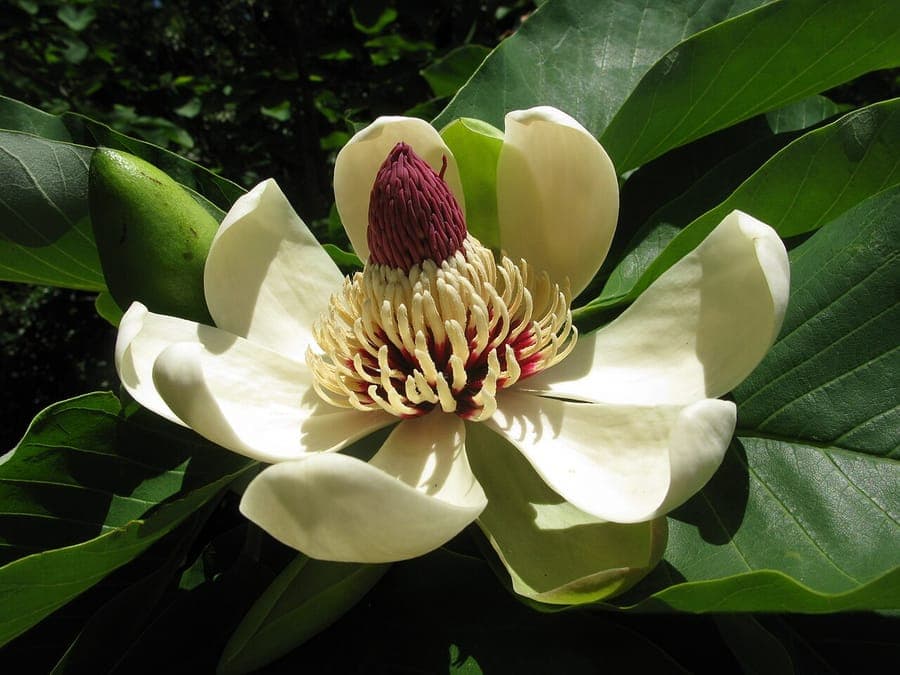
The Magnolia obovata, commonly known as Japanese whitebark magnolia, is an impressive tree native to Japan and the Kuril Islands. This magnolia belongs to the Magnoliaceae family and is renowned for its large, eye-catching leaves and beautiful, fragrant flowers that emerge in late spring. The tree grows to a majestic height and serves as a true focal point in any garden.
Appearance and Bloom
The Japanese whitebark magnolia distinguishes itself through exceptionally large, obovate leaves that can reach 30-50 cm in length. The foliage is dark green above and persistently grey-green beneath, creating a unique two-toned effect. The white to cream-colored flowers appear in May and June before the complete canopy emerges. These flowers are highly aromatic and can reach up to 15 cm in diameter. The flowering period lasts several weeks and creates a spectacular display in the garden.
Ideal Location
Magnolia obovata thrives best in full sun to partial shade. The tree tolerates more shade than many other magnolias but blooms most profusely in full sun. Choose a sheltered location where young shoots are protected from cold, cutting winds that can damage flowers. A position against a south-facing wall or near protective trees is ideal.
Soil
This tree performs best in moist, well-draining soil with a pH between 5.5 and 6.5. At planting, incorporate plenty of organic matter such as compost or leaf mold to improve soil structure. The tree is sensitive to both very dry and very wet conditions, so maintain good balance. Mulch around the base helps keep soil moist and protects shallow roots.
Watering
During the growing season, water the tree regularly, especially when soil feels dry. Once established, Magnolia obovata is reasonably drought-tolerant but blooms best with consistently moist soil. Water at the tree base and avoid wetting foliage, which can promote fungal diseases. In dry summers, supplemental watering may be necessary.
Free preview
Want to see Magnolia obovata: complete guide in your garden? Make a free preview of your design.
Pruning
Magnolia obovata requires minimal pruning. Remove only dead, damaged, or crossing branches in late summer or early fall. The pruning window is limited; avoid pruning after September to prevent cutting into flowering wood. The natural form is elegant and attractive, so drastic pruning is unnecessary and may disturb the characteristic shape.
Maintenance Calendar
Spring: Check for frost damage, add mulch if needed, and begin regular watering. Summer: Follow consistent watering schedule, especially during dry periods, and monitor for pests. Fall: Leaf color change is normal; collect fallen leaves around the tree. Winter: Protect young trees with screening or winter cloth against extreme frost.
Winter Hardiness
Magnolia obovata is moderately hardy and can withstand temperatures down to -15 degrees Celsius once well-established. Young trees are more tender and may require protection during severe winters. The large flower buds are sometimes sensitive to late frosts, particularly in regions with erratic winters. Plant young trees in sheltered locations in colder areas.
Companion Plants
Magnolia obovata combines beautifully with Ericaceae and other shade-tolerant shrubs such as Pieris, Mahonia, and Rhododendron. The white flowers of this magnolia harmonize nicely with blue flowering plants or silvery-foliaged specimens like Senecio cinearia.
Conclusion
Magnolia obovata is an excellent choice for garden enthusiasts seeking a majestic tree with dramatic foliage and stunning flowers. With proper care and ideal growing conditions, this Japanese magnolia will provide years of enjoyment in your garden.
Available at: Quality garden centers specializing in ornamental trees and magnolias for superior selection and expertise.
Frequently asked questions about Magnolia obovata
Is Magnolia obovata winter hardy?
Magnolia obovata is moderately hardy and can withstand temperatures down to -15 degrees Celsius once well-established. Young trees are more tender and may require protection during severe winters.
When and how do you prune Magnolia obovata?
Magnolia obovata requires minimal pruning. Remove only dead, damaged, or crossing branches in late summer or early fall.
How much water does Magnolia obovata need?
During the growing season, water the tree regularly, especially when soil feels dry. Once established, Magnolia obovata is reasonably drought-tolerant but blooms best with consistently moist soil.
Where does Magnolia obovata grow best?
Magnolia obovata thrives best in full sun to partial shade. The tree tolerates more shade than many other magnolias but blooms most profusely in full sun.
What soil does Magnolia obovata need?
This tree performs best in moist, well-draining soil with a pH between 5.5 and 6.5. At planting, incorporate plenty of organic matter such as compost or leaf mold to improve soil structure.

See it in your garden
See Magnolia obovata in your garden
One photo of your garden and a few questions. You see the result in about a minute.
Try it with a photoIdentify this plant in your own garden. Identify a plant
Similar plants
Loebner magnolia: complete guide
Magnolia × loebneri
Everything about Loebner magnolia (Magnolia × loebneri) 'Merrill' and 'Leonard Messel': starry spring flowers, position, soil, summer pruning and hardiness.
Saucer magnolia: complete growing guide
Magnolia × soulangeana Soul.-Bod.
Saucer magnolia is a hybrid featuring spectacular pink-white flowers appearing before leaf emergence. Ideal as specimen plant. Winter-resistant to -15°C.
Magnolia delavayi: complete guide
Magnolia delavayi
Delavay magnolia is an imposing shrub from southern China with large glossy leaves and fragrant creamy-white flowers. Learn about cultivation, hardiness, and care for this rare species.
