
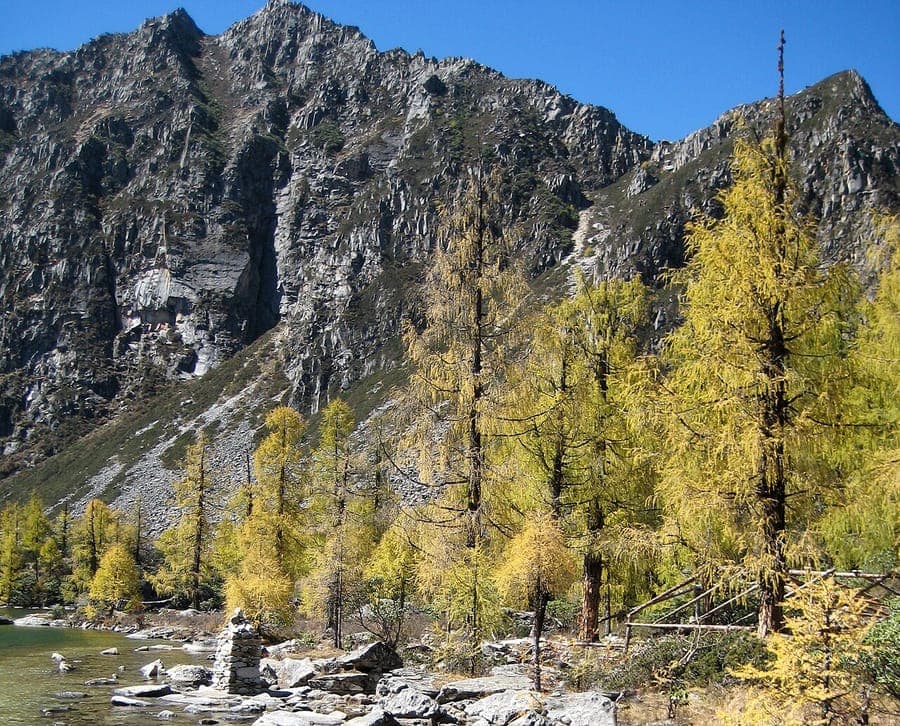
rduta on Flickr / CC BY 2.0, via Wikimedia Commons
Larix potaninii: complete guide
Larix potaninii
Want to see Larix potaninii: complete guide in your garden?
1 minute, no credit card
Overview
Larix potaninii, commonly called Chinese larch or Potanin larch, is an exceptional deciduous conifer from mountain regions of Nepal, Tibet, and central China. This elegant tree grows in subalpine forest environments where extreme conditions test this species' strong character. With its fine, ornamental needles and golden autumn color, Chinese larch brings unique charm to alpine gardens.
This larch typically grows as a slender to moderate tree, reaching 15-25 meters in gardens. It distinguishes itself through late spring leaf emergence and early autumn golden transformation. gardenworld.app recommends Chinese larch for gardeners who value alpine beauty and seasonal change.
The tree is perfect for landscapes desiring four-season interest. It delivers winter silhouette, spring growth, summer greenery, and spectacular autumn color.
Appearance and Bloom
Larix potaninii has extremely fine, soft needles that grow in long, thin clusters. Needles are light green in summer. In autumn, the tree transforms spectacularly, with all needles changing to beautiful gold to orange before falling.
The tree has a slender, elegant form with branches somewhat ascending. Bark is gray-brown and becomes rougher with age, adding visual texture.
Flowers are inconspicuous; male flowers are small, yellow cones while female flowers are rosy. After blooming, small wooden cones form, approximately 1-2 cm long. These cones remain attractive through the following winter, creating morphological interest.
The tree's winter silhouette, when all needles have fallen, creates an interesting, finely-branched pattern.
Ideal Location
Larix potaninii thrives in full sun. Provide at least 6 hours of direct sunlight daily. The tree tolerates partial shade but grows more slowly.
The plant shows exceptional wind tolerance and needs no shelter. This makes it perfect for exposed locations where many other trees struggle. Alpine mountain settings are ideal.
Temperature: Chinese larch is fully hardy and tolerates temperatures to -30°C or lower.
Free design
Want to see Larix potaninii: complete guide in your garden? Make a free design now.
Soil
Larix potaninii accepts almost any well-draining soil. It performs best in slightly moist soil but can also grow dry. Acidic to neutral soil is ideal.
The tree thrives in lean, stone and gravel-rich soils. Nutrient-rich soils sometimes cause excessive growth, which is not favorable.
Waterlogging is harmful; ensure good drainage. In low, wet areas it performs poorly.
Watering
Larix potaninii is very drought-tolerant once established. Water new trees regularly until well-rooted, approximately two to three growing seasons. Water thoroughly but allow soil to dry somewhat between waterings.
Mature, established trees need minimal supplemental water. Even in dry summers they survive without additional irrigation.
Pruning
Larix potaninii requires no formal pruning. The tree grows naturally elegant. However, remove dead branches as soon as noticed.
Limit any pruning to removing diseased or damaged wood. The tree produces new growth from old wood less readily.
Maintenance Calendar
Spring: Monitor for winter damage. Water regularly in first year after planting. Enjoy late leaf emergence.
Summer: No extra care needed. Enjoy fine green foliage.
Autumn: Enjoy spectacular golden color change from September to October. Collect seed if desired from fallen cones.
Winter: Enjoy winter silhouette. No care needed.
Winter Hardiness
Larix potaninii is fully hardy and tolerates temperatures to -30°C or lower. This makes it perfect for continental and Scandinavian winters. Snow and ice rarely cause damage. The tree actually prefers cold climates.
Even young plants are hardy. No winter protection needed.
Companion Plants
Larix potaninii combines beautifully with other alpine and mountain plants:
- Pinus mugo (dwarf mountain pine)
- Juniperus communis subsp. alpina
- Salix glauca (gray willow)
- Betula nana (dwarf birch)
- Dryas octopetala (mountain avens)
- Vaccinium myrtillus (bilberry)
Plant together for an alpine, mountainous effect.
Closing
Larix potaninii is an exceptional tree that brings four-season interest to any landscape. With its fine needles, alpine appearance, and spectacular autumn color, it's a true alpine masterpiece. gardenworld.app recommends Chinese larch for gardeners who value alpine charm and seasonal change.
Want to see Larix potaninii: complete guide in your garden? Make a free design now.
Upload a photo, pick a style, and get a photorealistic design with plant list in under a minute.
No credit card required


Similar plants
Abies delavayi: complete guide
Abies delavayi
Delavayi fir is an elegant, medium-sized coniferous tree from the Pinaceae family with dark green needles. This Asian evergreen is perfect for alpine gardens and large landscapes.
Taiwan fir: complete guide
Abies kawakamii
Discover the magnificent Taiwan fir, a rare evergreen conifer from Taiwan's mountain regions. Learn growth requirements, care tips, and why this beautiful tree is perfect for collectors of unique garden specimens.
Farges fir: complete guide
Abies fargesii
Discover the majestic Farges fir, an impressive conifer from China's mountains with elegant foliage and columnar form. Ideal for large gardens.