
Wikimedia Commons / CC BY-SA 3.0, via Wikimedia Commons
Phoenician juniper: complete guide
Juniperus phoenicea
Want to see Phoenician juniper: complete guide in your garden?
1 minute, no credit card
Overview
Juniperus phoenicea (Phoenician juniper) is a Mediterranean conifer with red to reddish-brown fruit and an elegant, compact silhouette. Native to southern Spain, southern Italy and Sardinia, this plant tolerates drought and poor soils excellently. Perfect for warm gardens.
Appearance & Growth
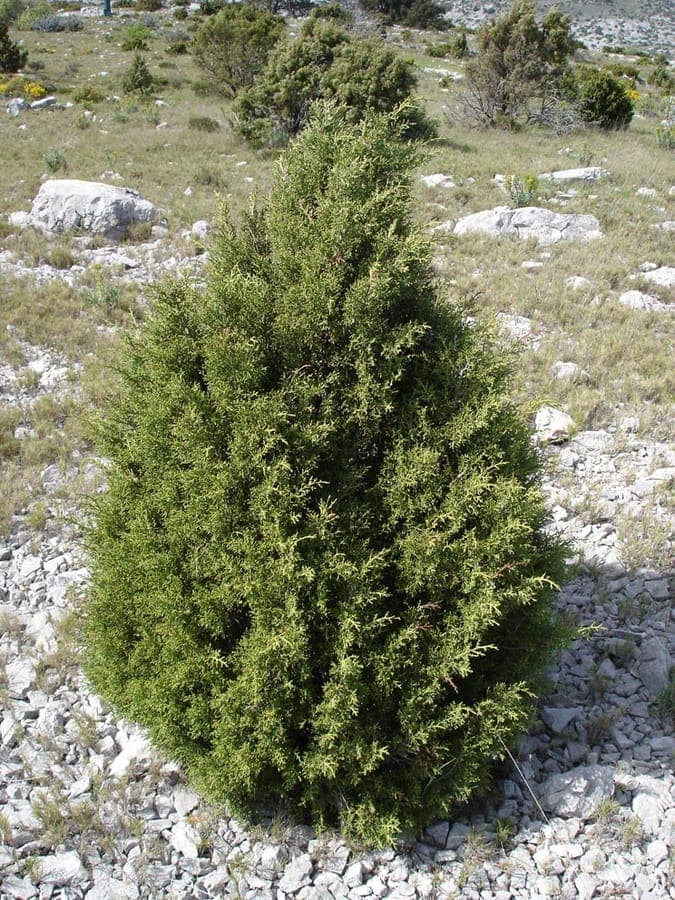
This shrub grows 2-4 meters tall with a compact, pyramidal silhouette becoming somewhat broader with age. Needles are delicate, gray-green to blue-green, forming attractive texture.
The fruits (berries) are distinctive: glossy red to reddish-brown, approximately 1 cm large. These berries appear in the third year after flowering and ripen gradually. They attract birds.
The plant grows slowly, approximately 10-15 cm annually, making it suitable for small gardens.
Ideal Location
Juniperus phoenicea thrives in full sun. Minimum 6-8 hours direct sunlight daily. Partial shade can work but weakens growth.
This plant is perfect for warm microclimates. South-facing walls or stones provide extra warmth. Protection from strong north winds helps in cold regions.
Soil Requirements
Well-draining, preferably poor soil. This plant thrives in sand, gravel and poor clay. Rich soils can cause weak growth.
PH between 6.0-8.5 is perfect. Calcareous soils are ideal. No feeding needed, even no compost incorporation needed.
Watering
Once established, extremely drought tolerant. Regular watering the first year aids rooting. Subsequently water only during severe drought.
Excessive water can be harmful. Ensure perfect drainage. In containers, somewhat more regular watering needed due to limited soil volume.
Free design
Want to see Phoenician juniper: complete guide in your garden? Make a free design now.
Pruning
Pruning is hardly necessary. The plant grows naturally compact and well-formed. Broken or damaged shoots can be removed.
Be cautious with pruning - this plant recovers slowly. No structural pruning needed.
Maintenance Calendar
March-April: Minimal care, growth begins May-October: Growth, no care needed October-November: Berries ripen, enjoy November-February: Rest period, no care
Winter Hardiness
Juniperus phoenicea is hardy to USDA zone 8-9 (-5 to -12°C). In the Netherlands it can survive outdoors in the south, but northern areas need protection or container culture.
In containers, better protected in winter. Shelter from wet snow helps. In severe frost areas, better to bring indoors.
Companion Plants
Works beautifully with:
- Lavender for color harmony
- Roses for romantic effect
- Oleaster for texture contrast
- Santolina for white contrast
- Cistus for pink tones
Excellent in Mediterranean and dry gardens.
Purchasing & Care
Available as young tree or shrub. Grows slowly so larger specimens are more expensive but give immediate effect.
Plant in spring or fall. Dig deep hole, add sand to clay. First year water regularly. No feeding needed.
In containers use large pot (minimum 50 liters) with quality potting soil mixed with gravel.
Conclusion
Juniperus phoenicea is an excellent choice for creating warm, dry gardens. With elegant form, red berries, and minimal care needs, it's a valuable addition. Perfect in Mediterranean style. Plant as specimen or in groups. Discover more Mediterranean plants on gardenworld.app. Get inspired on gardenworld.app with designs featuring heat-loving conifers.
Want to see Phoenician juniper: complete guide in your garden? Make a free design now.
Upload a photo, pick a style, and get a photorealistic design with plant list in under a minute.
No credit card required


Similar plants
Cupressus macnabiana: complete guide
Cupressus macnabiana
The Fragrant Cypress offers elegant growth with fine, aromatic foliage. Perfect for temperate climates and as specimen trees in contemporary gardens.
Cupressus guadalupensis: complete guide
Cupressus guadalupensis
The Guadalupe cypress: an elegant conifer for gardens. Complete cultivation guide for this Mexican cypress. Information about care, location, form and maintenance.
Austrocedrus chilensis: complete guide
Austrocedrus chilensis
Discover Austrocedrus chilensis, the Chilean Cedar ornamental conifer. Elegant specimen with fine foliage and columnar form for permanent structure.