
Feel free to use my photos, but please mention me as the author and if you want send me a message. or ([email protected]) / CC BY-SA 3.0 at, via Wikimedia Commons
Iris sibirica: complete guide
Iris sibirica
Want to see Iris sibirica: complete guide in your garden?
1 minute, no credit card
Overview
Iris sibirica is an elegant front yard iris from Eastern Europe, found from Central Europe to Mongolia. This iris is renowned for its fine, narrow leaves and graceful blue flowers. The plant grows more slenderly than bearded irises and reaches a height of 60-80 centimeters. Iris sibirica blooms in May and June with several flowers per stem, and is particularly popular for its suitability for moist soil types.
Appearance and bloom
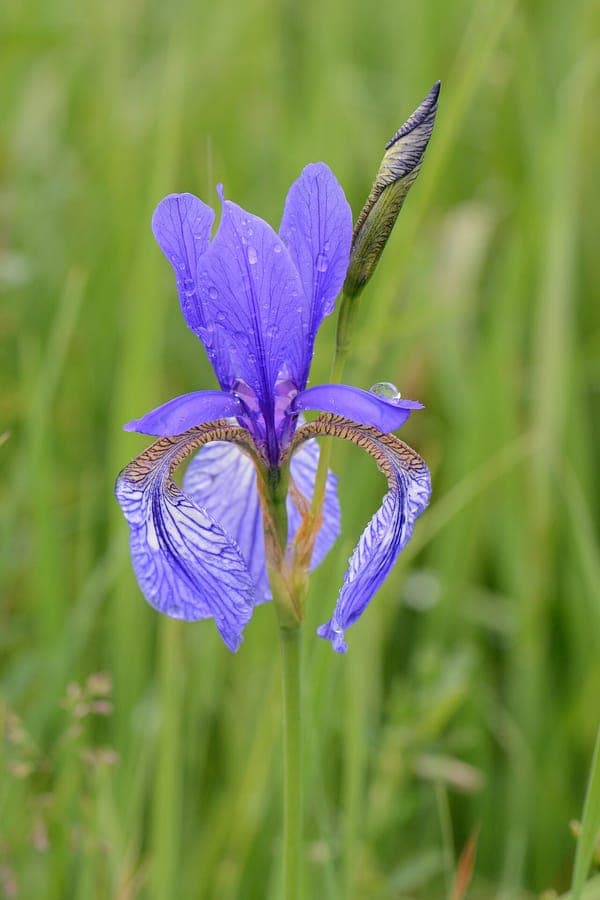
Iris sibirica is characterized by narrow, elegant leaves approximately 40-60 centimeters tall and 5-10 millimeters wide. The flowers are graceful and refined, typically blue-violet to deep blue in color. The petals are narrower than in bearded irises, creating a very elegant appearance. Flowers grow 5-8 centimeters in diameter. The stem often carries two to three flowers that open successively, ensuring a long flowering period. The foliage remains green into autumn.
Ideal location
Iris sibirica grows best in full sun to light shade, with at least 5-6 hours of direct sunlight per day. The plant is exceptionally hardy to -25 degrees Celsius and suitable for all temperate climates. Plant in locations where other irises struggle: moist soils and even waterside planting are possible. Iris sibirica is the only iris species that tolerates moisture and muddy soils.
Soil
Iris sibirica is very flexible regarding soil type. The plant grows well in both normal to moist soils, with pH between 6.5 and 7.5. Unlike bearded irises, Iris sibirica does not require good drainage; marginal drainage is sufficient. The plant can even grow in shallow standing water. For optimal growth, mix garden soil with compost in equal parts. Rot is not a concern here.
Free design
Want to see Iris sibirica: complete guide in your garden? Make a free design now.
Watering
Water Iris sibirica regularly, especially during the growing season. The plant requires more water than bearded irises, particularly during dry periods lasting more than a week. Every two weeks during the growing season, add a layer of compost at the plant's base for extra nutrition. In winter, extra watering is not needed.
Pruning
Pruning is straightforward: remove spent flowers immediately after they wilt. After blooming in July, foliage can be cut back to approximately 15-20 centimeters in height. This provides a neater appearance and space for new growth. Remove dead foliage each autumn. For cut flower use, harvest stems early in the morning.
Maintenance calendar
May to June: water regularly, remove spent flowers. July: trim back foliage. August to September: divide healthy plants. October to November: remove autumn debris. December to February: no pruning, plant rests. March to April: start of active growth, check for diseases.
Winter hardiness
Iris sibirica is extremely winter-hardy and can withstand temperatures down to -25 to -30 degrees Celsius. The plant requires no special winter protection. Snow and frost do not damage the plant. Foliage dies back in winter and reappears in spring.
Companion plants
Plant Iris sibirica with other moisture-lovers:
- Astilbe (false spiraea)
- Hosta (plantain lily)
- Primula japonica (Japanese primrose)
- Pontederia (pickerel rush)
This arrangement creates a fresh, moisture-loving plant combination.
Closing
Iris sibirica is a reliable, long-lived plant that blooms for many years. With water and patience, Iris sibirica grows into a magnificent plant. The narrow foliage, graceful flowers, and suitability for moist soils make Iris sibirica unmatched. Local garden centers carry quality specimens ready for immediate planting.
At gardenworld.app, you can have professional front yard designs created that optimally showcase Iris sibirica with other moisture-loving plants.
Want to see Iris sibirica: complete guide in your garden? Make a free design now.
Upload a photo, pick a style, and get a photorealistic design with plant list in under a minute.
No credit card required


Similar plants
Iris pallida: complete guide
Iris pallida
Discover the soft purple Iris pallida, a classic front yard iris with fragrant rhizomes and reliable annual blooms. Perfect for sunny locations.
Iris spuria: complete guide
Iris spuria
Discover Iris spuria with stunning blue flowers and slender growth. Suitable for full sun locations, 80-120cm tall. Strong growth and long blooming.
Iris lutescens: complete guide
Iris lutescens
Discover Iris lutescens, a dwarf iris with yellow and purple flowers. 25-40cm tall, perfect for front yard borders. Blooms early April-May.