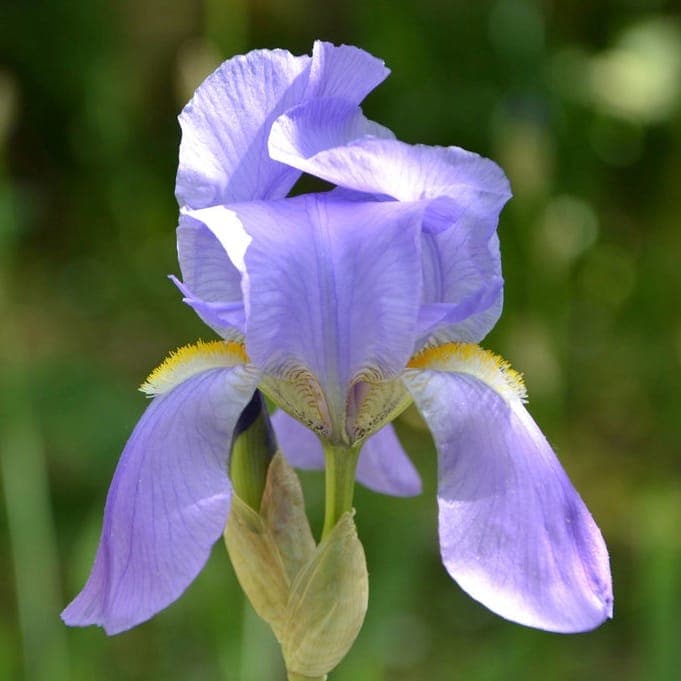
Pamwik / CC BY-SA 4.0, via Wikimedia Commons
Iris pallida: complete guide
Iris pallida
Want to see Iris pallida: complete guide in your garden?
Full design in HD: €7.99
Look after your Iris pallida with the GardenWorld app
Identify plants with your camera and get a care calendar with reminders for this plant.


Overview
Iris pallida is a stunning front yard iris native to Northern Italy and the northwest Balkans. This iris is renowned for its sweet fragrance, which emanates from its rhizomes rather than the flowers themselves. It's a true classic in European gardens, valued for its elegance and reliable annual flowering. The plant grows to approximately 70-80 centimeters tall and blooms in May and June with large, pale purple flowers featuring intensely blue veining patterns.
Appearance and bloom
Iris pallida features long, blue-grey leaves that emerge early in spring. The flowers are large and striking, with pale purple coloration where the inner petals (standards) are lighter than the drooping petals (falls). Flowers can reach 10 centimeters in diameter. What makes Iris pallida particularly special is the intense, sweet fragrance that comes from the rhizomes and roots rather than the flowers. This scent provided the plant's common name "Orris."
Ideal location
Iris pallida grows best in a sunny location with at least 6-8 hours of direct sunlight daily. A spot with morning sun and afternoon shade is ideal, particularly in warm climates. The plant is extremely cold-hardy and can withstand temperatures down to -20 degrees Celsius. Plant Iris pallida on raised borders or slopes where the plant won't sit in poorly draining soil.
At gardenworld.app, you can perfect your garden design with professional advice on plant positioning and sunlight distribution.
Soil
Iris pallida requires well-draining soil with a pH between 6.8 and 7.5. Heavy clay soil must be amended with sand or compost. The soil must be at least 40-50 centimeters deep to provide sufficient space for the round rhizomes. A mixture of garden soil with sand and compost (1:1:1 ratio) gives optimal results. The soil should not remain wet; water accumulation in winter can cause rhizome rot.
Free preview
Want to see Iris pallida: complete guide in your garden? Make a free preview of your design.
Watering
Once established, Iris pallida is quite drought-tolerant. Water regularly during the growing season, especially in the first two years. Once the plant has established roots, watering can be limited to dry periods lasting more than two weeks without rain. In winter, watering is not needed; the plant goes dormant.
Pruning
Pruning is necessary to encourage blooming and maintain plant health. Remove dead or diseased leaves at the base of the plant. Also remove spent flowers (deadheading) to direct energy to further blooms. After flowering (June-July), you can cut back leaves to approximately 20-30 centimeters in height, providing a neater appearance and better winter resilience.
Maintenance calendar
March to April: check for diseases and pests. Winter: ensure adequate drainage. June to July: prune after flowering. September: divide rhizomes. October to November: prepare for winter. May to June: trim foliage damaged by heavy frost in January-February. February: start of active growth.
Winter hardiness
Iris pallida is extremely winter-hardy and can withstand temperatures down to -20 to -25 degrees Celsius. Many cultivars are also cold-resistant, so winter protection is usually unnecessary. In very cold climates, a layer of leaf mulch can help protect against extreme frost damage.
Companion plants
Plant Iris pallida together with other late spring bloomers for a stunning garden. Perfect companions include:
- Papaver orientale (oriental poppy)
- Dianthus (carnation)
- Nepeta (catmint)
- Hemerocallis (daylily)
This plant combination provides attractive combined blooming from May through August.
Closing
Iris pallida is a reliable, long-lived plant that offers beautiful flowers year after year. With quality planting material and proper care, the plant will provide many years of enjoyment. The fragrant flowers and elegant appearance make Iris pallida an ideal choice for front yard designs. Check your local garden centers for quality specimens ready for planting.
At gardenworld.app, you can have professional front yard designs created that optimally showcase Iris pallida and combine it with other plants.
Frequently asked questions about Iris pallida
Is Iris pallida winter hardy?
Iris pallida is extremely winter-hardy and can withstand temperatures down to -20 to -25 degrees Celsius. Many cultivars are also cold-resistant, so winter protection is usually unnecessary.
When and how do you prune Iris pallida?
Pruning is necessary to encourage blooming and maintain plant health. Remove dead or diseased leaves at the base of the plant.
How much water does Iris pallida need?
Once established, Iris pallida is quite drought-tolerant. Water regularly during the growing season, especially in the first two years.
Where does Iris pallida grow best?
Iris pallida grows best in a sunny location with at least 6-8 hours of direct sunlight daily. A spot with morning sun and afternoon shade is ideal, particularly in warm climates.
What soil does Iris pallida need?
Iris pallida requires well-draining soil with a pH between 6.8 and 7.5. Heavy clay soil must be amended with sand or compost.

See it in your garden
See Iris pallida in your garden
One photo of your garden and a few questions. You see the result in about a minute.
Try it with a photoIdentify this plant in your own garden. Identify a plant
Similar plants
Iris sibirica: complete guide
Iris sibirica
Discover elegant Iris sibirica with fine blue flowers. Perfect for moist soils, 60-80cm tall. Excellent in groups and as a cut flower.
Iris spuria: complete guide
Iris spuria
Discover Iris spuria with stunning blue flowers and slender growth. Suitable for full sun locations, 80-120cm tall. Strong growth and long blooming.
Iris lutescens: complete guide
Iris lutescens
Discover Iris lutescens, a dwarf iris with yellow and purple flowers. 25-40cm tall, perfect for front yard borders. Blooms early April-May.
