
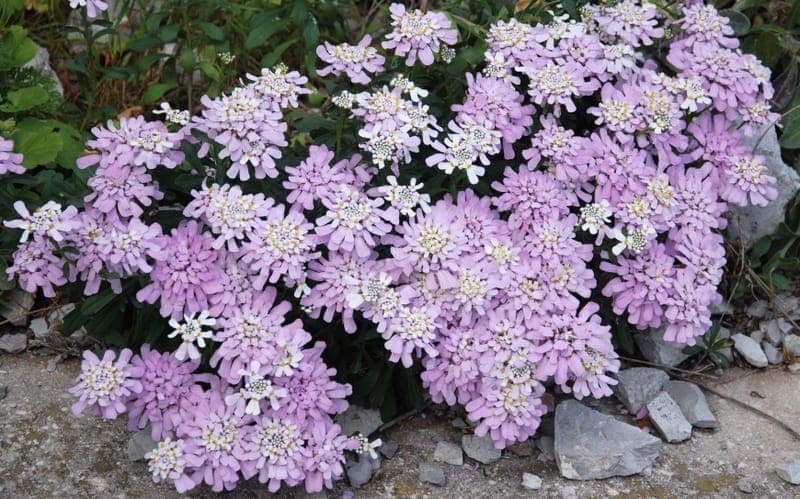
Toromedia / CC BY-SA 3.0, via Wikimedia Commons
Iberis gibraltarica: complete guide
Iberis gibraltarica
Want to see Iberis gibraltarica: complete guide in your garden?
1 minute, no credit card
Overview
Iberis gibraltarica, commonly known as Gibraltar candytuft, is a delightful small ground cover native to Gibraltar and Morocco. This mat-forming plant from the Brassicaceae family (the same family as cabbage and broccoli) produces lovely pink to red flowers in dense, velvety panicles. The plant is evergreen, so there's green foliage year-round.
This Mediterranean plant is perfect for rock gardens, walls, rocky outcrops, and as an edging over walls or steps. It grows well in the Netherlands and Belgium in favorable locations, and can even succeed in some German gardens. The plant demands minimal maintenance and is highly tolerant of dry, poor soils.
Appearance & Bloom
Iberis gibraltarica is an extremely compact-growing plant, usually 20-30 centimeters high and 30-40 centimeters wide. The leaves are small, linear, green, and remain present year-round. The flowers appear in April-May in dense umbels (flower clusters). The flowers start pink and fade toward white as they age, thus a tricolor effect from pink to white is characteristic.
Each flower is very small, about 0.5 centimeters, but because they occur in very dense clusters, this creates an impressive display. Blooming lasts about two to three weeks, depending on temperature. The plant doesn't form notable seeds; propagation is usually from self-sowing or cuttings.
Ideal Location
Iberis gibraltarica grows best in sunny locations with at least six hours of direct sunlight daily. In full sun, blooming is most profuse. In partial shade, the plant grows well but blooms less. The plant cannot tolerate shading from larger plants or trees.
The plant grows well on sloping terrain, on walls, between stones, and in rocky outcrops. Also highly suitable for container culture on balconies or terraces with plenty of sun. Wind is no problem; the plant even tolerates coastal winds.
Soil
Iberis gibraltarica is extremely tolerant of poor, lean soils. In fact, the plant grows better on poor, well-drained soils than on rich ones. Heavy clay should be avoided; sand and gravel are ideal. The plant prefers pH around neutral to slightly acidic (pH 6.0-7.5).
For rock gardens place the plant directly in a gritty-sand mix. For container culture use well-draining mix like cactus soil or alpine potting mix. Don't enrich with lots of compost; this promotes leaf growth at the expense of flowers.
Free design
Want to see Iberis gibraltarica: complete guide in your garden? Make a free design now.
Watering
Iberis gibraltarica is extremely drought-tolerant. Once established, you rarely need to water except in very dry periods. Excess water is more damaging than under-watering; excess moisture can cause root rot. In container culture water cautiously, especially in winter.
In the ground you never need to water artificially except during extreme drought. The plant draws sufficient moisture from the soil. For potted plants water sparingly, let soil dry between waterings.
Pruning
Minimal pruning is needed for this plant. After blooming (May-June) you can remove spent flower stems for a neater appearance, but this is optional. The plant naturally maintains itself. In container culture you can lightly cut back to encourage bushy growth.
Don't remove healthy green foliage; this plant is evergreen and the greenery is valuable. In very severe winters some foliage may be damaged, but delay pruning until clearly dead in spring.
Maintenance Calendar
March: Check plant after winter; remove damaged parts. April to May: Plant blooms; no feeding needed. June to August: Minimal maintenance; water only in extreme drought. September to February: Dormancy; no feeding or maintenance. October to November: Possible self-seeding; seedlings may grow next spring.
Winter Hardiness
Iberis gibraltarica is hardy down to approximately -10-12 degrees Celsius in dry conditions. In Dutch and Belgian gardens usually frost-free, but in very severe winters (think 1995, 1996) foliage can suffer frost damage. In Germany protection may be needed in continental climates or mountainous areas.
The plant recovers well from frost damage and regrows quickly. Ensure good drainage to avoid moisture-related frost damage.
Companion Plants
Iberis gibraltarica pairs beautifully with other Mediterranean ground covers like Sedum, Sempervivum, Armeria, and Thymus. Also attractive with silver plants like Artemisia or Santolina. In rocks and between stones, good companions include Saponaria and Dianthus alpinus.
Also nice: combine with small mountain goats or other alpine flowering ground covers.
Closing
Iberis gibraltarica is an excellent choice for gardeners wanting Mediterranean flair in their garden. With its pink-white flowers and drought tolerance, it's a perfect choice for wall gardens and rock gardens. Once planted, it requires very little attention. Plant in well-drained locations, provide plenty of sun, and enjoy its charming spring flowers.
For this plant and other Mediterranean ground covers, design your front garden with gardenworld.app - a free online garden designer for sunny rock gardens. With gardenworld.app, you create your own Mediterranean front garden.
Want to see Iberis gibraltarica: complete guide in your garden? Make a free design now.
Upload a photo, pick a style, and get a photorealistic design with plant list in under a minute.
No credit card required


Similar plants
Evergreen candytuft: complete guide
Iberis sempervirens
Discover the evergreen candytuft, a winter-green succulent with countless white flowers. Care, cultivation, and maintenance advice for this popular front-garden plant.
Cheddar pink: complete guide
Dianthus gratianopolitanus
Grow Dianthus gratianopolitanus successfully: care, soil, watering, pruning and ideal garden placement. Perfect for rock gardens and borders.
Marsh daisy: complete guide
Armeria maritima
How to grow Armeria maritima in UK and US gardens. Perfect for rockeries, dry borders, and coastal areas. Low maintenance and drought tolerant.