
Kurt Stüber [1] / CC BY-SA 3.0, via Wikimedia Commons
Cheddar pink: complete guide
Dianthus gratianopolitanus
Want to see Cheddar pink: complete guide in your garden?
1 minute, no credit card
Overview
Cheddar pink (Dianthus gratianopolitanus) is a tough, dependable little perennial that brings charm and colour to sunny garden spots. Native to parts of Western and Central Europe-Belgium, France, Germany, Switzerland and the UK-it's adapted to thrive in rocky, dry conditions. As a member of the Caryophyllaceae family, it shares traits with pinks and carnations but stays low and spreads gently, making it ideal for modern, low-maintenance gardens. It's not fussy, but it does have clear preferences, especially when it comes to soil and sun.
This is a plant that earns its place in the garden through resilience and beauty. Once established, it asks for almost nothing and rewards you with a burst of colour every late spring. Whether you're filling gaps between stones, edging a path, or softening the front of a sunny border, Cheddar pink delivers.
On gardenworld.app you can design a planting scheme that highlights Cheddar pink's strengths, pairing it with plants that match its water and light needs.
Appearance & bloom cycle
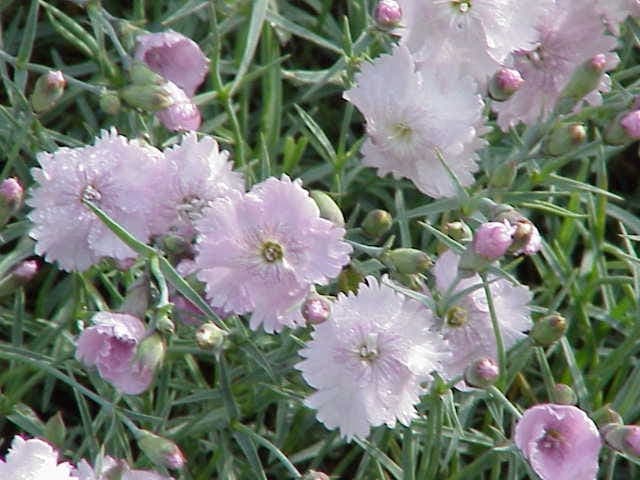
Cheddar pink forms a dense, cushion-like mound reaching 15–20 cm in height and spreading up to 30 cm wide. The foliage is narrow, linear, and blue-green, creating a soft backdrop for the vibrant flowers. Blooms appear from late May to late June, sometimes extending into early July if deadheaded. The flowers are 3–4 cm across, in shades of pink to deep rose, with a striking dark red eye at the centre and delicate fringed edges. They carry a light, clove-like fragrance, strongest in the evening.
Deadheading spent blooms encourages tidiness and may prompt a light second flush in late summer. Left unattended, the plant will self-seed modestly, but not invasively.
Ideal location
Full sun is non-negotiable. Cheddar pink needs at least 6 hours of direct sunlight daily to bloom well and maintain compact growth. In partial shade, it becomes leggy and produces fewer flowers. Ideal spots include rock gardens, crevices in stone walls, gravel beds, or the front edges of sunny borders. Its low, spreading habit makes it excellent for softening hardscapes or providing texture between stepping stones.
Avoid areas with strong, drying winds, especially in exposed gardens. While drought-tolerant, constant wind can desiccate the foliage.
Soil requirements
The key to growing Cheddar pink successfully is drainage. It hates wet feet. Heavy clay soils will rot the roots. The best soil is sandy, gritty, and well-drained, with a pH between 6.0 and 7.5. If your soil is clay-heavy, consider planting in raised beds or rock gardens using a mix of topsoil, sharp sand, and grit. Avoid moisture-retentive mulches like bark chips. Gravel or crushed stone works better and complements the plant's natural habitat.
Free design
Want to see Cheddar pink: complete guide in your garden? Make a free design now.
Watering
Once established, Cheddar pink is drought-tolerant and rarely needs supplemental watering, even during dry spells. During the first six weeks after planting, water weekly to help roots settle. After that, let rainfall do the work. When you do water, apply it at the base-never overhead-to prevent fungal diseases. Yellowing leaves are often a sign of overwatering, not drought.
Pruning
Pruning is simple but effective. After the main bloom finishes in July, shear the plant back by half, cutting to about 10 cm tall. This encourages fresh foliage and may trigger a second, smaller bloom in September. Regular deadheading during the flowering period keeps the plant looking neat and extends visual appeal.
Maintenance calendar
- January–February: No action needed. Check for winter damage after severe cold.
- March: Remove any dead or matted foliage. Avoid early fertilising.
- April: Apply a light top dressing of compost. Plant new specimens in well-drained soil.
- May–June: Peak bloom time. Deadhead regularly.
- July: Cut back by half after flowering.
- August–September: Watch for second bloom. Keep an eye on pests like aphids.
- October–December: Leave plant standing. Avoid mulching heavily.
On gardenworld.app you'll find a custom garden calendar that adjusts to your USDA zone (ideal for zones 5–9) and local weather patterns.
Winter hardiness
Cheddar pink is hardy in USDA zones 5 to 9. In zone 5, it may suffer some foliage burn in harsh winters, especially if the ground stays wet. In milder zones like 7–9, it remains evergreen and requires no winter protection. Avoid covering it with plastic or moisture-trapping fabric-this promotes rot. Let old growth stand through winter; it insulates the crown.
Companion plants
Pair Cheddar pink with other drought-tolerant perennials: Sedum 'Autumn Joy', Thymus serpyllum, Lavandula angustifolia, or Echinacea purpurea. It looks stunning with silver-foliage plants like Artemisia or Stachys byzantina. Avoid aggressive spreaders like mint or ground ivy, which will overwhelm it. Use gravel pathways or stone edging to define space and reduce competition.
Closing
Cheddar pink is a no-fuss, high-reward plant for sunny, dry gardens. It's perfect for rockeries, borders, or between pavers. With minimal care, it thrives for years. You'll find it at garden centres across the UK and North America, or use gardenworld.app to plan a drought-friendly garden where Cheddar pink takes centre stage.
Want to see Cheddar pink: complete guide in your garden? Make a free design now.
Upload a photo, pick a style, and get a photorealistic design with plant list in under a minute.
No credit card required


Similar plants
Dianthus karami: complete guide
Dianthus karami
Dianthus karami is a rare Lebanese mountain pink with fringed pink blooms on limestone cliffs, ideal for rock gardens and troughs.
Sicilian pink: complete guide
Dianthus siculus
Discover Dianthus siculus, an elegant purple bloomer from Sicily. Cultivation, June-September flowering and garden combinations.
Alpine mouse-ear chickweed: complete guide
Cerastium pedunculatum
Full growing guide for Cerastium pedunculatum: ideal location, soil, watering, winter hardiness, and companion plants for rock gardens.