
Jörg Hempel / CC BY-SA 3.0 de, via Wikimedia Commons
Himantoglossum hircinum: complete guide
Himantoglossum hircinum
Want to see Himantoglossum hircinum: complete guide in your garden?
1 minute, no credit card
Overview
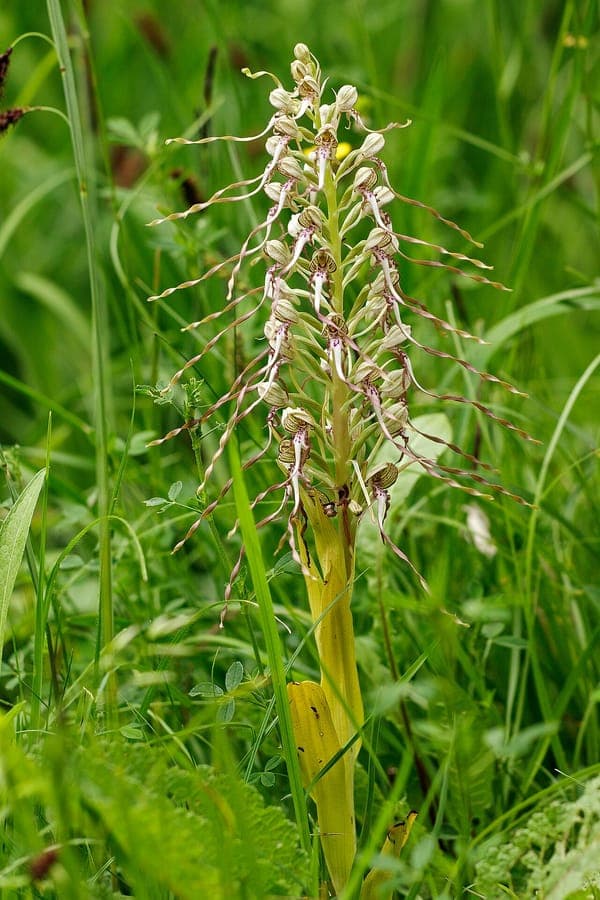
The lizard orchid (Himantoglossum hircinum) is a spectacular wild orchid from Southern Europe. This unique plant is celebrated for its distinctive flowers featuring long, dancing petal lobes that resemble bird feet. The plant grows 20-60 cm tall and blooms from April to June with intensely fragrant flowers.
Appearance and Bloom
Himantoglossum hircinum has a striking appearance with narrow, lance-shaped leaves forming at the plant's base. The flowers are pink-purple to whitish with darker spots and have a highly characteristic shape with long, twisting labrum lobes that can reach 6 cm. The fragrance is strong and somewhat unpleasant (hence the name 'hirci' = goat scent). The blooming period runs from April through June.
Ideal Location
This orchid thrives best in sunny to partially shaded locations with well-draining soil. In your front garden design from gardenworld.app, place this wild orchid away from other strong fragrances. Choose a spot with at least 6 hours of direct sunlight daily for optimal blooming.
Soil
Himantoglossum hircinum prefers alkaline to neutral soil with pH 7-8. The soil must be well-draining and shouldn't become too moist. Add sand and gravel to heavy clay soils for better drainage. Rich, loamy soil with good humus content also works excellently.
Watering
This is a plant that prefers dry conditions. Water only when the top 5 cm of soil feels dry. Ensure water drains well, especially during the growing season. In winter, prevent water stagnation at all costs.
Free design
Want to see Himantoglossum hircinum: complete guide in your garden? Make a free design now.
Pruning
Remove spent flowers to encourage further blooms. The plant partially dies back after the growing season, which is normal. Leave foliage until October. Thinning isn't necessary, but you can carefully pot seedlings from overcrowded colonies.
Maintenance Calendar
- March-April: Signs of growth, ensure drainage
- April-June: Blooming period, apply feeding 1x per 2 weeks
- July-August: Remove dried parts
- September-October: Foliage dies back naturally
- November-February: Dormant period, minimal water
Winter Hardiness
Himantoglossum hircinum is fully hardy down to -15°C (USDA zone 6). The plant is adapted to Mediterranean winters and tolerates frost periods well as long as the soil isn't waterlogged. No winter protection needed in temperate regions, but mulch can help in northern areas.
Companion Plants
Pairs well with:
- Pulsatilla (Pasque flower): blooms simultaneously and loves the same spot
- Allium species: their structure contrasts beautifully with orchid flowers
- Other evergreen groundcovers
- Fragrant mountain thyme and Thymus varieties
Protect from moisture-loving species like hostas.
Closing Thoughts
The lizard orchid is an excellent choice for gardeners wanting something different from ordinary flowers. With its unique shape, strong fragrance, and simple cultivation requirements, it follows gardenworld.app's guidelines for front garden design beautifully. Provide well-draining soil, full sun, and less water than you'd expect - this fascinating orchid will reward you with stunning blooms.
Want to learn more about wildflowers for your front garden? Visit gardenworld.app for personalized advice.
Want to see Himantoglossum hircinum: complete guide in your garden? Make a free design now.
Upload a photo, pick a style, and get a photorealistic design with plant list in under a minute.
No credit card required


Similar plants
Ram's-head lady's slipper: complete guide
Cypripedium arietinum
Everything you need to know about growing Cypripedium arietinum, a rare woodland orchid for cool, moist garden settings. Soil, care and planting tips.
Sparrow's-egg lady's slipper: complete guide
Cypripedium passerinum
Everything about growing Cypripedium passerinum, a cold-hardy subarctic orchid suited to cool, moist, shaded garden spots. Soil, care and companion plants.
Algerian Butterfly-orchid: complete guide
Platanthera algeriensis
Everything about Platanthera algeriensis, the rare Mediterranean orchid with greenish flowers native to Algeria, Morocco, Corsica and Spain.