
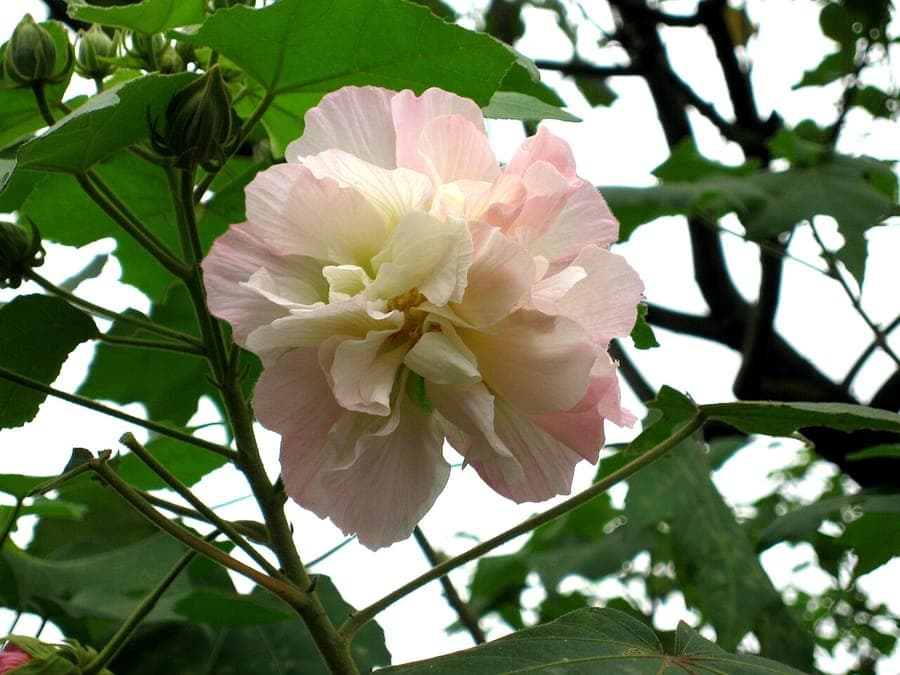
User ???? on zh.wikipedia / CC BY-SA 3.0, via Wikimedia Commons
Hibiscus mutabilis: complete guide
Hibiscus mutabilis
Want to see Hibiscus mutabilis: complete guide in your garden?
1 minute, no credit card
Overview
Hibiscus mutabilis, commonly called cotton-rose or changing hibiscus, is a tropical shrub native to southern China and Taiwan. The name 'mutabilis' (changing) refers to its most striking characteristic: flowers open white and deepen to deep pink as the day progresses.
Appearance & Bloom
This elegant shrub reaches 2-3 meters in height with broad spread. Gray-green foliage is soft and fluffy with pleasant texture. Double-flowered varieties are most spectacular, featuring full, non-fading blooms. Flowering period extends from summer through autumn (July-October). Each flower lasts only one day, but new blooms appear continuously. Older stems develop interesting bark patterns.
Ideal Location
This heat-loving plant requires abundant sunlight for optimal growth and flowering. Minimum 6-8 hours direct sun daily is essential. In temperate climates, they succeed against warm walls or in protected, south-facing positions. Wind shelter prevents flower damage from strong breezes.
Soil
Well-drained, fertile soil is preferred. The plant tolerates acidic to neutral soils (pH 6.0-7.5). Heavy clay must be amended with sand and organic matter. Excellent drainage is critical - waterlogging causes rapid leaf drop and fungal issues. Incorporate compost at planting time.
Watering
Hibiscus mutabilis requires regular moisture, especially during the growing season. Water when the soil surface feels dry. Summer brings increased water demands due to higher temperatures and active growth. Avoid both drought and waterlogging. Container-grown plants need more frequent watering. Foliar misting during dry periods enhances flowering.
Free design
Want to see Hibiscus mutabilis: complete guide in your garden? Make a free design now.
Pruning
Prune hard in early spring before new growth begins. Remove dead wood and any crossing or diseased branches. Severe pruning encourages bushier forms and more flowering points. During the growing season, pinch shoot tips to promote branching. After the flowering period, remove spent blooms.
Maintenance Calendar
April-May: Heavy pruning; soil amendment; potted cuttings establishment June-July: Regular watering; begin feeding program July-October: Flowering peak; frequent feeding and watering October-November: Declining blooms; reduce feeding December-March: Dormancy; minimal water; frost protection essential
Winter Hardiness
Hibiscus mutabilis is frost-sensitive and can only overwinter outdoors in USDA zones 9-11. In temperate climates, plants must be moved to a warm greenhouse (minimum 10°C) or indoors. In container culture, it transitions easily for seasonal use - bringing plants outdoors for summer display and inside for winter protection.
Companion Plants
Ideal combinations in beds or containers:
- Lantana for contrasting bloom
- Fuchsia for shade accents
- Plumbago for blue coloring
- Bougainvillea for structural interest
- Passionflower for vertical growth
Specialty nurseries throughout Europe stock hibiscus varieties. Popular in Mediterranean and southern gardens, cotton-rose thrives where tropical effects are desired.
Conclusion
Hibiscus mutabilis represents spectacular blooming for heat-loving gardeners. The daily color transformation provides unexpected delight and conversation. With ample sunshine, proper care, and frost protection, you'll enjoy years of exotic flowering. Use gardenworld.app's design tool to incorporate tender tropical plants into container schemes for maximum impact and easier seasonal management.
Want to see Hibiscus mutabilis: complete guide in your garden? Make a free design now.
Upload a photo, pick a style, and get a photorealistic design with plant list in under a minute.
No credit card required


Similar plants
Rose-of-sharon: complete guide
Hibiscus syriacus
Hibiscus syriacus, or Rose-of-sharon, is a deciduous shrub with large purple flowers in late summer. Hardy in zones 5–9. Full care guide for gardeners.
Chinese hibiscus: complete guide
Hibiscus rosa-sinensis
Everything you need to know about growing Hibiscus rosa-sinensis: ideal location, soil, watering, pruning and overwintering. Perfect for UK and US gardeners.
Manioc-Hibiscus: complete guide
Abelmoschus manihot
Discover Abelmoschus manihot, also known as Manioc-Hibiscus. A comprehensive guide for planting, care, location, and more on gardenworld.app.