
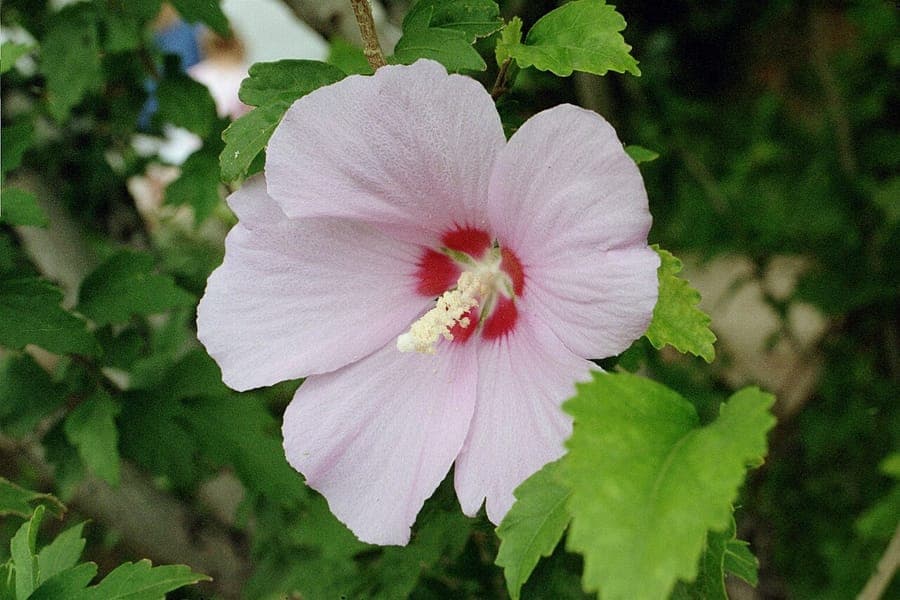
Eric Kounce TexasRaiser / CC BY-SA 3.0, via Wikimedia Commons
Rose-of-sharon: complete guide
Hibiscus syriacus
Want to see Rose-of-sharon: complete guide in your garden?
1 minute, no credit card
Overview
Hibiscus syriacus, commonly known as Rose-of-sharon, is a tough, deciduous shrub that brings bold color to gardens when many other plants are winding down. Native to Southeast China and Taiwan-not Syria, despite the name-it thrives across USDA hardiness zones 5 to 9. In the UK and North America, it's a popular choice for hedges, borders, or as a specimen plant thanks to its long bloom season and low maintenance.
Mature plants typically reach 2 to 4 meters tall and 1 to 1.5 meters wide, depending on the cultivar. The growth habit is upright and dense, becoming more tree-like with age. It belongs to the Malvaceae family, sharing lineage with mallows and cotton plants.
On gardenworld.app, you can design a planting scheme that features Rose-of-sharon as a focal point in late-season borders, pairing it with grasses and perennials for year-round interest.
Appearance & bloom cycle
Rose-of-sharon blooms from late July through October, making it one of the few shrubs that flower well into autumn. The flowers are large, 6–10 cm across, with a prominent central stamen and soft, crepe-like petals. While purple is the most common color, cultivars also bloom in white, pink, red, and blue, some with double flowers.
Each bloom lasts just one day, but the plant produces new buds continuously, ensuring a long visual impact. The dark green, ovate leaves have a slightly serrated edge and turn yellow before dropping in fall.
Even after leaf drop, the woody stems add winter structure to the garden, especially when lightly frosted.
Ideal location
Plant in full sun to light shade. For best flowering, aim for at least 6 hours of direct sunlight daily. In dense shade, the plant becomes leggy and blooms poorly.
Choose a sheltered spot if you're in a windy area-strong gusts can damage the large flowers. Space plants at least 1.5 meters apart to allow for air circulation and full development.
Rose-of-sharon works well in mixed borders, as a standalone specimen, or trained into a small tree form. It also tolerates urban conditions, including pollution and compacted soil.
Soil requirements
This shrub is adaptable to various soil types but prefers well-drained, loamy soil with a pH between 6.0 and 7.0. Avoid waterlogged conditions-root rot is a real risk in heavy clay.
When planting, mix in a bucket of compost or well-rotted manure to improve soil structure and fertility. Mulch annually with organic material to retain moisture and suppress weeds.
Free design
Want to see Rose-of-sharon: complete guide in your garden? Make a free design now.
Watering
Water deeply once a week during the first growing season, giving each plant about 10 liters. Established shrubs are drought-tolerant but benefit from supplemental watering during prolonged dry spells, especially in zones 7 and above.
Avoid overhead watering to prevent fungal issues. Use a soaker hose or water at the base.
Pruning
Prune in late winter or early spring (February to March) before new growth starts. Cut back one-third of the oldest stems to strong buds. This encourages vigorous new shoots, where flowers form.
Remove any dead, damaged, or inward-growing branches. Never prune in fall-buds for next year's flowers are already set.
For a tree form, select a central leader and remove lower branches gradually over a few years.
Maintenance calendar
- January–February: Inspect structure, prune as needed.
- March: Final pruning window; plant new shrubs.
- April–May: Begin light feeding with balanced granular fertilizer.
- June: Growth accelerates; watch for aphids.
- July–October: Peak bloom; water during dry weeks.
- November–December: Leaf drop; apply mulch to protect roots.
With gardenworld.app, you can sync this maintenance schedule to your calendar and get location-based reminders for pruning and feeding.
Winter hardiness
Rose-of-sharon is hardy down to -23°C (USDA zone 5). In zone 6 and above, it reliably survives winter with no protection. Young plants may suffer tip dieback in harsh winters but usually recover fully in spring.
No winter cover is needed, but a 5 cm layer of mulch helps insulate roots in colder zones.
Companion plants
Pair with plants that bloom earlier to create continuous color. Good companions include Hydrangea paniculata, Nepeta, and Fothergilla. Ornamental grasses like Miscanthus sinensis provide movement and contrast behind the shrub.
At the base, use low-growers like Liriope or Ajuga to hide the bare lower stems without competing for roots.
Avoid aggressive spreaders like Bamboo or Mint.
Closing
Rose-of-sharon is a dependable, eye-catching shrub that fills the late-summer gap when many others have finished flowering. It's tough, adaptable, and attracts pollinators with its nectar-rich blooms.
Look for named cultivars like 'Aphrodite' (pink with red eye), 'Blue Bird' (true blue), or 'Diana' (pure white) at garden centres across the UK and North America. Retailers often carry them in 3–5 litre pots from spring through early summer.
Whether you're designing a cottage garden or a modern urban space, Rose-of-sharon earns its place with ease and beauty.
Want to see Rose-of-sharon: complete guide in your garden? Make a free design now.
Upload a photo, pick a style, and get a photorealistic design with plant list in under a minute.
No credit card required


Similar plants
Crimean linden: complete guide
Tilia × euchlora
Crimean linden is an elegant, fast-growing shade tree ideal for large gardens. Discover cultivars, spacing, maintenance tips and winter hardiness.
California flannelbush: complete guide
Fremontodendron californicum
Everything about California flannelbush (Fremontodendron californicum): sunny placement, drainage, pruning and care for this spectacular yellow-flowering shrub.
Hairy rose mallow: complete guide
Hibiscus moscheutos subsp. lasiocarpos
Full growing guide for hairy rose mallow (Hibiscus moscheutos subsp. lasiocarpos): location, soil, watering, winter hardiness and garden design tips.