
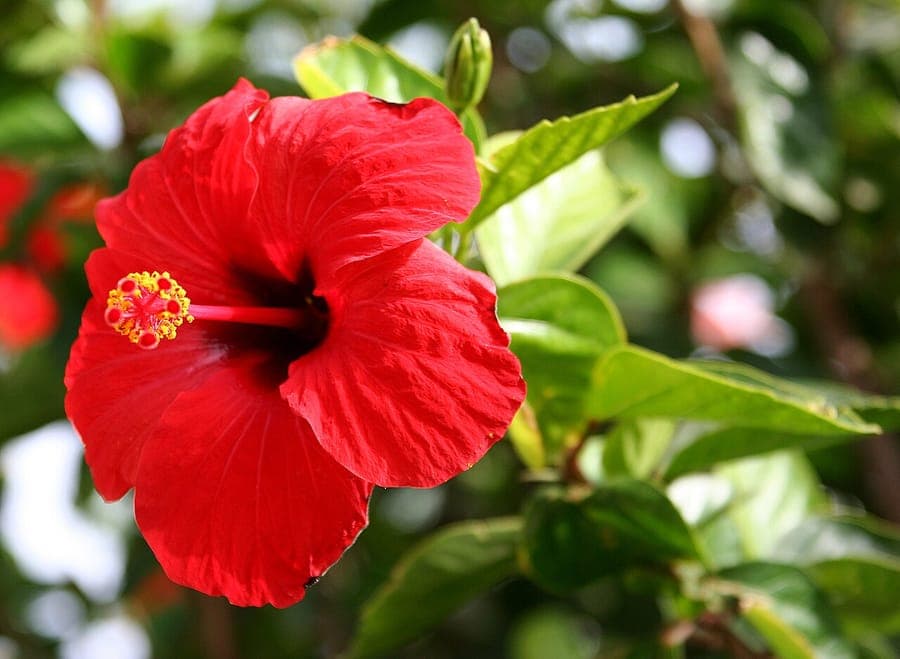
Andy / Andrew Fogg from near Cambridge, UK / CC BY 2.0, via Wikimedia Commons
Chinese hibiscus: complete guide
Hibiscus rosa-sinensis
Want to see Chinese hibiscus: complete guide in your garden?
1 minute, no credit card
Overview
Hibiscus rosa-sinensis, commonly known as Chinese hibiscus, is a vibrant tropical shrub that brings bold colour and a touch of the exotic to gardens and patios. Though not frost-hardy, it thrives in containers and can be overwintered indoors with ease. Native to Vanuatu, this member of the Malvaceae family grows as a shrub or small tree, reaching 1.5 to 3 meters in height in warm climates. In temperate zones like the UK or USDA zones 9–11, it's best grown in pots to allow seasonal movement.
On gardenworld.app, you can design a layout that places your hibiscus where it gets maximum sun and shelter-key for continuous blooming. Its lush foliage and dramatic flowers make it a standout in mixed container plantings or as a standalone feature.
Appearance & bloom cycle
The Chinese hibiscus features glossy, dark green, oval leaves with serrated edges. Its flowers are the real showstoppers: large, trumpet-shaped blooms up to 15 cm wide, with five silky petals and a prominent central stamen column. Colours range from deep red and vibrant orange to soft pink, yellow, and white, often with contrasting throats.
Each flower lasts just one day, but new buds open daily from June through October. With consistent warmth and care, blooming can stretch into November. In ideal conditions, a healthy plant can produce dozens of flowers at once, creating a tropical display that lasts months.
Ideal location
This hibiscus demands full sun-at least 6 hours of direct light daily-for optimal flowering. A south-facing patio, balcony, or garden bed works best. In cooler climates, place it near a south-facing wall to benefit from radiant heat and wind protection. Avoid shady spots; insufficient light leads to leggy growth and few blooms.
While it handles heat well, sudden temperature drops or strong winds can damage leaves and drop buds. In USDA zones below 9, grow it in a container so you can move it indoors before the first frost. On gardenworld.app, use the sun mapping tool to pinpoint the sunniest microclimate in your garden for your hibiscus.
Soil requirements
Use well-draining, slightly acidic to neutral soil (pH 5.5–6.5). In containers, mix quality potting compost with perlite or coconut coir to improve aeration. Avoid heavy clay soils in garden beds; if planting in the ground (only possible in zone 10+), amend soil with sand and organic matter to enhance drainage.
Poor drainage leads to root rot, a common killer. Always use pots with drainage holes, and elevate them slightly to prevent water pooling. Add a slow-release fertiliser at planting time to support early growth.
Free design
Want to see Chinese hibiscus: complete guide in your garden? Make a free design now.
Watering
Keep the soil consistently moist but never soggy. During summer, container-grown plants may need daily watering, especially in hot, dry spells. Check moisture by inserting your finger 5–7 cm into the soil-if dry, water thoroughly.
Use rainwater when possible, as hibiscus is sensitive to lime and chlorine in tap water. Reduce watering in autumn as growth slows. During winter dormancy (8–12°C), water only when the top few centimetres are dry-roughly every 2–3 weeks.
Pruning
Prune in early spring, just before new growth begins. Remove any dead, weak, or crossing branches. Cut back healthy stems by one-third to encourage bushy growth and more flowering wood. Since hibiscus blooms on new growth, pruning directly boosts flower production.
Use clean, sharp secateurs and disinfect between cuts to prevent disease spread. For a tree form, remove lower branches to create a single trunk. Pinch back young shoots in summer to promote branching.
Maintenance calendar
- January–February: Dormant. Water sparingly. Keep cool and bright.
- March: Begin light feeding. Prune if not done earlier.
- April: Move outdoors gradually. Start weekly feeding.
- May–September: Peak season. Water regularly, feed every 7–10 days with high-potash fertiliser.
- October: Bring indoors before frost. Reduce watering.
- November–December: Overwinter in cool, light room. No feeding.
Winter hardiness
Chinese hibiscus is not hardy below USDA zone 9. In colder zones (7 and below), it must be overwintered indoors. Ideal conditions are 8–12°C in a bright room like a conservatory, sunroom, or greenhouse. Avoid warm, dry rooms like living areas with central heating.
If kept too warm, the plant may retain leaves but will exhaust itself. If too cold or dark, it drops leaves and enters deep dormancy. Either way, it should revive in spring with proper care.
Companion plants
Pair with other tropicals like croton, canna lily, or Persian shield for a bold, colour-rich display. Use trailing plants like sweet potato vine or ivy geraniums to soften container edges. Avoid overcrowding-hibiscus dislikes root competition.
In mixed beds (in warm zones), plant with ornamental grasses or pentas to attract pollinators without shading the hibiscus.
Closing
Growing Chinese hibiscus takes attention, but the payoff is months of stunning blooms. Start with a healthy plant from garden centres like those in the UK or online suppliers. Look for compact, bushy specimens with plenty of buds.
With full sun, consistent moisture, and timely pruning, your hibiscus will thrive. For design inspiration, visit gardenworld.app to visualise how this tropical beauty fits into your outdoor space-whether on a city balcony or a sun-drenched garden terrace.
Want to see Chinese hibiscus: complete guide in your garden? Make a free design now.
Upload a photo, pick a style, and get a photorealistic design with plant list in under a minute.
No credit card required


Similar plants
Crimean linden: complete guide
Tilia × euchlora
Crimean linden is an elegant, fast-growing shade tree ideal for large gardens. Discover cultivars, spacing, maintenance tips and winter hardiness.
California flannelbush: complete guide
Fremontodendron californicum
Everything about California flannelbush (Fremontodendron californicum): sunny placement, drainage, pruning and care for this spectacular yellow-flowering shrub.
Hairy rose mallow: complete guide
Hibiscus moscheutos subsp. lasiocarpos
Full growing guide for hairy rose mallow (Hibiscus moscheutos subsp. lasiocarpos): location, soil, watering, winter hardiness and garden design tips.