
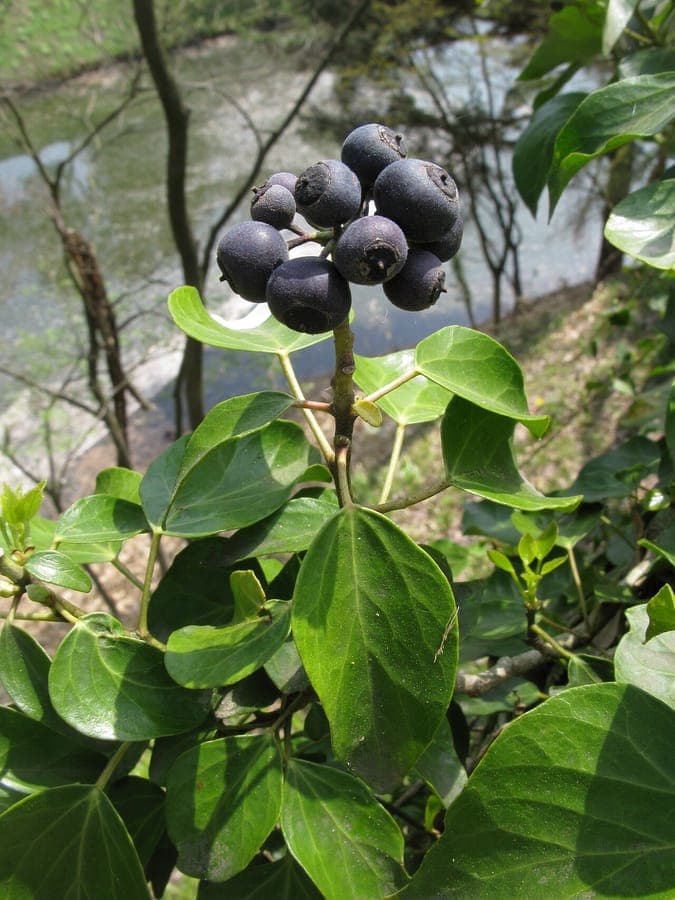
Qwert1234 / Public domain, via Wikimedia Commons
Hedera rhombea: complete guide
Hedera rhombea
Want to see Hedera rhombea: complete guide in your garden?
1 minute, no credit card
Overview
Hedera rhombea, commonly known as Japanese ivy, is an elegant and compact climbing plant originating from East Asia, especially Japan, Korea, and Taiwan. This subtle species was first scientifically described in 1867 and forms an interesting addition to climbing plant collections.
Unlike many other Hedera species, Hedera rhombea is very compact with much smaller leaves, making it perfect for fine screening and houseplant applications.
Appearance
Hedera rhombea climbs to approximately 5-10 meters high (usually much shorter indoors) with very delicate, small leaves only 2-4 centimeters wide. The leaves are diamond-shaped (hence the name "rhombea") with wavy edges.
The plant is evergreen and retains its foliage throughout the year. In frost-free regions, the plant produces small, inconspicuous flowers in autumn.
The growth pattern is more spreading and elegant than stiffer species, with graceful, flexible stems.
Ideal Location
Hedera rhombea grows best in light shade to half sun. The plant thrives in:
- Living rooms with indirect light
- Conservatories and greenhouses
- Protected outdoor locations in temperate climates
- Against east or west-facing walls with shelter
- As a potted plant on windowsills
- Hanging baskets and wall supports
In tropical climates, full shade may be acceptable. Avoid direct strong midday sun, which can cause leaf scorch.
Soil
Hedera rhombea thrives in moist, well-draining soils. For houseplant cultivation, potting soil is typically used.
Optimal soil characteristics:
- pH value: 6.0-7.0 (neutral)
- Well-draining soil
- Humus-rich potting soil for indoors
- Organic matter addition
- Moderately fertile
When planting outdoors, mix in extra sand for better drainage.
Watering
Hedera rhombea is moisture-loving but must not be waterlogged. Regular watering is essential, especially during growth periods.
Watering schedule:
- Growth period (spring/summer): water when top soil feels dry
- Rest period (autumn/winter): less water; soil may partly dry
- Houseplant: possibly water twice weekly during growing season
- Outdoors: more water in warm, dry periods
- No waterlogging
- Mist regularly for optimal humidity
Preferably water with room-temperature water.
Free design
Want to see Hedera rhombea: complete guide in your garden? Make a free design now.
Pruning
Hedera rhombea naturally maintains a compact appearance, but pruning encourages dense growth.
- Regular pinching encourages branching
- Remove dead or damaged stems
- Indoors: prune to maintain shape
- Plant grows slowly, so aggressive pruning unnecessary
- Leave long stems for hanging pot effect
- No formal pruning needed
The plant naturally forms a beautiful, rounded silhouette.
Maintenance Calendar
January: Plant at rest; minimal water; check humidity February: Begin growth preparation; gradually increase water March: First growth appears; begin regular watering April: Active growth begins; possible pinching May: Full growth; water weekly June: Fastest growth; water regularly; possible repotting July: Heat; possibly extra watering indoors August: Growth slows; standard watering September: Prepare for rest; gradually reduce water October: Growth stops; less water November: Winter rest begins; minimal water December: Complete rest; check moisture only
Frost Hardiness
Hedera rhombea is frost-sensitive and cannot tolerate temperatures below 0 degrees Celsius. This makes it suitable only for indoor growing or protected outdoor locations in mild climates.
In cooler regions, outdoor cultivation is only possible in very protected spots and only in the mildest winters. For most situations, houseplant cultivation is recommended.
Companion Plants
In the home, Hedera rhombea combines well with:
- Other climbing plants: Epipremnum, Rhaphidophora
- Foliage plants: Syngonium, Anthurium
- Low-growing plants: Peperomia, Chlorophytum
- Hanging plants: Senecio, Tradescantia
As an outdoor plant (in mild climates) it combines well with protected ferns and Asian plants.
Closing Remarks
Hedera rhombea is for those seeking an elegant, compact climbing plant that lasts long. This is a perfect houseplant ivy for those who love greenery but have limited space. The Japanese heritage gives this plant special elegance.
Available from specialized nurseries and garden centers with tropical plant collections.
Visitors to gardenworld.app can also add indoor plants to their designs.
Want to see Hedera rhombea: complete guide in your garden? Make a free design now.
Upload a photo, pick a style, and get a photorealistic design with plant list in under a minute.
No credit card required


Similar plants
American marsh pennywort: complete guide
Hydrocotyle americana
Everything about Hydrocotyle americana: location, soil, moisture and winter care. A delicate groundcover for shaded pond edges and boggy garden borders.
Devil's club: complete guide
Oplopanax horridus
Full guide to growing Oplopanax horridus: ideal site, soil, watering, and care for this dramatic spiny woodland shrub.
Water pennywort: complete guide
Hydrocotyle umbellata
Everything about Hydrocotyle umbellata: ideal location, soil, watering, winter care and pond planting. A versatile aquatic plant for garden ponds and boggy spots.