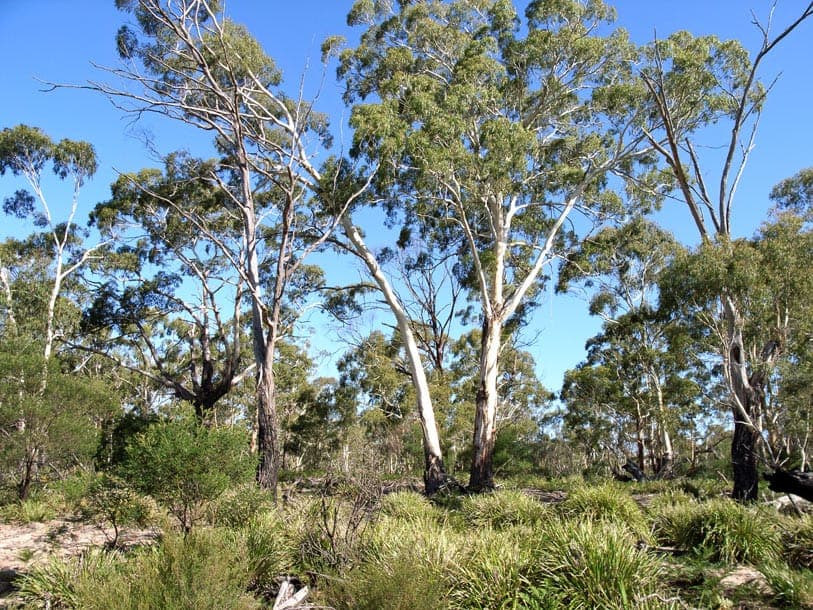
Murray Fagg / CC BY 3.0 au, via Wikimedia Commons
Eucalyptus viminalis: complete guide
Eucalyptus viminalis
Want to see Eucalyptus viminalis: complete guide in your garden?
Full design in HD: €7.99
Look after your Eucalyptus viminalis with the GardenWorld app
Identify plants with your camera and get a care calendar with reminders for this plant.


Overview
Eucalyptus viminalis, commonly known as manna gum or ribbon gum, is an elegant, fast-growing tree from the Myrtaceae family. Native to eastern Australia, this tree is characterized by white to gray-white bark, drooping branches, and narrow, long leaves. With potential heights of 25-35 meters, it offers elegant vertical lines and year-round interest. The tree suits medium to large gardens and parkland settings in temperate climates.
Appearance and Bloom
The most striking features of Eucalyptus viminalis are the white to gray-white bark that flakes smoothly, and drooping branches creating a gracefully weeping silhouette. Leaves are very long, narrow and lance-shaped, hanging from slender twigs. This gives the tree a weeping willow-like appearance, hence the scientific name "viminalis".
Flowering occurs from April to June. Small white flowers appear in clusters and are subtle yet highly attractive to birds. These flowers attract Australian bird species as well as local nectar-feeding birds. Fruits are small woody capsules.
Ideal Location
Eucalyptus viminalis grows best in full sun locations. At least six hours of direct daily sunlight is essential. The tree tolerates partial shade in warm zones. Exposed windy positions suit it well as the tree resists wind damage. In temperate to warm climates this tree thrives; in very cold zones more caution is needed.
Ensure good air circulation to prevent fungal infections. The tree thrives in warm, dry conditions.
Soil Requirements
Eucalyptus viminalis is undemanding about soil and grows in lean to moderately fertile soils. The plant tolerates both acidic to alkaline pH (5-8). However, well-draining soil is essential; waterlogging causes root problems.
The tree accepts even poor, stony soils. This makes it suitable for challenging locations. In overly rich soils, the tree may overgrow.
Watering
Once established, Eucalyptus viminalis is very drought-tolerant. During the first year, water regularly until the tree is established. Thereafter, reduce watering significantly; the tree tolerates drought well.
Water less frequently. The tree grows better in dry conditions than moist ones. In winter, minimize watering.
Free preview
Want to see Eucalyptus viminalis: complete guide in your garden? Make a free preview of your design.
Pruning and Maintenance
Eucalyptus viminalis requires minimal pruning once established. Young trees may be lightly pruned to shape. Remove only dead or damaged branches. The tree develops a natural elegant form without aggressive pruning.
Avoiding heavy pruning is important as it leads to less pleasant form. If pruning is necessary, do it in early spring before growth begins.
Maintenance Calendar
Spring (March-May): Check previous year's growth. Monitor blooming and bird visits. Begin regular watering for young trees.
Summer (June-August): Water only young planted specimens. Enjoy the elegant summer silhouette.
Autumn (September-October): No special maintenance needed.
Winter (November-February): In colder zones, provide protection. No watering needed.
Winter Hardiness
Eucalyptus viminalis is moderately hardy and tolerates temperatures to -10 to -15°C. In very severe winters (-25°C or lower), damage can occur. Young trees need more protection.
In very cold climates, consider growing the tree in containers. For ground-planted trees in marginal zones, mulching around the base is recommended.
Companion Plants
Eucalyptus viminalis combines elegantly with other drought-tolerant plants. Try:
- Other Australian trees: Leptospermum and Kunzea
- Silver-leaved plants: Artemisia and Senecio
- Weeping shrubs: Ruscus and Arbutus
- Bird plants: Sambucus and Ilex
Closing Thoughts
Eucalyptus viminalis brings elegance and grace to temperate gardens. With rapid growth, drought tolerance, and minimal care needs, this tree deserves a place in growing gardens. Once established, your garden will enjoy its graceful presence and bird visits for many years.
Want to transform your garden and discover how Eucalyptus viminalis fits into your design? Try our garden designer at gardenworld.app-receive personalized plant recommendations for your specific space. When you need more plant inspiration later, consult our comprehensive plant blog at gardenworld.app.
Frequently asked questions about Eucalyptus viminalis
Is Eucalyptus viminalis winter hardy?
Eucalyptus viminalis is moderately hardy and tolerates temperatures to -10 to -15°C. In very severe winters (-25°C or lower), damage can occur.
When and how do you prune Eucalyptus viminalis?
Eucalyptus viminalis requires minimal pruning once established. Young trees may be lightly pruned to shape.
How much water does Eucalyptus viminalis need?
Once established, Eucalyptus viminalis is very drought-tolerant. During the first year, water regularly until the tree is established.
Where does Eucalyptus viminalis grow best?
Eucalyptus viminalis grows best in full sun locations. At least six hours of direct daily sunlight is essential.
What soil does Eucalyptus viminalis need?
Eucalyptus viminalis is undemanding about soil and grows in lean to moderately fertile soils. The plant tolerates both acidic to alkaline pH (5-8).

See it in your garden
See Eucalyptus viminalis in your garden
One photo of your garden and a few questions. You see the result in about a minute.
Try it with a photoIdentify this plant in your own garden. Identify a plant
Similar plants
Feijoa (Acca sellowiana): growing pineapple guava
Acca sellowiana
The feijoa or pineapple guava (Acca sellowiana) is an evergreen shrub with red-tufted flowers and aromatic fruit. Site, hardiness, pollination and harvest explained.
Crimson bottlebrush (Callistemon citrinus): care and overwintering
Callistemon citrinus
Growing crimson bottlebrush (Callistemon citrinus, now Melaleuca citrina): position, compost, watering, pruning and overwintering this tough Australian shrub.
Weeping bottlebrush (Callistemon viminalis): care and 'Little John'
Callistemon viminalis
Weeping bottlebrush (Callistemon viminalis, now Melaleuca viminalis): growing it in containers, the dwarf 'Little John', pruning and frost-free overwintering.
