
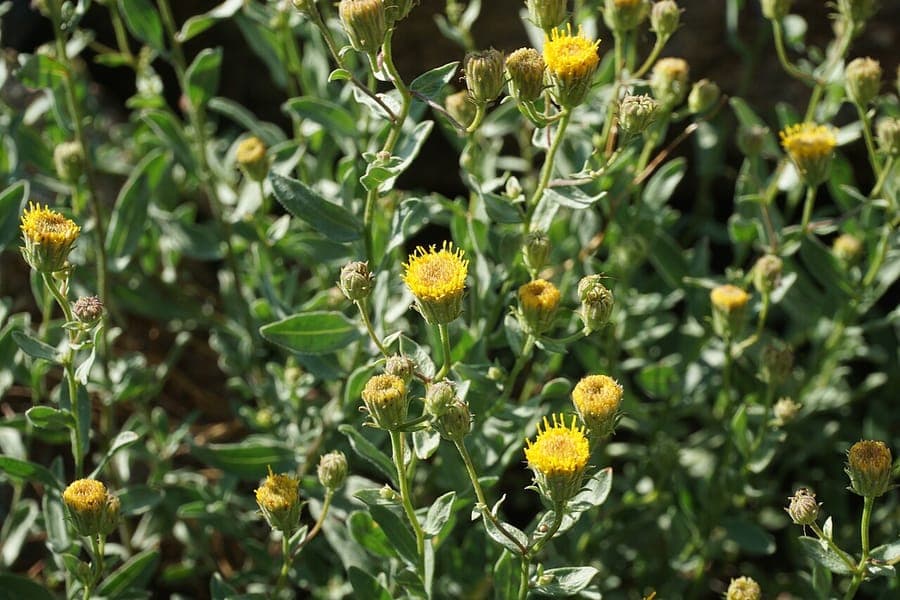
Matt Berger / CC BY 4.0, via Wikimedia Commons
Rock fleabane: complete guide
Erigeron petrophilus
Want to see Rock fleabane: complete guide in your garden?
1 minute, no credit card
Overview
Erigeron petrophilus, commonly known as rock fleabane or rockloving erigeron, is a compact perennial in the Asteraceae family. Described by the botanist Greene in 1888, the species is native to the dry mountain slopes and rocky ravines of southwestern Oregon and California, with concentrations in the Sierra Nevada, the Klamath Mountains, and the Cascade foothills. The species name petrophilus comes from the Greek 'petros' (rock) and 'philos' (lover), a fitting reference to its strong preference for rocky, extremely well-drained sites.
In its native range, Erigeron petrophilus occupies sun-exposed south-facing slopes, gravelly ridges, and open chaparral at elevations from around 300 metres up to over 2,000 metres. The plant colonises thin, nutrient-poor, fast-draining soils where competition from larger plants is limited. Its white, conspicuous flower heads attract pollinators including bees and hoverflies, providing a useful food source in habitats where few other flowering plants are present in summer.
For gardeners in the UK and northern Europe seeking a reliably hardy, low-maintenance perennial with attractive white daisy flowers, Erigeron petrophilus offers a distinctive alternative to more commonly grown fleabane species. It is drought tolerant once established, suited to rock gardens, gravel beds, dry stone walls, and raised beds, and available from specialist alpine nurseries. Discover how this rock daisy fits into your garden design at gardenworld.app.
The plant forms a compact, single-crowned herb with a basal rosette of foliage from which upright flower stems emerge. Its growth habit is moderate in pace, making it a well-behaved resident in a rock garden or border front without overwhelming neighbouring plants.
Appearance & bloom cycle
Erigeron petrophilus produces a neat, low rosette of green to grey-green leaves with a medium texture. The leaves are covered in fine, soft hairs that give them a slightly felty feel and help reduce moisture loss in dry conditions. Leaf shape is elongated to lance-shaped, with the basal leaves typically 3-7 cm long. The overall effect of the foliage is of a refined, compact cushion that sits well among rocks and gravel.
The flowers are white and clearly visible - described in botanical records as conspicuous. Each flower head is built in typical daisy fashion: a central yellow disc surrounded by several white ray florets. Flower heads are small to medium in size, held on slender, upright stems. After flowering, small brown fruits develop, each equipped with a pappus of fine hairs that aids wind dispersal. The plant can self-seed on open, well-drained ground, though not aggressively.
In its natural California and Oregon habitat, flowering occurs from June through August, corresponding to the region's dry summer season. In garden cultivation in the Netherlands, UK, or Germany, the bloom period typically runs from June into August. A sunny, sheltered site can push the start of flowering into late May. Regular removal of spent flower stalks encourages a second, lighter flush of flowers later in summer, extending the ornamental season into September.
The plant behaves as a true perennial, dying back partially in winter and re-emerging from the basal crown in spring. This reliable return each year, combined with the plant's modest footprint, makes it a valuable resident in a permanent rock garden or border.
Ideal location
True to its name, Erigeron petrophilus performs best in an open, fully sunny position receiving at least five to six hours of direct sun daily. It thrives in the intense light and free air circulation of mountain ridges, and these are the conditions to replicate in the garden. A south-facing or southwest-facing aspect in a rock garden, raised bed, or along a dry stone wall suits the plant well.
Good air circulation around the plant matters: it reduces fungal disease pressure and helps keep the foliage dry, particularly important in the more humid maritime climate of northwest Europe. Avoid planting in enclosed, poorly ventilated spots close to walls or dense hedges that trap damp air.
The compact size - rarely exceeding 25-30 cm in height - makes Erigeron petrophilus well suited to the front of a border, path edges, or planting between stepping stones. Large containers with excellent drainage work well on patios and balconies. Partial afternoon shade is tolerated but reduces flowering vigour and loosens the rosette habit. Deep shade should be avoided.
In urban gardens benefiting from the heat island effect, plants may begin flowering earlier in the season, which is useful for early pollinator support in late May and early June.
Soil requirements
The soil requirements of Erigeron petrophilus mirror its natural habitat: lean, sharply drained, and mildly acidic to moderately alkaline. The soil pH range of 6.4 to 8.5 is wide, covering most garden soils in northern Europe. What matters far more than pH is drainage. In the wild, this plant grows on gravelly scree and rocky slopes where water drains away within minutes of rainfall.
On heavier clay or loam soils, amendment is essential. Dig over the top 25-30 cm and incorporate 20-30% coarse sand (particle size 2-4 mm) and 10-15% perlite or fine grit to improve both structure and drainage. Avoid over-enriching the soil with nitrogen-heavy fertilisers or fresh compost: excess nutrients produce lush, floppy growth that suppresses flowering and increases susceptibility to fungal infections. A lean to moderately fertile, gritty soil is the ideal medium.
For container cultivation, use a mix of one part standard potting compost, one part coarse sand, and one part perlite or horticultural grit. Ensure the pot has adequate drainage holes - at least two or three for a pot of 20-30 cm diameter. A layer of gravel in the bottom of the pot, below the growing mix, further aids drainage.
When mulching around established plants, use fine gravel or crushed stone rather than bark: gravel mulch dries quickly after rain, prevents moisture accumulating around the crown, and reflects heat upward - conditions the plant actively enjoys.
Free design
Want to see Rock fleabane: complete guide in your garden? Make a free design now.
Watering
Once established - usually six to eight weeks after planting - Erigeron petrophilus is notably drought tolerant and requires minimal supplemental watering. In the first growing season, water once or twice per week during dry spells to help the roots establish in the new soil. Water at the base of the plant using a gentle flow to keep the leaf rosette dry and reduce fungal risk.
After establishment, the plant copes well with dry spells of two to three weeks, particularly on gravelly, fast-draining ground. During prolonged summer drought of more than three weeks, a thorough weekly watering is adequate. In wet periods, or on heavier soils, excess moisture is more dangerous than drought: waterlogged roots, especially during the winter dormant period, are the leading cause of plant loss.
In winter, rainfall across the Netherlands and the UK is generally more than sufficient; additional watering is rarely necessary. A gravel mulch around the plant base helps manage moisture levels and maintains the dry conditions around the crown that the roots prefer during dormancy.
Avoid wetting the crown and foliage in cool, damp weather - this is when fungal problems most commonly arise. If watering by hand, direct water to the soil, not the plant.
Pruning
Erigeron petrophilus requires very little pruning. After the main flowering period - typically in August or September - cut the spent flower stalks back to just above the leaf rosette using clean, sharp scissors or small secateurs. This straightforward step often encourages a second, lighter flush of flowers and keeps the plant looking tidy.
In late autumn, after the first hard frosts, you can remove dead and dried leaf debris. However, leave the leaf rosette itself in place: the dense cluster of basal leaves insulates the crown during hard frosts. Only in early spring - once new growth is visible, usually in March - should you clear away the old leaves and tidy up the base of the plant by removing any loose, dried material.
Avoid hard pruning in autumn that exposes the crown bare: this increases the risk of winter frost damage at frost-prone sites. Division every three to four years in early spring helps maintain vigour and prevents the centre of older clumps from dying out. Lift the clump, split into sections of three to five rosettes, and replant at the original depth in refreshed soil.
Maintenance calendar
January - February: Check that the plant is not sitting in standing water. During hard frosts with little snow cover, a loose layer of pine branches or dry straw over the rosette provides light insulation. Avoid impermeable covers that trap moisture.
March: Remove winter protection once hard frosts end. Cut away dead leaves, add a small amount of lean compost around the base. Plant out new specimens from garden centres once the ground is no longer frozen.
April: Weed carefully around plants. Refresh the gravel mulch if depleted. No feeding required; excess nitrogen encourages weak, floppy growth.
May - June: Flowering begins. Remove spent flower stalks regularly to encourage a longer season. Water only during dry spells lasting more than one week.
July - August: Peak flowering period. Keep the site weed-free. Drought periods of two to three weeks are well tolerated on free-draining soils.
September - October: Remove remaining spent stalks after flowering. Leave the leaf rosette intact for winter. Check drainage around the site.
November - December: Minimal care. No feeding and barely any supplemental watering.
Winter hardiness
Erigeron petrophilus is reasonably winter hardy for a plant originating from the dry mountain ranges of the American west. Within its natural range in the Sierra Nevada and Klamath Mountains, the species endures winter temperatures that regularly drop to -10 to -15 degrees Celsius, although winters in those areas are typically drier than in northwest Europe.
In garden cultivation in the Netherlands, Belgium, and the UK, the plant performs best in conditions corresponding to USDA zones 6-8. The key factor is not cold tolerance per se but the combination of cold and persistent moisture. A wet, heavy clay soil during a cold winter is far more dangerous for this plant than a dry period with light frost. On well-drained sandy or gravelly soil, the plant survives without difficulty.
For sites with heavy, moisture-retentive soil and severe winters, plant Erigeron petrophilus on a raised section of the bed (10-15 cm above surrounding soil level) or in a container that can be moved to a cool but dry frost-free space in winter. A gravel mulch around the base reduces crown moisture during the dormant season and is one of the single most effective protective measures available.
Explore cold-hardy plant combinations and garden design ideas for all soil types at gardenworld.app.
Companion plants
Erigeron petrophilus partners beautifully with other plants that share its preference for sunny, dry conditions on free-draining soil. Recommended companions include:
- Sedum (Hylotelephium) 'Herbstfreude' - the thick, succulent leaves create a bold textural contrast with Erigeron's fine foliage while sharing its drought tolerance. Available at most garden centres.
- Dianthus gratianopolitanus (Cheddar pink) - enjoys similar dry, calcareous soils and blooms at the same time in pink or red, creating an attractive two-tone display with Erigeron's white flowers.
- Armeria maritima (Thrift) - a cushion-forming plant with spherical pink flower heads that complements Erigeron in both height and colour palette.
- Stachys byzantina (Lamb's ears) - the silvery, felty leaves provide a striking colour and texture contrast and require the same well-drained, sunny site.
- Festuca cinerea (Grey fescue) - narrow, blue-grey leaves create a beautiful foil for the white flowers of Erigeron. Plant 25-30 cm apart to avoid root competition.
- Sempervivum (Houseleek) - rosettes of houseleek fill gaps between rocks and are equally drought tolerant. The combination of textures and forms works particularly well in a gravel garden.
- Pulsatilla vulgaris (Pasque flower) - blooms earlier in April-May with purple flowers and shares similar site requirements; the combination provides colour from early spring through late summer.
Space Erigeron petrophilus plants 20-30 cm apart, depending on desired density. Groups of three to five plants in a rock garden or gravel bed are visually most effective and create a natural-looking colony.
Conclusion
Erigeron petrophilus is an uncommon but genuinely worthwhile addition to the rock garden or drought-tolerant border. This rock fleabane asks for a sunny spot, sharply drained lean soil, and minimal maintenance, returning reliably each year with attractive white daisy flowers that support pollinators from midsummer into early autumn. Whether you are creating a Mediterranean-style gravel garden, a traditional alpine trough, or a low-water front garden border, this compact perennial earns its place with ease. Start planning your planting design at gardenworld.app.
Want to see Rock fleabane: complete guide in your garden? Make a free design now.
Upload a photo, pick a style, and get a photorealistic design with plant list in under a minute.
10,000+ gardens designed already
No credit card required


Similar plants
Cutleaf daisy: complete guide
Erigeron compositus
Full guide to growing Erigeron compositus: ideal site, soil, watering, pruning, and companion plants for this alpine daisy.
Threadleaf fleabane: complete guide
Erigeron filifolius
Full guide to growing Erigeron filifolius: sunny dry sites, lean soils, watering, pruning, and companion planting for this fine-leaved daisy.
Subalpine fleabane: complete guide
Erigeron peregrinus
Full guide to growing Erigeron peregrinus: purple blooms, moist soils, ideal site, winter hardiness, and companion plants for this alpine daisy.