Wikimedia Commons / CC BY-SA 3.0, via Wikimedia Commons
Eremurus robustus: growing the giant foxtail lily
Eremurus robustus
Want to see Eremurus robustus: growing the giant foxtail lily in your garden?
Full design in HD: €7.99
Look after your Eremurus robustus with the GardenWorld app
Identify plants with your camera and get a care calendar with reminders for this plant.


Overview
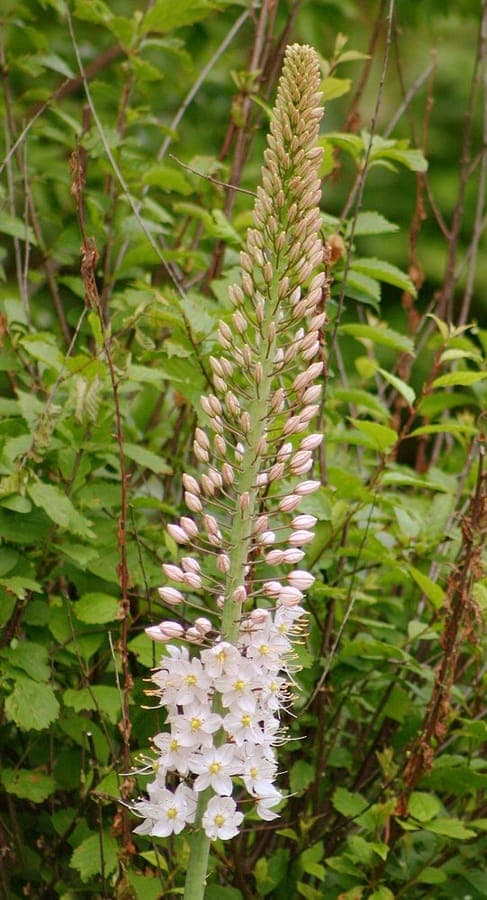
Eremurus robustus is the giant among foxtail lilies. In late May or June a ramrod-straight flower stem shoots up from a rosette of broad, blue-green leaves and can reach 2.5 to 3 metres. The top metre or more is packed with hundreds of starry flowers in soft peachy pink. Few perennials draw such a spectacular vertical line through a border, which explains its other common name, giant desert candle.
The species belongs to the family Asphodelaceae and comes from Central Asia, from the mountains of Kazakhstan, Kyrgyzstan, Tajikistan and Uzbekistan, including the Tien Shan and the Pamir-Alay. There it grows on dry, stony slopes and in steppe grassland, with a cold winter, a wet spring and a hot, dry summer. That rhythm shapes everything it needs in your garden: moisture in spring, dryness in summer and soil that never stays waterlogged.
It is not known to be toxic to people or pets, but it is not edible either. It is not invasive anywhere in Europe and self-seeds sparingly at most in British gardens. Want to know where a giant like this will look its best? gardenworld.app can create a garden design for you that takes account of height, aspect and the gap the plant leaves behind after flowering.
Appearance and bloom cycle
Below ground Eremurus robustus does not form a bulb but a fleshy crown with thick roots that radiate like a starfish and can spread half a metre or more. Early in spring the leaves emerge from it: strap-shaped, up to a metre long, blue-green and slightly fleshy, forming a broad rosette at the base.
The flowers open from the bottom upwards, so the spike stays colourful for weeks. Each flower is about 4 cm across, palest peachy pink with brownish markings at the base of the petals and prominent yellow stamens. As they age they fade almost to white, while the buds at the top are still pink. Bees and bumblebees flock to them. During or soon after flowering the foliage yellows and the plant retreats until the following spring. A faded spike with its round seed capsules stays decorative in the border for a long time.
Ideal location
Give Eremurus robustus the sunniest spot you have. A warm, south-facing border, a gravel garden or a site in front of a wall that holds the heat is ideal. In shade it flowers poorly and becomes floppy.
Shelter from strong wind matters, because a 3-metre stem with a heavy flower spike catches a lot of it. A hedge or wall a few metres away helps. On an open, windy site, push a sturdy, discreet stake in beside the stem in May. Think about summer too: after flowering the foliage vanishes and leaves a gap in the border. Plant lower perennials in front of the eremurus to fill that space from July onwards without shading the crown.
Soil requirements
Drainage is everything. The fleshy roots rot quickly in cold, wet soil. The ideal is a fertile, sandy loam that drains freely, preferably neutral to slightly alkaline. On heavy clay, plant in a raised bed or work a generous amount of grit and gravel into the top 40 cm.
Plant in September or October. Dig a wide, shallow hole and build a small mound of coarse sand or grit in the centre. Set the crown on top with the bud facing upwards and carefully spread out the brittle roots. Cover with 10 to 15 cm of soil above the crown. Allow at least 60 to 90 cm between it and other plants. A little well-rotted compost in the surrounding soil helps, but never put fresh manure against the roots.
Free preview
Want to see Eremurus robustus: growing the giant foxtail lily in your garden? Make a free preview of your design.
Watering
In spring the plant grows on winter moisture and rain. If spring turns out very dry, give a full watering can around the rosette every other week in April and May so the flower stem develops well.
After flowering it wants to stay dry. The foliage dies back and the crown goes into summer dormancy. Do not water then, and make sure lawn or border sprinklers miss this spot. On free-draining ground it copes with a wet summer, but in heavy, damp soil that often leads to rot. A container is not a good choice for this giant.
Pruning
Hardly any pruning is needed. After flowering you can leave the spent spike for its seed heads, or cut it at the base if you want to prevent self-seeding. Leave the leaves until they are completely yellow, so the crown can replenish its reserves for next year, then cut or pull them away.
Lift the crown as rarely as possible. Eremurus robustus improves the longer it stays undisturbed. You can divide it in September once an old plant has formed several crowns, but do so gently, because the roots snap easily.
Maintenance calendar
January to February: dormant. Mark the spot with a cane so you do not dig into it by accident.
March: the first shoots appear. Cover the young rosette with fleece on frosty nights and protect it from slugs.
April to May: the leaves grow and the flower stem shoots up. Water in dry spells and add a stake if needed.
June to July: flowering. Cut a spike for a large vase when the lowest flowers open, if you like.
July to August: foliage dies back. Do not water.
September to October: best planting time for new crowns. Divide old plants if necessary.
November to December: spread a layer of dry leaves or bark over the planting spot.
The planting calendar on gardenworld.app lays out these steps month by month, together with the jobs for the rest of your garden.
Winter hardiness
The crown of Eremurus robustus is very hardy (RHS H6) and tolerates frost in the ground down to about -20 °C, especially when the soil is dry. Its weak point is early growth. Shoots sometimes appear as early as March, and a hard night frost can damage the young leaves and the flower bud. The plant then flowers less that year, or not at all.
In November, spread a layer of dry leaves or wood chips over the planting spot; it protects against severe frost and slightly delays the new growth. Remove it in March and keep fleece to hand for cold nights in March and April.
Companion plants
An eremurus needs lower partners to hide its dying foliage in summer. Nepeta × faassenii and Salvia nemorosa are ideal: they flower around the same time in blue-purple and also love sun and dry conditions. Paeonia lactiflora fills the space in front of the eremurus with large flowers and sturdy leaves that stay green all summer.
Allium giganteum flowers at the same time with large purple globes and repeats the vertical rhythm at a lower height. Stipa gigantea, giant oat grass, shares its height and airy character and remains attractive into winter. Together they create a border with height, structure and colour from May into autumn.
Final thoughts
Eremurus robustus is a plant that makes an impression: three-metre candles, hundreds of pink stars and a humming cloud of bees. It asks for a sunny, sheltered spot, soil that never stays wet and some patience, as a new plant often needs two years before its first full display. Plant the crown in September on a bed of coarse sand, leave it to grow undisturbed and enjoy, from the second or third year, one of the most spectacular perennials there is.
Frequently asked questions about Eremurus robustus
Is Eremurus robustus winter hardy?
The crown of Eremurus robustus is very hardy (RHS H6) and tolerates frost in the ground down to about -20 °C, especially when the soil is dry. Its weak point is early growth.
When and how do you prune Eremurus robustus?
Hardly any pruning is needed. After flowering you can leave the spent spike for its seed heads, or cut it at the base if you want to prevent self-seeding.
How much water does Eremurus robustus need?
In spring the plant grows on winter moisture and rain. If spring turns out very dry, give a full watering can around the rosette every other week in April and May so the flower stem develops well.
Where does Eremurus robustus grow best?
Give Eremurus robustus the sunniest spot you have. A warm, south-facing border, a gravel garden or a site in front of a wall that holds the heat is ideal.
What soil does Eremurus robustus need?
Drainage is everything. The fleshy roots rot quickly in cold, wet soil.

See it in your garden
See Eremurus robustus in your garden
One photo of your garden and a few questions. You see the result in about a minute.
Try it with a photoIdentify this plant in your own garden. Identify a plant
Similar plants
Catmint: complete guide
Nepeta faassenii
Everything about catmint (Nepeta faassenii): long-blooming blue flowers, drought-proof, ideal rose companion. Expert tips for a carefree, pollinator-rich border.
Woodland sage: complete guide
Salvia nemorosa
Everything about Woodland Sage (Salvia nemorosa): planting, care, pruning and combinations. Expert tips for months of blue-violet flower spikes.
Garden peony: complete guide
Paeonia lactiflora
Everything about the garden peony (Paeonia lactiflora): planting depth, fragrant blooms, cultivars and long-term care. Expert tips for flowers that last a lifetime.
