
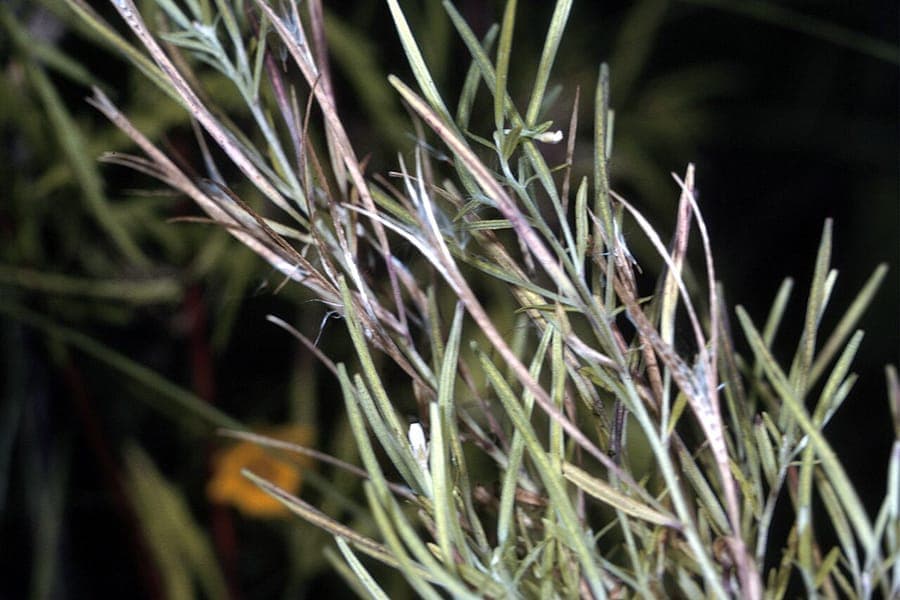
Robert H. Mohlenbrock / Public domain, via Wikimedia Commons
Bog willowherb: complete guide
Epilobium leptophyllum
Want to see Bog willowherb: complete guide in your garden?
1 minute, no credit card
Overview
Epilobium leptophyllum, known as bog willowherb, narrow-leaved willowherb, or linear-leaf willowherb, is a slender, erect perennial herb in the family Onagraceae. It has an exceptionally wide native range across North America - from Alaska and the Canadian provinces of Alberta, British Columbia, and Manitoba south through most of the contiguous United States, including Colorado, Oregon, Wyoming, and even Texas. Its habitat niche is highly specialised: it is a plant of wetlands, specifically favouring nutrient-poor bog margins, fens, wet prairies, vernal pools, and streamside marshes.
The species name 'leptophyllum' derives from the Greek 'leptos' (slender, fine) and 'phyllon' (leaf or blade), a direct reference to the plant's most distinctive feature: its extremely narrow, linear leaves. These slender blades give the plant an almost grass-like, airy appearance in the marginal vegetation, clearly distinguishing it from broader-leaved relatives such as Epilobium hirsutum or Epilobium coloratum.
In European gardens bog willowherb is still relatively little-known, but it deserves a firm place in naturalised peat gardens, bog gardens, and fen-style plantings. It establishes quickly on bare, moist mineral banks, self-seeds generously, and offers reliable nectar for small bees, hoverflies, and butterflies. Its slow growth rate and modest stature - typically 30 to 70 cm tall - make it less invasive than some other willowherb species.
The synonym Epilobium rosmarinifolium (Pursh) appears in older floras, describing the resemblance of the narrow blades to rosemary foliage. The synonym Epilobium lineare also appears historically.
Appearance & bloom cycle
Bog willowherb grows as a conspicuously slender, erect herb reaching 30 to 70 cm, occasionally 90 cm in exceptionally moist, fertile conditions. Stems are simple or sparsely branched, finely hairy, and green to slightly reddish. Leaves are extremely narrow, linear to narrowly lanceolate, 3 to 8 cm long but only 2 to 8 mm wide, with finely toothed margins. This narrowness gives the plant a feathery, almost rush-like texture unlike any other commonly cultivated Epilobium species.
The bloom period runs from July through August with scattered flowers into September. Individual flowers are small (5–8 mm across), four-petalled, pale pink to whitish-pink, with slightly notched petal tips giving each bloom a finely divided look. A well-established plant bears dozens of flowers simultaneously. After flowering, thin cylindrical seed capsules 3 to 6 cm long develop and split open at maturity, releasing tiny seeds each with a white silky plume for wind dispersal.
The historical synonym Epilobium palustre var. gracile (Farw.) captures the graceful habit well. Epilobium squamatum (Nutt. ex Pursh) and Epilobium tenellum (Raf.) are further synonyms encountered in older North American botanical literature.
Ideal location
Bog willowherb is a habitat specialist: it requires moist to wet, nutrient-poor positions. In nature it is characteristically found in Sphagnum bogs, wet meadow margins, fen edges, and the margins of softwater ponds and small lakes. In the garden, ideal locations include the edge of a wildlife pond with slightly acidic water chemistry, a constructed peat bog garden, a rain garden that sits wet for extended periods, or a naturally moist corner adjacent to a downpipe or drainage outlet.
Full sun encourages the most prolific flowering and the best reddish stem tinting, but the plant grows well in partial shade beneath open-canopy trees or on the shaded side of a pond. Deep shade reduces flowering and weakens the stems considerably. Avoid nutrient-rich positions: on fertile, heavily amended soil the plant loses its characteristic graceful, compact habit and may be outcompeted by more aggressive marginal plants.
Bog willowherb self-seeds freely. In large, naturalised peat or bog gardens this is an advantage, colonising new wet areas naturally. In smaller, more controlled gardens, removing seed capsules before they open limits spread to manageable levels. Unwanted seedlings are easily pulled at the seedling stage.
Soil requirements
The soil requirements of bog willowherb closely reflect its habitat specialisation: consistently moist to wet, nutrient-poor, acidic to mildly acidic substrates. The species performs best at a pH of 4.0 to 6.5, corresponding to peaty, humus-rich soils, acidic sandy substrates with high moisture, and loamy streamside soils associated with soft-water streams. On calcareous, high-pH soils, the plant declines rapidly and rarely persists beyond one season.
For constructed peat bog or fen gardens, use pure moss peat or a mixture of moss peat, coarse lime-free sand, and rainwater (not tap water, which typically has an elevated pH and significant calcium content). Tap water gradually alkalises peat beds and disrupts the characteristic plant community. Rainwater or deionised water is strongly recommended for irrigation of acidic bog plantings.
At pond margins with naturally neutral to mildly acidic water chemistry, no special soil preparation is usually needed. Epilobium leptophyllum seeds most effectively on bare, moist, mineral bank surfaces without a thick mat of moss or existing vegetation. Lightly scraping the bank surface before sowing provides the ideal germination substrate.
Avoid nitrogen or phosphate fertilisation: it promotes rank, untypical growth and encourages competitive, more aggressive marginal species to overtake the delicate Epilobium. Keep the substrate nutrient-poor - this is the key management principle for pioneer plants of oligotrophic wetlands.
Watering
Bog willowherb requires permanently moist to wet substrate. On naturally wet sites - pond margins, peat bogs, fen gardens - supplemental watering is usually unnecessary and, if tap water is used, actually undesirable due to its calcium content raising soil pH. On marginally drier positions such as rain gardens that partially dry between rain events, daily watering with rainwater during dry spells is necessary to keep the plant healthy.
The plant tolerates brief dry periods better than many other marginal species, but after more than a week without moisture, stems visibly flag, blades curl inward, and flowering stops prematurely. Recovery after watering is rapid: within one to two days of a thorough watering the plant resumes its upright habit. Drip irrigation positioned at the stem base delivers water efficiently without wetting the fine blades, which can encourage powdery mildew during warm, humid weather.
In winter the root zone should not be allowed to dry out completely: roots need a minimum of residual moisture through the dormant season for reliable survival. In peat bog gardens this is rarely a concern due to the water-holding capacity of the Sphagnum moss layer.
Free design
Want to see Bog willowherb: complete guide in your garden? Make a free design now.
Pruning
Bog willowherb requires minimal intervention. As a short-lived perennial that relies heavily on seed for perpetuation, management centres on guiding the self-seeding process. To contain the plant to a defined area, remove maturing seed capsules just before they open - clip the stems at about 10 cm above the ground once capsules are visible but still green and closed. To encourage spread into adjacent wet areas, allow capsules to fully ripen and seeds to disperse naturally.
In naturalised bog or fen gardens, this self-seeding character is a decided advantage: the plant colonises new wet patches organically without any gardener intervention, creating a spontaneous, naturalistic cover. At the end of the growing season in October or November, cut the dead aboveground stems to just above ground level, but leave some standing as overwintering habitat for small insects. Remove the remaining winter stems in early spring before new growth begins.
Clump division in spring is the most reliable method of translocation: lift the root crown gently, divide into two to four equal sections, and replant at the same depth with 25 to 35 cm spacing. This also reinvigorates clumps that have been in place for several years.
Maintenance calendar
January–February: Dormancy. Check that the planting site is not sitting under frozen standing water for extended periods at extreme cold, which can damage root crowns. Frost damage is rare in peat bog settings due to the insulating effect of the peat substrate.
March: Vegetation period begins. Remove dead material from the previous year. Seedlings from last autumn's seed drop begin to germinate; select desired plants and remove surplus seedlings while still small.
April: Transplant seedlings or divided clumps if relocation is desired. Maintain consistent moisture. Check the site pH; if above 6.5, a light application of acidic peat substrate helps rebalance conditions.
May–June: Active growth. Maintain moisture. Weed out competing plants; watch for aggressive marginal species such as Lythrum or Phragmites that can rapidly outcompete the smaller Epilobium on more fertile substrates.
July–August: Bloom period. Enjoy the delicate pale pink flowers and the steady visits of small pollinators. Maintain moisture. Remove maturing seed capsules if spread control is desired.
September: Late bloom and seed dispersal. Harvest ripe seed in paper bags for deliberate sowing on new wet sites.
October–November: Cut back aboveground stems to a few centimetres above ground. Leave some stems standing for insect habitat.
December: Dormancy. In peat bog settings, ensure adequate moisture is maintained through dry frost periods; cover with a layer of loose Sphagnum or straw if needed.
Winter hardiness
Bog willowherb is exceptionally cold-hardy, as one would expect from a species native to Alaska and the Northwest Territories of Canada, where winter temperatures can drop to -40 °C and below. In European garden terms, it is reliably hardy in USDA zones 2 to 7, covering virtually all of Europe including Scandinavia and northern Russia. In mild coastal areas of northwestern Europe such as the Netherlands and Belgium, this plant faces no winter hardiness challenge at all.
The aboveground stems die back after the first sharp frost; the root crown and the seeds resting on the soil surface are the surviving elements. Seeds of Epilobium leptophyllum benefit from cold stratification and germinate most reliably after a winter exposure to freezing temperatures, which ensures natural regeneration in the wild. In garden settings this means that seeds allowed to fall in autumn will typically germinate the following spring without any special treatment.
After an unusually severe winter, the root crown may take slightly longer to produce new growth, but regrowth is reliable once soil temperature exceeds about 8 °C, typically in April in temperate European climates. No winter protection is needed in most European growing conditions.
Companion plants
Bog willowherb fits most naturally with other plants of nutrient-poor, moist to wet, acidic habitats:
- Eriophorum angustifolium (common cottongrass): the white-plumed seed heads of cottongrass and the pale pink flowers of bog willowherb create a classic bog plant association. Both require acidic, nutrient-poor, wet peat at pH 3.5 to 5.5. Space 30 cm apart.
- Sphagnum (peat moss): as living mulch beneath the Epilobium stems, Sphagnum maintains the soil pH, retains moisture, and provides the ideal germination surface for wind-dispersed seeds. It is the natural companion in any true bog garden.
- Drosera rotundifolia (round-leaved sundew): this carnivorous plant shares identical habitat requirements and creates a fascinating ecological pairing with bog willowherb on wet, acidic, nutrient-poor banks.
- Molinia caerulea (purple moor grass): this native acid-loving grass provides structural contrast and height variation in the moist border without overwhelming the delicate Epilobium. Space 40 cm apart.
- Juncus effusus (soft rush): the upright, dark green stems of soft rush complement the slender Epilobium stems and provide year-round texture and structural interest in the marginal zone.
Avoid nitrogen-enriching, vigorous partners such as Petasites, large stands of Filipendula ulmaria, or Typha - these will rapidly overtop and outcompete the modest bog willowherb on any but the most nutrient-poor substrates.
See how bog willowherb works in a wildlife pond or peat garden design for your specific garden at gardenworld.app, where you can upload your garden photo and try marginal plant combinations visually. For more on naturalised bog gardens and companion plant selection, visit gardenworld.app.
Closing
Bog willowherb is a plant for the gardener who values the subtle, the ecological, and the genuinely wild. In its slender form - with narrow blade-like foliage, tender pale pink flowers, and feathery wind-borne seeds - it brings something of the true bog landscape into the garden. Its demands are modest: a wet, acidic spot, no fertilisation, occasional seed management. In return it offers biodiversity value, textural elegance, and the quiet appeal of a plant that thrives precisely where others give up.
Want to see Bog willowherb: complete guide in your garden? Make a free design now.
Upload a photo, pick a style, and get a photorealistic design with plant list in under a minute.
10,000+ gardens designed already
No credit card required


Similar plants
Shortfruit evening primrose: complete guide
Oenothera brachycarpa
Everything about Oenothera brachycarpa - the shortfruit evening primrose from the American Southwest. Growing tips, placement and care for your garden.
Sundrops (Oenothera tetragona): complete guide
Oenothera tetragona
Everything about Oenothera tetragona - the cheerful daytime-blooming sundrops perennial. Growing tips, placement, pruning and care for a long summer display.
Seabeach evening primrose: complete guide
Oenothera humifusa
Full guide to Oenothera humifusa, the seabeach evening primrose native to the US Atlantic coast. Yellow blooms, silvery foliage, drought-tolerant.