Hectonichus / CC BY-SA 3.0, via Wikimedia Commons
Paperbush (Edgeworthia chrysantha): complete guide
Edgeworthia chrysantha
Want to see Paperbush (Edgeworthia chrysantha): complete guide in your garden?
Full design in HD: €7.99
Look after your Paperbush with the GardenWorld app
Identify plants with your camera and get a care calendar with reminders for this plant.


Overview
Paperbush (Edgeworthia chrysantha) is one of the loveliest winter-flowering shrubs you can grow. In the greyest months, from February into March, its bare branches carry rounded flower heads that are silvery white and silky on the outside and golden yellow within. They have a sweet, spicy scent, so you often smell the shrub before you see it. Little wonder it has become increasingly popular with garden centres and keen gardeners in recent years.
Edgeworthia chrysantha comes from China and belongs to the Thymelaeaceae, the same family as daphne. In Japan it has been cultivated for centuries under the name mitsumata, meaning "three forks", because each branch divides into three. Its strong, flexible bark fibres are traditionally used to make fine handmade paper, which explains the common name. The young stems are so supple that you can tie them in a knot without breaking them, and in the United States the plant is sometimes sold as knotted paperbush for that reason.
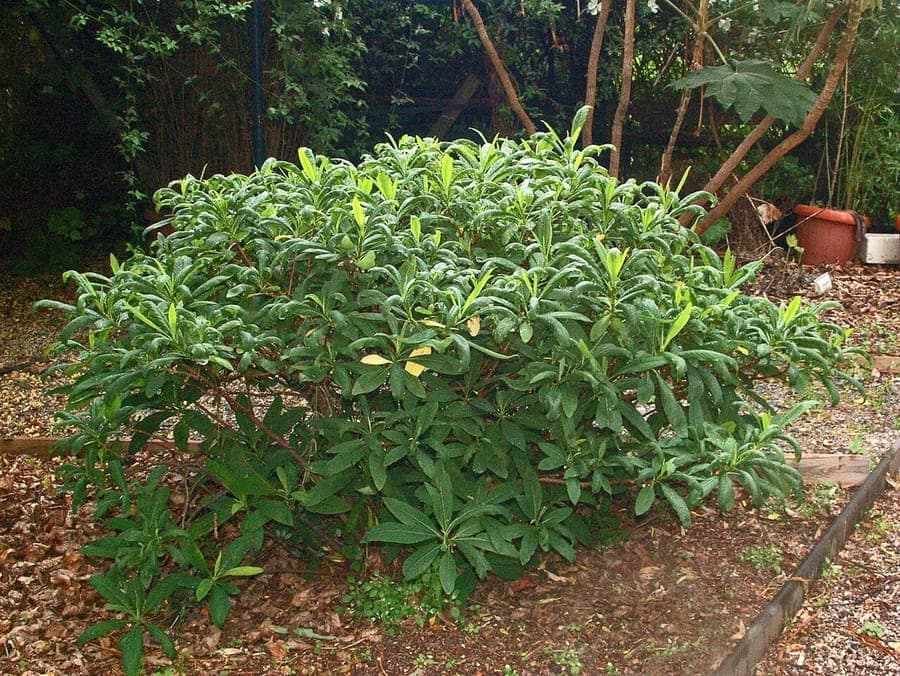
In gardens it usually grows 1 to 1.5 m tall and as wide, occasionally reaching 2 m in a very sheltered spot. It forms a rounded, open shrub with thick, cinnamon-brown twigs. If you would like advice on where it would look best on your plot, ideally close to the house so you notice the scent in winter, you can have a garden design made on gardenworld.app.
Appearance and bloom cycle
What makes paperbush so special is that its flower buds appear in autumn. When the leaves drop in October and November, nodding buds remain at the branch tips, covered in soft, silvery-white hairs. They look like small balls of cotton wool and decorate the shrub all winter.
From February, or late January in a mild winter, they open. Each head holds 30 to 50 tubular flowers and measures 3 to 5 cm across. The outside stays silvery and hairy while the inside turns rich yellow. The fragrance is sweet with a hint of clove, and flowering often lasts four to six weeks. There are selections with larger heads, such as 'Grandiflora', and with orange-red flowers, such as 'Red Dragon'.
After flowering, in April, the leaves emerge. They are lance-shaped, 8 to 15 cm long, soft and bluish green, arranged in rosettes at the tips of the twigs, and turn butter yellow in autumn before they fall. So even in summer the shrub is a fresh, leafy presence with a slightly exotic look, as in the photo at the top of this page.
Ideal location
Paperbush prefers a sheltered position in light partial shade or sun, with protection from the hottest midday sun. A spot near a south-west or west-facing wall is ideal, or at the edge of a group of taller shrubs that keep cold winds at bay. Cold easterly and northerly winds damage the buds in winter.
Plant it close to a path, a terrace or the front door so you catch the scent each time you step outside in February. In a large, open garden without shelter it struggles more, as winters there tend to be a few degrees colder.
Soil requirements
Edgeworthia chrysantha needs humus-rich soil that holds moisture yet drains well. Slightly acid to neutral ground is ideal, and on very chalky soil the leaves may yellow. Wet feet in winter are its greatest enemy: on heavy clay that stays wet for long periods the roots rot. When planting, work in plenty of leaf mould or compost and some coarse grit, or plant on a slightly raised mound.
Plant in spring, in April or May, so the shrub has a full season to root before its first winter. A mulch of leaf mould or composted bark keeps the roots cool in summer and protects them in winter.
Free preview
Want to see Paperbush (Edgeworthia chrysantha): complete guide in your garden? Make a free preview of your design.
Watering
Paperbush needs evenly moist soil. In its first year, water about 10 litres once a week during dry weather. Later on it remains important that the ground does not dry out in summer, because the flower buds for the following winter form in July and August. During prolonged drought the shrub drops its leaves early and produces fewer buds.
Too much water is equally harmful. Never let water stand around the base, especially in winter. In a container, water more often in summer but let the top few centimetres dry out between waterings.
Pruning
Prune paperbush as little as possible. It naturally forms a neat, regular shape and does not respond well to hard cutting. The flower buds sit at the tips of the previous season's growth, so pruning in autumn or winter removes the flowers.
If pruning is necessary, do it straight after flowering, in April. Remove dead or damaged wood and crossing branches. Wear gloves if you have sensitive skin, because the sap of related plants can irritate.
Maintenance calendar
January and February: Buds swell and the first flowers open. In hard frost below -10 °C, protect the shrub with a double layer of fleece.
March: Full flower. Enjoy the scent and leave the plant alone.
April: Light pruning after flowering if needed. Feed with organic shrub fertiliser and renew the mulch. A good month for planting.
May and June: Leaves unfold fully. Water during dry spells.
July and August: Next winter's flower buds form. Keep the soil moist.
September and October: The silvery buds become visible. Stop feeding.
November and December: Leaves turn yellow and drop. Add an extra layer of mulch around the base.
Winter hardiness
Paperbush is moderately hardy. The RHS rates it H4, which means frost down to about -10 °C. Established plants in a sheltered spot can cope with short spells around -12 °C, but the flower buds may be damaged sooner. In most winters in southern Britain and the Low Countries it does well, especially in towns and against a wall; in colder, exposed areas it is a gamble.
Young plants are more vulnerable. Protect them during hard frosts in their first winters with fleece and a thick layer of leaf mould at the base. In cold districts you can grow paperbush in a large container and move it into a cold, light place during severe frost, such as an unheated greenhouse or a garage with a window.
There is little reliable information on the toxicity of Edgeworthia chrysantha. Related plants in the same family, such as daphne, are poisonous. Keep children and pets from eating the flowers, leaves or bark, and wash your hands after pruning. The species is not invasive in Europe.
Companion plants
Pair paperbush with other plants that offer something in winter. Chinese witch hazel (Hamamelis mollis) flowers at the same time with fragrant yellow spidery blooms. Wintersweet (Chimonanthus praecox) is scented from December onwards. Skimmia japonica provides evergreen leaves and red berries or buds.
At its feet, Lenten roses (Helleborus orientalis) flower from January to April in white, pink and purple. Snowdrops (Galanthus nivalis) and winter aconites form a carpet beneath the bare branches. For summer, hostas and ferns keep the spot green in partial shade, so it remains attractive long after flowering has finished.
Final thoughts
Paperbush transforms the whole winter garden: silver buds in December, golden flowers in February and a fragrance that greets you every time you step outdoors. Give it a sheltered spot, soil that never stays waterlogged and as little pruning as possible, and you will enjoy it for many years.
The plant calendar on gardenworld.app shows month by month what your paperbush and the other plants in your garden need. Plant an Edgeworthia chrysantha near your door next spring and look forward to the first flowers the following February.
Frequently asked questions about Paperbush
Is Paperbush winter hardy?
Paperbush is moderately hardy. The RHS rates it H4, which means frost down to about -10 °C.
When and how do you prune Paperbush?
Prune paperbush as little as possible. It naturally forms a neat, regular shape and does not respond well to hard cutting.
How much water does Paperbush need?
Paperbush needs evenly moist soil. In its first year, water about 10 litres once a week during dry weather.
Where does Paperbush grow best?
Paperbush prefers a sheltered position in light partial shade or sun, with protection from the hottest midday sun. A spot near a south-west or west-facing wall is ideal, or at the edge of a group of taller shrubs that keep cold winds at bay.
What soil does Paperbush need?
Edgeworthia chrysantha needs humus-rich soil that holds moisture yet drains well. Slightly acid to neutral ground is ideal, and on very chalky soil the leaves may yellow.

See it in your garden
See Paperbush in your garden
One photo of your garden and a few questions. You see the result in about a minute.
Try it with a photoIdentify this plant in your own garden. Identify a plant
Similar plants
Chinese Witch Hazel: complete guide
Hamamelis mollis
Chinese witch hazel blooms in January-February with fragrant yellow flowers even in deep winter. Master care, site selection, and pruning to enjoy 30+ years of winter color.
Chimonanthus praecox: complete guide
Chimonanthus praecox
Wintersweet brings fragrance and color during the coldest months. Learn how to grow this Asian shrub for early spring charm.
Lenten-rose: complete guide
Helleborus orientalis
Learn how to grow and care for Helleborus orientalis. This early-blooming perennial thrives in shady spots and flowers from February to April, adding colour when little else is blooming.
