
Dominicus Johannes Bergsma / CC BY-SA 3.0, via Wikimedia Commons
Lenten-rose: complete guide
Helleborus orientalis
Want to see Lenten-rose: complete guide in your garden?
1 minute, no credit card
Overview
The Lenten-rose (Helleborus orientalis) is a standout perennial in temperate gardens, prized for its ability to bloom when most plants are still dormant. Native to woodland areas in Greece, Turkey, and the Caucasus, this hardy forb emerges as early as February and continues flowering through April. It's a member of the Ranunculaceae family and thrives in the cool, humus-rich soils typical of forest understories. In the garden, it brings quiet elegance with its evergreen foliage and downward-facing blooms. Whether you're designing a woodland edge or a shaded border, the Lenten-rose adds structure and subtle beauty during the bleakest months. On gardenworld.app, you can create a planting plan that highlights early bloomers like this one, ensuring your garden never feels bare.
Appearance & bloom cycle
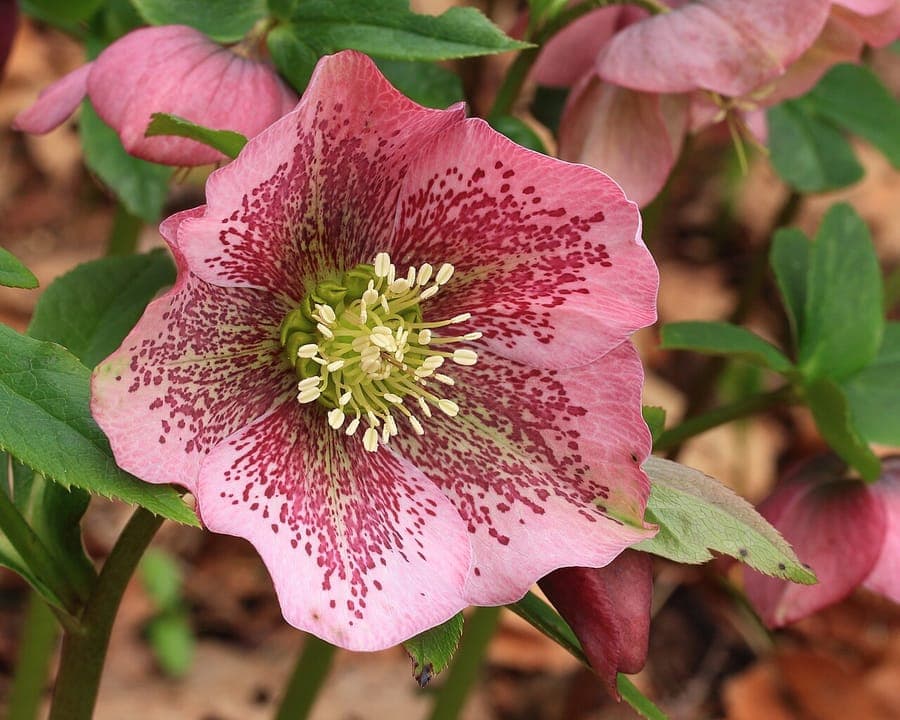
Helleborus orientalis forms clumps of dark green, leathery, palmate leaves that stay green all year, reaching 30–45 cm across. From late winter to mid-spring, upright stems rise to 40–60 cm, bearing large, cup-shaped flowers that nod gracefully. The blooms range from pure white and pale green to deep maroon, often with speckled or veined patterns. Each flower can last 6–8 weeks, and newer hybrids offer double forms and picotee edges. Because the flowers face downward, plant them where you can view them at eye level - on a rock wall, near steps, or in containers. This makes it easy to appreciate their intricate inner details.
Ideal location
Choose a spot with partial to full shade, ideally under deciduous trees or shrubs that provide light cover in winter but allow filtered light in spring. An east- or north-facing bed works well. Avoid hot afternoon sun, which can scorch leaves and dry out roots. The plant enjoys shelter from strong winds, especially in exposed gardens. Urban gardeners can grow it in shaded courtyards or on covered patios. If you're unsure about placement, use gardenworld.app to simulate different light conditions and see how the Lenten-rose fits into your overall design.
Soil requirements
This plant prefers moist, well-drained soil rich in organic matter. Amend heavy clay with compost or leaf mould to improve structure and drainage. Sandy soils benefit from added compost to retain moisture. The ideal pH range is 6.0 to 7.5 - slightly acidic to neutral. Avoid waterlogged soils, as they lead to root rot. If your soil is poor, mix in well-rotted manure at planting time to give the roots a strong start.
Free design
Want to see Lenten-rose: complete guide in your garden? Make a free design now.
Watering
Water regularly during the first growing season, especially during dry spells. Once established, Helleborus orientalis is fairly drought-tolerant but performs best with consistent moisture. In spring, when flower buds form, make sure the soil doesn't dry out completely. Mulching with leaf litter or compost helps retain moisture and keeps roots cool. Avoid overhead watering to prevent fungal issues on the foliage.
Pruning
Minimal pruning is needed. In late winter, before new flowers emerge, cut back old, tattered leaves to ground level. This improves air circulation and highlights the blooms. Be careful not to damage emerging flower stalks. Deadheading isn't necessary, as seed pods can add ornamental interest and may self-sow. If you want to prevent self-seeding, remove spent flowers before they set seed.
Maintenance calendar
- January: Tidy up by removing old foliage. Check for aphids or black spot.
- February: Flowers begin to open. Protect from hard frosts with horticultural fleece if needed.
- March: Apply a light layer of compost around the base. Divide overcrowded clumps if desired.
- April: Peak bloom. Monitor for slugs on young leaves.
- May–August: Dormant period. Water only during prolonged drought.
- September: Refresh with compost. Prepare for fall planting.
- October: Ideal time for planting or transplanting. Soil is still warm, encouraging root growth.
- November–December: No active care needed. Ensure good drainage to prevent winter rot.
Winter hardiness
Hardy in USDA zones 6–9 (-23°C to -1°C). The evergreen leaves often persist through winter, providing visual interest in the dormant garden. In harsh winters, foliage may show some dieback but usually rebounds in spring. The main threat is wet soil during freeze-thaw cycles, which can damage roots. Raised beds or sloped areas help prevent waterlogging.
Companion plants
Pair Lenten-rose with other shade-tolerant, early bloomers like snowdrops, crocus, and winter aconite. Later, it blends well with hostas, ferns, and epimediums. Avoid planting near shallow-rooted vegetables or herbs, as hellebores are toxic if ingested. Garden centres across the UK and US often stock Lenten-roses in late winter - look for healthy, well-established plants with firm buds.
Closing
Helleborus orientalis is a quiet achiever in the garden - unspectacular at first glance but deeply rewarding over time. Once settled, it asks for little and gives back with months of bloom and year-round foliage. Whether naturalised under trees or featured in a formal border, it brings dignity to the winter garden. Start small, let it spread, and enjoy the way it greets the coming spring.
Want to see Lenten-rose: complete guide in your garden? Make a free design now.
Upload a photo, pick a style, and get a photorealistic design with plant list in under a minute.
No credit card required


Similar plants
Drummond's anemone: complete guide
Anemone drummondii
Discover Drummond's anemone (Anemone drummondii): a silvery-grey mountain plant for cool rock gardens and alpine troughs.
Korean clematis: complete guide
Clematis serratifolia
Clematis serratifolia is a hardy climber with fragrant yellow bell flowers in August-September. Pruning group 3, location and care tips.
Aquilegia brevistyla: complete guide
Aquilegia brevistyla
Discover Aquilegia brevistyla, the elegant North American columbine. Growing tips, shade tolerance, and design ideas for woodland and shadowed gardens.