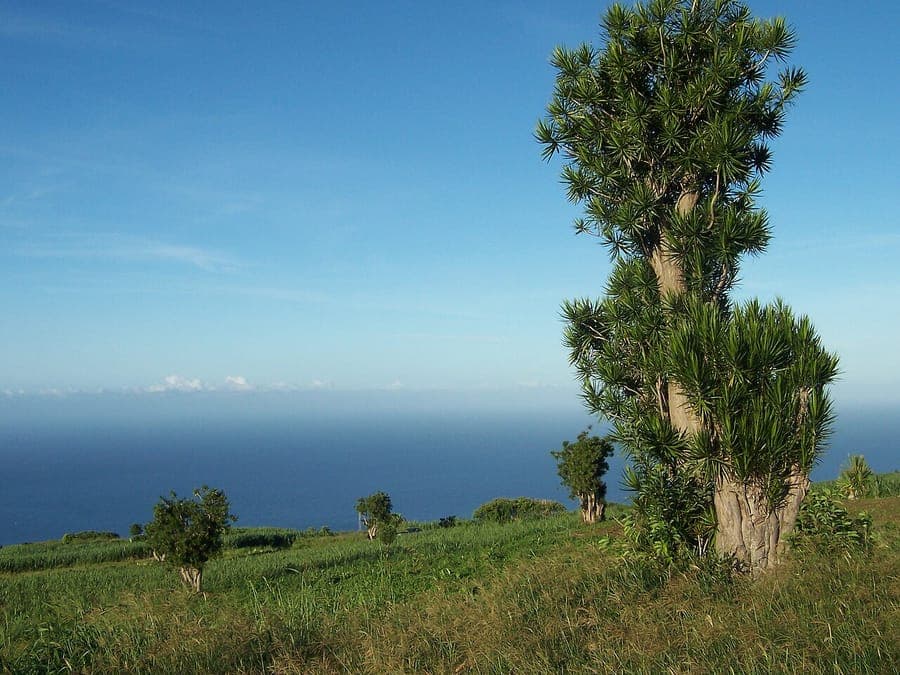
No machine-readable author provided. B.navez assumed (based on copyright claims). / CC BY-SA 3.0, via Wikimedia Commons
Song of India: complete guide
Dracaena reflexa
Want to see Song of India: complete guide in your garden?
Full design in HD: €7.99
Look after your Song of India with the GardenWorld app
Identify plants with your camera and get a care calendar with reminders for this plant.


Dracaena reflexa, commonly known as Song of India or Pleomele, is an elegant foliage plant belonging to the Asparagaceae family, native to northeastern Mozambique and adjacent Indian Ocean islands. Formally described by Lam. in 1786, this species has become a beloved choice for interior landscaping and household cultivation.
The plant develops as a graceful tree or shrub, typically achieving 1.5 to 2.5 meters height in indoor culture, though wild specimens may exceed 5 meters. It displays slender, upright stems clothed with long, narrow, gently arching leaves. Foliage is elongate, glossy dark green with golden to yellow marginal bands and veins, creating striking visual effects.
The distinctive leaf variegation constitutes this plant's primary ornamental appeal. Selected cultivars display golden striping throughout leaves or possess complete golden margins. The contrast between dark green ground color and golden highlights provides exceptional visual interest.
Song of India thrives as a houseplant. The plant tolerates indoor conditions admirably, provided adequate illumination exists. Bright, indirect light locations optimize foliar coloration. The plant tolerates brief morning or afternoon direct sun but burns in prolonged summer rays.
Soil preparation proves critical. Employ well-draining potting medium incorporating abundant perlite, orchid bark, or sand. The plant abhors waterlogging and prefers drier conditions to wet feet. Ensure drainage holes accommodate free water movement.
Watering requires consistency, allowing soil to partially dry between applications. Winter watering should decrease substantially. Always verify upper soil layers have dried before applying water. Ensure excellent pot drainage.
Temperature and humidity prove important for successful indoor cultivation. Song of India thrives at temperatures ranging from 15 to 25 degrees Celsius. Avoid cold drafts. Increase humidity by occasional foliage misting, which simultaneously removes dust accumulation.
Fertilization occurs monthly during growing seasons (spring and summer) using diluted liquid fertilizer. Autumn and winter applications should decrease significantly. Phosphorus-rich formulations benefit foliar development.
Growth acceleration results from regular pruning. Remove dead or damaged leaves and stems. Should the plant become excessively tall, pinch growth terminals to encourage lateral branching and fuller form development.
Propagation occurs readily from cuttings. Excise healthy 10 to 15 centimeter stem segments and insert in water or moist potting medium. Roots emerge within several weeks. Air-layering also succeeds effectively.
Pest management proves important. Monitor regularly for common houseplant pests: mealybugs, spider mites, scale insects, and whiteflies. Weekly foliage misting deters many arthropods.
Song of India suits office spaces, living rooms, and entryways in residences and commercial settings. Its elegant form and golden-streaked foliage create sophisticated, warm ambiance.
In UK regions, Song of India appears regularly in garden centers and plant retailers. For specialized cultivars or online acquisition, resources like gardenworld.app provide detailed care information and commercial sources.

See it in your garden
See Song of India in your garden
One photo of your garden and a few questions. You see the result in about a minute.
Try it with a photoIdentify this plant in your own garden. Identify a plant
Similar plants
Great camas (Camassia leichtlinii): planting and care
Camassia leichtlinii
Everything about great camas (Camassia leichtlinii): planting the bulbs, heavy wet soil, naturalising in grass, hardiness and the best partners for a flowering meadow.
Pineapple lily (Eucomis bicolor): planting, care and overwintering
Eucomis bicolor
Everything about the pineapple lily (Eucomis bicolor): planting the bulbs, watering and feeding, overwintering in pots or the ground, and the best border partners.
Pineapple lily (Eucomis comosa): growing and overwintering
Eucomis comosa
Eucomis comosa is the tallest and best-known pineapple lily, with creamy spikes topped by a leafy tuft in late summer. Planting, overwintering and leaf cuttings.
