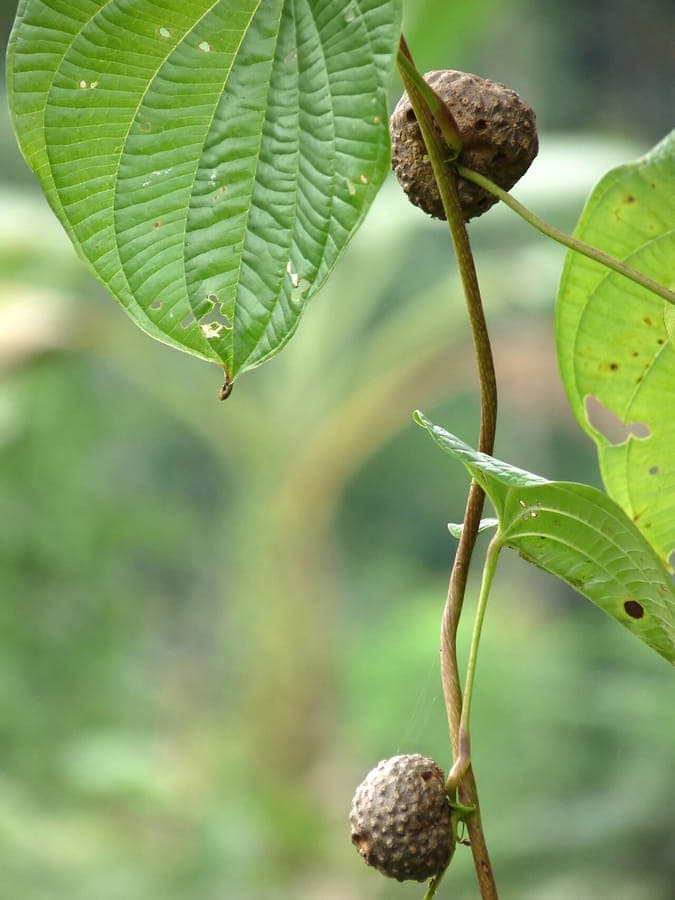
Jeevan Jose, Kerala, India / CC BY-SA 4.0, via Wikimedia Commons
Dioscorea bulbifera: complete guide
Dioscorea bulbifera
Want to see Dioscorea bulbifera: complete guide in your garden?
Full design in HD: €7.99
Look after your Dioscorea bulbifera with the GardenWorld app
Identify plants with your camera and get a care calendar with reminders for this plant.


Overview
Dioscorea bulbifera, known as air-potato or aerial yam, is a fascinating tropical climbing plant from Tropical Africa and Asia. This unique plant produces hanging, potato-like bulbils (small tubers) along its vines - a biological marvel. The plant is both ornamental and potentially edible, though caution is advised.
The name "air-potato" refers to the remarkable property that this plant produces food-bearing tubers in the air rather than underground.
Appearance and Growth
Dioscorea bulbifera is a slender, elegant climbing plant with heart-shaped, dark green leaves. The leaves are relatively small compared to other Dioscorea species.
The most striking feature is the bulbils - small, potato-like structures that grow along the vines. These vary in size from a few centimeters to 8-10 cm. They drop naturally when ripe and can produce new plants.
The plant grows rapidly in warm conditions and can easily reach 2-3 meters per season.
Ideal Location
Air-potato grows best in partial shade to full sun. Provide strong climbing support or trellis - the plant grows vigorously.
The plant thrives in warm, humid conditions. Protect from strong, dry winds.
Soil
Well-draining, fertile soil with pH 5.5-7.0 is ideal. The plant is not fussy about soil type but prefers sandy to light clay soils.
Amend planting holes generously with organic matter. Good drainage is essential - the plant cannot tolerate prolonged waterlogging.
Watering
Air-potato loves moist conditions. Provide regular watering, especially during growth and bulbil formation periods.
Do not let soil dry completely, but avoid waterlogging. Mulch aids moisture retention.
Free preview
Want to see Dioscorea bulbifera: complete guide in your garden? Make a free preview of your design.
Pruning and Support
Provide strong support. Gently train the plant along its support.
Minimal pruning is required. Remove dead or damaged foliage. You can remove side branches for better form, but avoid aggressive pruning.
Maintenance Calendar
May to July: Growth period - regular watering, monthly feeding with balanced fertilizer. August to October: Bulbil formation - maintain stable moisture, reduce feeding. November to April: Dormant season - minimal watering, protection from cold.
Winter Hardiness
Dioscorea bulbifera is tropical and cannot tolerate frost. Grow outdoors only in warm regions (USDA 10b-12). In temperate climates: container growing with winter protection.
Temperatures below 10°C cause serious damage.
Precautions
The bulbils may contain potentially toxic compounds in raw form. In some cultures, they are eaten cooked, but research local traditions first. Not all varieties are edible.
The plant can become invasive in warm areas - check local regulations before planting.
Companion Plants
Grows well with other tropical climbers. Combines nicely with ornamental plants in protected gardens.
Closing Thoughts
Dioscorea bulbifera is a unique, conversation-starting plant for those wanting something different in their tropical garden. The hanging bulbils are biologically fascinating. Provide good nutrition, water, and support for best results.
Available at Intratuin and Gamma in the Netherlands. More information at gardenworld.app.
Available at OBI and Hornbach in Germany. More information at gardenworld.app.
Frequently asked questions about Dioscorea bulbifera
Is Dioscorea bulbifera winter hardy?
Dioscorea bulbifera is tropical and cannot tolerate frost. Grow outdoors only in warm regions (USDA 10b-12).
When and how do you prune Dioscorea bulbifera?
Provide strong support. Gently train the plant along its support.
How much water does Dioscorea bulbifera need?
Air-potato loves moist conditions. Provide regular watering, especially during growth and bulbil formation periods.
Where does Dioscorea bulbifera grow best?
Air-potato grows best in partial shade to full sun. Provide strong climbing support or trellis - the plant grows vigorously.
What soil does Dioscorea bulbifera need?
Well-draining, fertile soil with pH 5.5-7.0 is ideal. The plant is not fussy about soil type but prefers sandy to light clay soils.

See it in your garden
See Dioscorea bulbifera in your garden
One photo of your garden and a few questions. You see the result in about a minute.
Try it with a photoIdentify this plant in your own garden. Identify a plant
Similar plants
Cush-cush yam: complete guide
Dioscorea trifida
Everything about Dioscorea trifida, the tropical cush-cush climbing yam with ornamental lobed leaves and edible tubers from South America.
Dioscorea villosa: complete guide
Dioscorea villosa
Discover Dioscorea villosa (Wild yam), an elegant climbing vine from North America. Growing tips, care, and ornamental applications.
Dioscorea hispida: complete guide
Dioscorea hispida Dennst.
Explore the Asiatic bitter yam, an exotic climbing tuber with dramatic foliage. Perfect for warm-season growing and tropical front yard effects.
