
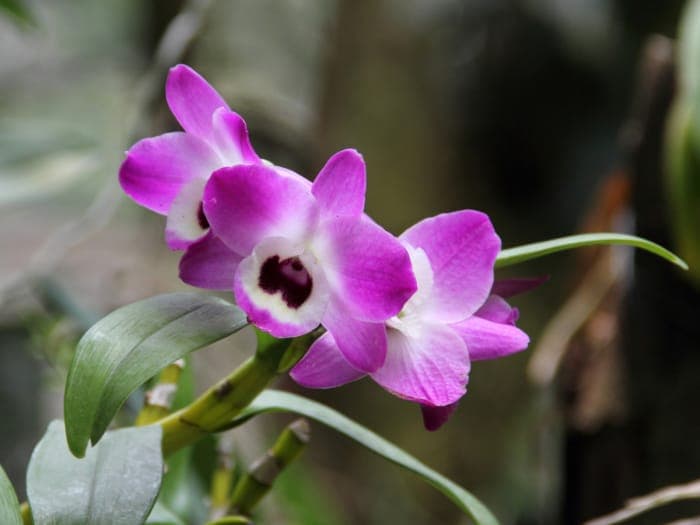
Fan Wen / CC BY-SA 4.0, via Wikimedia Commons
Dendrobium nobile: complete guide
Dendrobium nobile
Want to see Dendrobium nobile: complete guide in your garden?
1 minute, no credit card
Overview
Dendrobium nobile is one of the most coveted orchids in the world. This epiphytic orchid originates from the Himalayan regions of Nepal, India, Bhutan, and China, where it grows in mountain tropical forests. With its light to dark rose-colored flowers and fragrance, this is truly a jewel for every orchid collector. In their natural habitat, these orchids climb along trees in forested terrain at elevations between 800 and 2000 meters. This plant is known for its long bloom period and its ability to produce additional flowers.
Appearance and Bloom
Dendrobium nobile reaches a height of 30 to 60 centimeters with striking cane-like pseudobulbs. The flowers are bewitching: usually white to pale pink with deep rose or red labellum. The flowers grow along the entire length of the previous season's stems and bloom in late winter to early spring (January to March). An adult plant can produce hundreds of flowers per season, each with a subtle fragrance. The bloom can last 4 to 8 weeks.
Ideal Growing Location
Dendrobium nobile thrives best in locations with very bright light, at least 4-6 hours of direct sunlight daily. Most ideal is a south or west-facing window where the plant gets morning sun and afternoon half-shade. In summer, some light summer shade helps prevent leaf scorch. Ensure very good air circulation around the plant. In tropical climates, this orchid can grow outdoors in a refreshing spot.
Soil Composition
This orchid naturally grows as an epiphyte on trees, so your substrate must be very well-draining. Use coarse orchid bark (at least 50%), supplemented with coco chips, charcoal, and perlite. Add some sphagnum moss for moisture retention but no more than 20%. A pH of 5.5 to 7.0 is acceptable. Ensure water flows through the substrate almost immediately without stagnation risk.
Watering
Watering is a crucial distinction for success. During the growing season (spring through fall), the plant must water regularly - almost daily in hot weather. Use lukewarm rainwater. In winter, after blooming, you must reduce drastically. This dry season from December to January is crucial for flower bud formation - water only when the substrate is almost completely dry. This "dry rest" period simulates natural monsoon seasons.
Free design
Want to see Dendrobium nobile: complete guide in your garden? Make a free design now.
Pruning
Pruning is simple for Dendrobium nobile. After blooming in early spring, old, leafless stems can be carefully cut back to just a few centimeters above the base. This stimulates the formation of side shoots. Remove dead leaves and yellowed pseudobulbs. Careful handling is important because this delicate plant can break easily. Always use sterilized pruning tools.
Maintenance Calendar
Spring (Feb-April): Begin bloom. Water regularly after bloom ends. Start feeding. Summer (May-August): Water daily in hot period. Feed every two weeks. Fall (Sept-November): Feed every three weeks. Gradually reduce water. Winter (Dec-January): Keep very dry. No feeding. Keep cool (10-15 degrees Celsius). This is critical for bloom induction.
Winter Hardiness
Dendrobium nobile is not cold-hardy in temperate climates. In tropical and subtropical zones (10-30 degrees Celsius), this can grow outdoors. For temperate climates, indoor growing is essential. Ideal winter temperature is between 10 to 15 degrees Celsius to stimulate flower bud formation. Prevent temperatures below 8 degrees Celsius. This plant can tolerate short night temperatures but not prolonged freezing.
Companion Plants
Dendrobium nobile grows well in combination with other orchids with similar requirements, such as Paphiopedilum, Cattleya, and Phalaenopsis. For non-orchid companions, low-growing ferns, succulent orchid associations, and other epiphytes work well. Avoid large potted plants that could cast shade. In display cases, you can combine Dendrobium with small tillandsias and moss. Good air circulation is important for everyone.
Conclusion
Dendrobium nobile from gardenworld.app is a favorite for serious orchid collectors. With the right combination of light, temperature difference, and dry period in winter, you will be rewarded with spectacular blooms. Visit gardenworld.app for more tips on orchid care and creating ideal blooming conditions.
Want to see Dendrobium nobile: complete guide in your garden? Make a free design now.
Upload a photo, pick a style, and get a photorealistic design with plant list in under a minute.
No credit card required


Similar plants
Ram's-head lady's slipper: complete guide
Cypripedium arietinum
Everything you need to know about growing Cypripedium arietinum, a rare woodland orchid for cool, moist garden settings. Soil, care and planting tips.
Sparrow's-egg lady's slipper: complete guide
Cypripedium passerinum
Everything about growing Cypripedium passerinum, a cold-hardy subarctic orchid suited to cool, moist, shaded garden spots. Soil, care and companion plants.
Algerian Butterfly-orchid: complete guide
Platanthera algeriensis
Everything about Platanthera algeriensis, the rare Mediterranean orchid with greenish flowers native to Algeria, Morocco, Corsica and Spain.